


The Bank of England has lowered its benchmark rate by 25 basis points to 4.75%, in line with market expectations. This reduction follows a steady rate in September and a similar 25 basis point cut in August.
The Bank of England has lowered its benchmark rate by 25 basis points to 4.75%, in line with market expectations. This reduction follows a steady rate in September and a similar 25 basis point cut in August. Meanwhile, the U.S. Federal Reserve is expected to announce another 25 basis point cut today, building on its larger 50 basis point reduction in September. The focus is on any policy guidance amid rising economic uncertainty, especially following Donald Trump’s re-election, which has refocused market attention on inflation concerns and potential shifts in fiscal policy.
If current trends persist, gradual rate cuts are likely. The Bank's main priority remains achieving low and stable inflation to support sustainable economic growth and improve long-term prosperity.
Should inflation stay close to the target, further rate reductions are anticipated. However, there is also a risk of inflation exceeding expectations. While overall inflation aligns with targets, certain service costs are rising at an unsustainable rate. As a result, the BoE must be cautious, avoiding drastic or rapid rate cuts to ensure price stability and support economic resilience in the coming years.
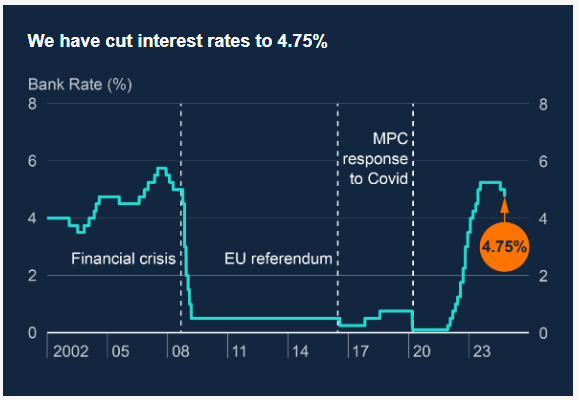
Source: Bank of England Monetary Report
Global markets remained focused on U.S. fiscal concerns, shifting central bank expectations, and renewed Middle East tensions.
 Fed Inflation Concerns Remain
The latest Federal Reserve minutes show that inflation remains a central concern for policymakers, even as recent economic data has reduced the urgency for another rate increase. Some officials believe price pressures are becoming more widespread, while a smaller group directly supported further tightening.
Detail Dollar Falls on Debt Concerns as Yields Rise (24 – 28 August)
Global markets entered the week with the US dollar under continued pressure as concerns over federal debt and Treasury market management moved to the center of investor attention. The Dollar Index hovered near 98.8 following sharp losses in the previous week, while the US Treasury’s expanded bond buyback programme pushed longer-term yields and the dollar lower. The move supported gold, silver, and major currencies, while investors assessed its longer-term implications for US borrowing costs and the yield curve.
DetailThen Join Our Telegram Channel and Subscribe Our Trading Signals Newsletter for Free!
Join Us On Telegram!


