




The annual inflation rate in the Eurozone increased to 2.5% in January 2025, up from 2.4% in December, according to a preliminary estimate.
This figure slightly surpassed market expectations of 2.4% and marked the highest inflation rate since July 2024.
A key factor behind this rise was the substantial increase in energy costs, which surged to 1.8% in January, compared to just 0.1% in December. This sharp rise in energy prices contributed notably to the overall inflation rate.
The core inflation rate, which excludes volatile food and energy prices, remained unchanged at 2.7% for the fifth month in a row. This figure was slightly above the market forecast of 2.6% but still represented the lowest level since early 2022. The latest inflation data will likely be observed by the European Central Bank (ECB) for future monetary policy decisions.
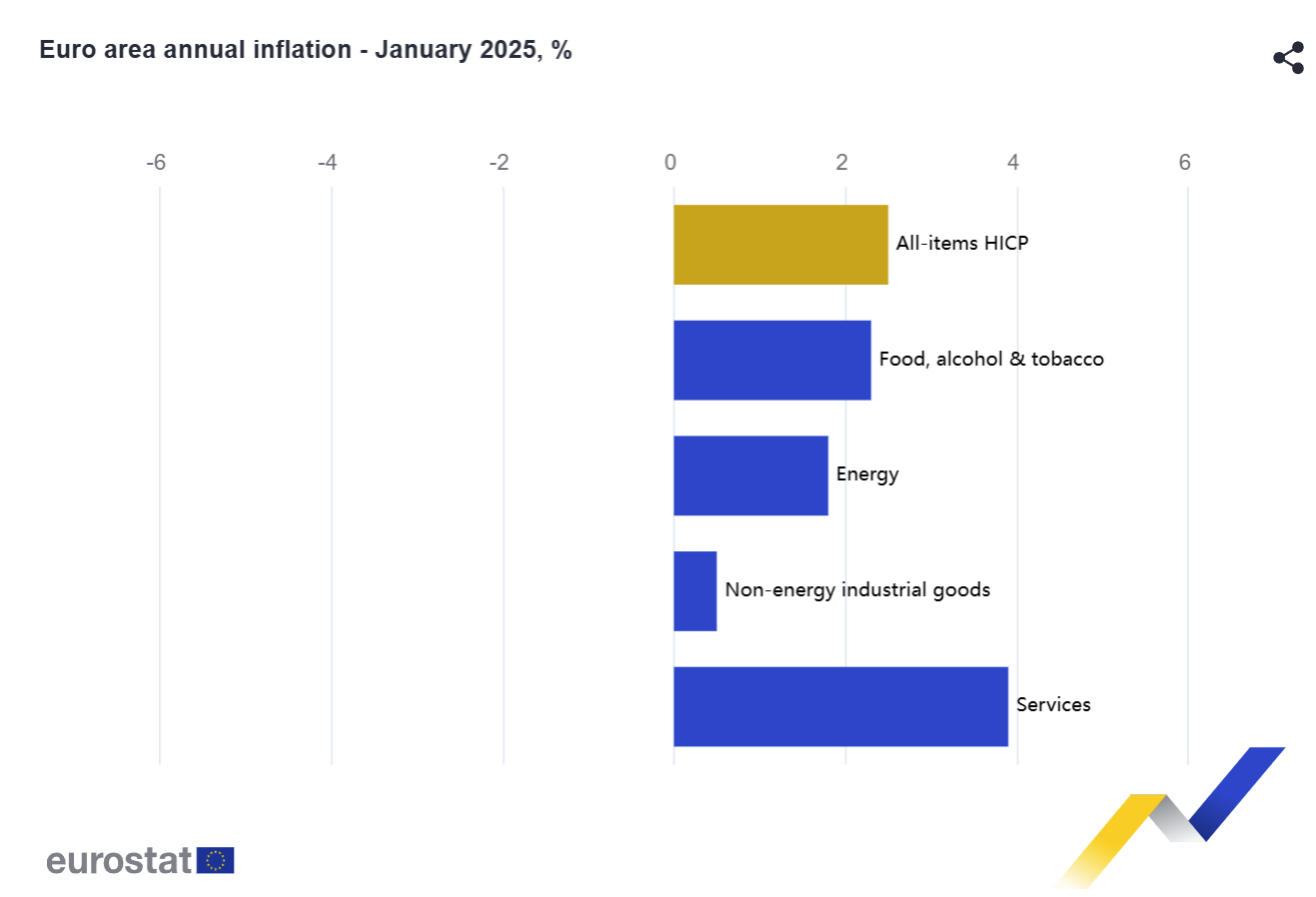
Source: Eurostat
Markets saw a short-lived recovery after the U.S. delayed planned strikes on Iranian energy infrastructure, easing immediate geopolitical pressure.
Detail Dollar Dominance Deepens (03.23.2026)Global markets remained under pressure as inflation fears tied to the ongoing Iran conflict strengthened the U.S. dollar and reshaped investor positioning.
Detail Energy Shock Drives Hawkish Shift (23-27 March)
Global markets remained under pressure as the conflict in the Middle East entered a more volatile phase, driving Brent crude past $110/barrel, which is its highest level since mid-2022.
DetailThen Join Our Telegram Channel and Subscribe Our Trading Signals Newsletter for Free!
Join Us On Telegram!


