


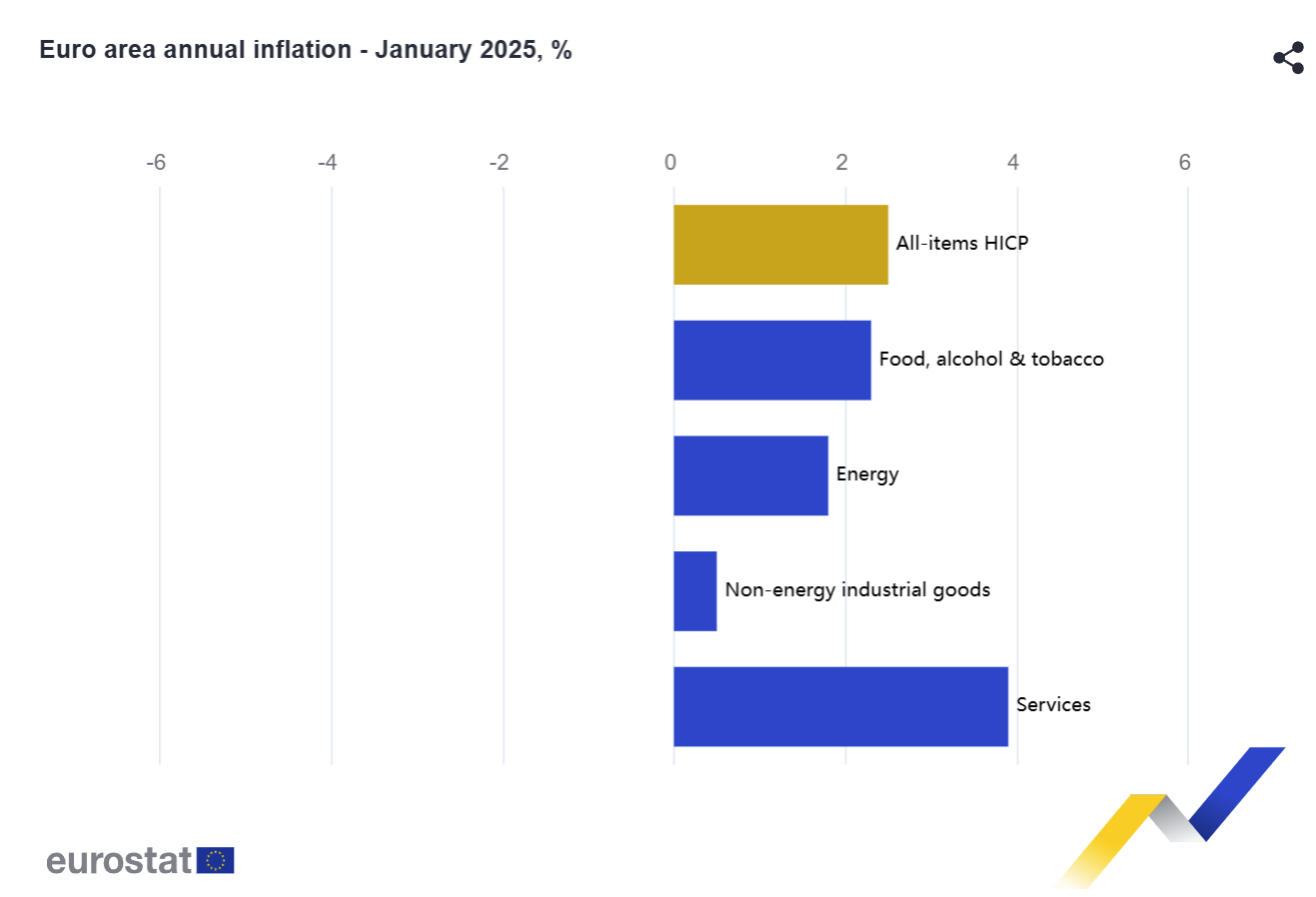
The annual inflation rate in the Eurozone increased to 2.5% in January 2025, up from 2.4% in December, according to a preliminary estimate.
This figure slightly surpassed market expectations of 2.4% and marked the highest inflation rate since July 2024.
A key factor behind this rise was the substantial increase in energy costs, which surged to 1.8% in January, compared to just 0.1% in December. This sharp rise in energy prices contributed notably to the overall inflation rate.
The core inflation rate, which excludes volatile food and energy prices, remained unchanged at 2.7% for the fifth month in a row. This figure was slightly above the market forecast of 2.6% but still represented the lowest level since early 2022. The latest inflation data will likely be observed by the European Central Bank (ECB) for future monetary policy decisions.
Source: Eurostat
Energy markets cooled on Monday as Brent crude slipped toward $103 a barrel, ending a two-session rally. Declining oil prices and easing Treasury yields provided support to major currencies and precious metals as investors awaited upcoming US inflation data.
 Dollar Keeps Firm Ahead of US Inflation (12 – 16 October)
The dollar held firm heading into the new week as investors awaited key US inflation figures to guide Federal Reserve policy. The Dollar Index held above 102 after four consecutive weekly gains, while the euro and yen remained under pressure from wide interest rate differentials and persistent fiscal concerns. September’s consumer and producer inflation reports will be closely watched as markets assess whether the Fed has room to pause its tightening cycle.
Detail Falling Yields Lift Metals as Currencies Stabilize (10.09.2026)Easing oil prices and retreating Treasury yields (around 5.23% ) provided some relief to financial markets as improving US-Iran diplomatic prospects reduced immediate inflation concerns.
Then Join Our Telegram Channel and Subscribe Our Trading Signals Newsletter for Free!
Join Us On Telegram!


