




Inflation in the euro area rose slightly to 2.5% in January 2025, up from 2.4% in December 2024, according to Eurostat, the statistical office of the European Union.
This marks a decline from the 2.8% inflation rate recorded in January 2024, indicating a continued slowdown in price growth. Meanwhile, the European Union’s overall inflation rate stood at 2.8%, rising from 2.7% the previous month but down from 3.1% a year earlier.
The core Consumer Price Index (CPI), which excludes volatile food and energy prices, remained unchanged at 2.7% in January, aligning with both market forecasts and the previous month's reading.
Inflation levels varied significantly across EU member states, with Denmark recording the lowest rate at 1.4%, followed by Ireland, Italy, and Finland, each at 1.7%. On the higher end, Hungary saw the steepest inflation at 5.7%, while Romania (5.3%) and Croatia (5.0%) also registered elevated levels.
Compared to December 2024:
Breaking down inflation by sector:
The rise in headline inflation, along with the stable core CPI, suggests persistent price pressures in the eurozone. While energy prices saw a modest increase, services inflation remains the primary driver of overall price growth. The European Central Bank (ECB) continues to monitor inflation trends closely as policymakers assess the timing of potential interest rate adjustments in 2025.
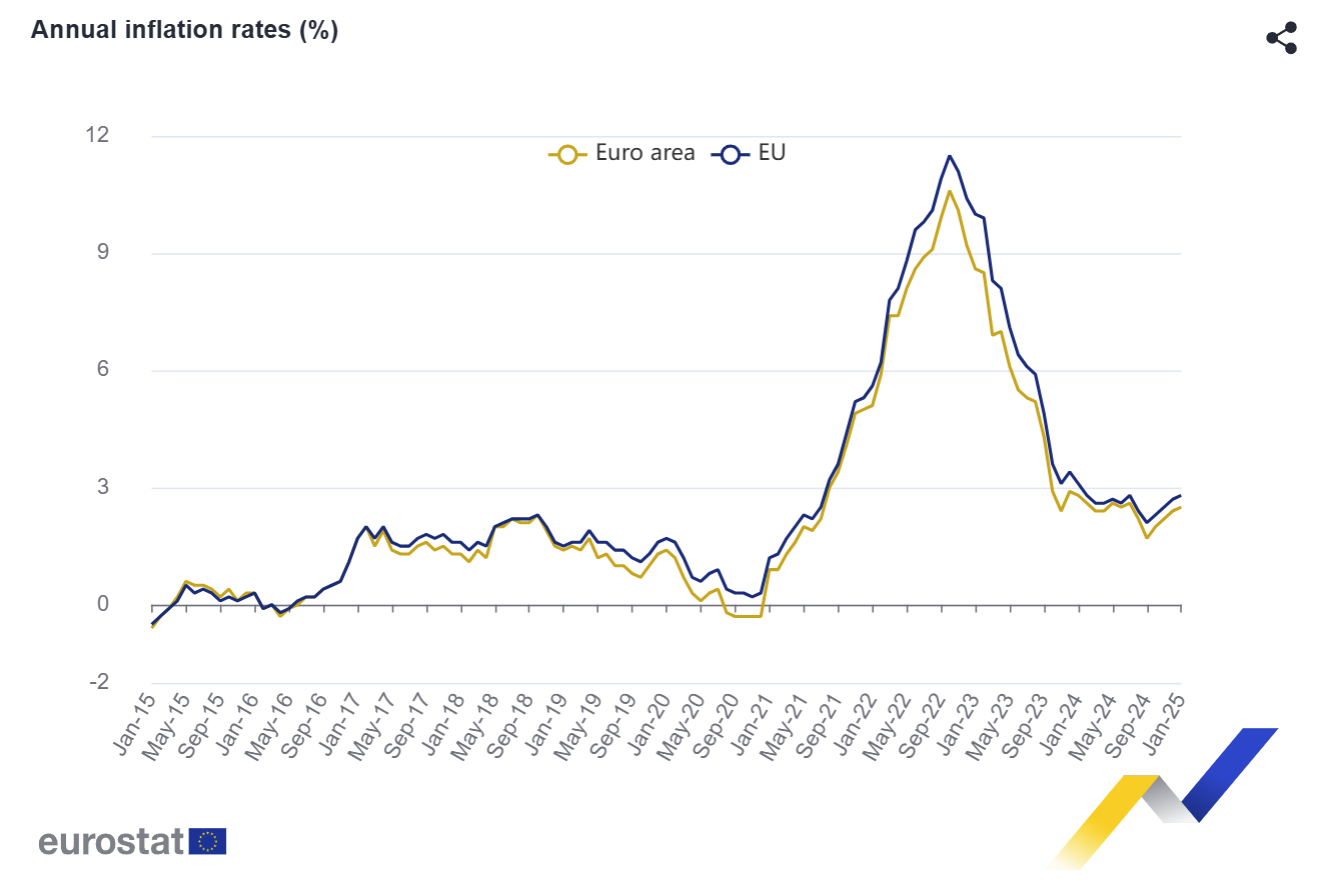
Source: Eurostat
Global markets remained dominated by dollar strength as geopolitical tensions and rising energy prices reshaped monetary expectations.
 Oil Tanker Attacks Create Volatility
Recent strikes on oil tankers in the Persian Gulf have exposed the extreme vulnerability of global energy supplies. Footage of burning vessels near the Iraqi coastline has saturated financial media, serving as a reminder to market participants of the risks inherent in the region. Whenever tensions escalate in this region, energy traders immediately begin pricing in the possibility of supply disruptions.
Detail Dollar Leads as Markets Reprice Risk (03.12.2026)Currency markets remained under pressure as energy-driven inflation concerns and ongoing geopolitical tensions continued to support the U.S. dollar.
Then Join Our Telegram Channel and Subscribe Our Trading Signals Newsletter for Free!
Join Us On Telegram!


