


Germany's inflation rate, as measured by the year-on-year change in the consumer price index (CPI), rose to 2.2% in November.
This marks an increase from October, when the rate stood at 2.0%, after remaining below 2% for two months (1.6% in September and 1.9% in August 2024). The Federal Statistical Office (Destatis) reports that a notable increase in service costs was the main cause of inflation in November. On the other hand, energy prices still reduced inflation, although not as much as they had in prior months. When comparing prices to October, consumer prices fell by 0.2% in November.
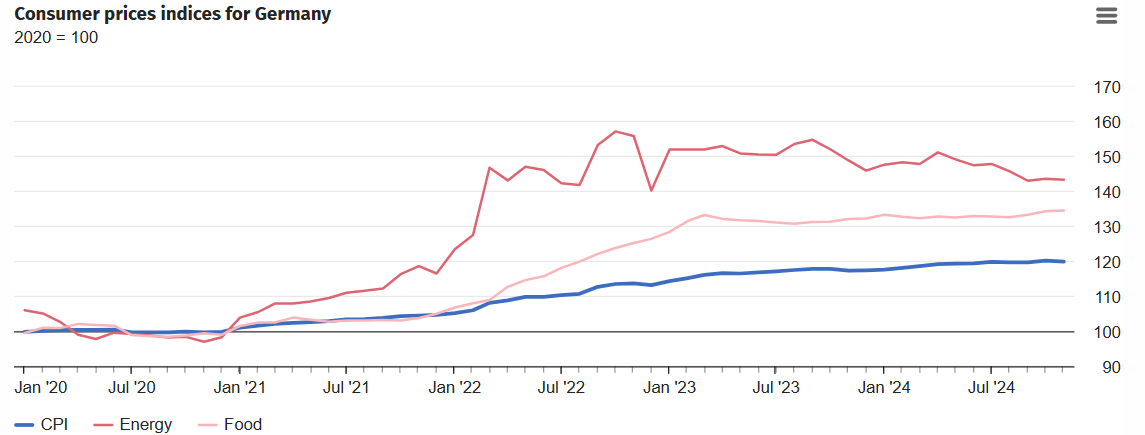
Source: Destatis
Escalating Middle East tensions pushed oil prices higher following a deadly drone strike on Saudi Aramco's Shaybah facility, renewing inflation concerns and expectations for further Federal Reserve tightening.
Rising oil prices renewed inflation concerns as uncertainty surrounding the US-Iran conflict and continued disruptions in the Strait of Hormuz reinforced expectations for further monetary tightening.
Elevated oil prices and rising Treasury yields weighed on precious metals as persistent geopolitical tensions reinforced inflation concerns and expectations for further Federal Reserve tightening.
Then Join Our Telegram Channel and Subscribe Our Trading Signals Newsletter for Free!
Join Us On Telegram!


