


Germany’s economic outlook has taken a significant turn for the better, with the ZEW Indicator of Economic Sentiment surging to 51.6 in March 2025, the highest level recorded since February 2022.
This sharp rise from February’s 26.0 reading also exceeded market expectations of 48.1, signaling renewed optimism among investors and analysts.
While the assessment of Germany’s current economic situation remains in negative territory, it showed a slight improvement, rising to -87.6 from -88.5 in February. This uptick suggests that although economic challenges persist, the outlook is gradually improving, supported by key policy measures and industrial recovery.
ZEW President Prof. Achim Wambach attributed the improved sentiment to recent fiscal and monetary policies. "Positive signals surrounding Germany’s fiscal policy, including the agreement on a multibillion-euro financial package for the federal budget, have likely contributed to improving market sentiment. Notably, the outlook for metal, machinery, and steel production is showing signs of recovery. Additionally, the ECB’s sixth consecutive interest rate cut is further enhancing financing conditions for both households and businesses," Wambach stated.
Several factors have played a crucial role in driving Germany’s economic sentiment to its highest point in over two years:
The sharp rise in economic sentiment indicates that Germany’s economy may be on the path to recovery after prolonged uncertainty. However, structural challenges remain, including weak demand in some sectors and global economic headwinds that could impact growth momentum. The effectiveness of fiscal and monetary policies in sustaining this positive trajectory will be crucial in the months ahead.
As Germany navigates this period of recovery, investors and policymakers will closely monitor further economic data to assess whether this optimistic sentiment translates into sustained economic growth.
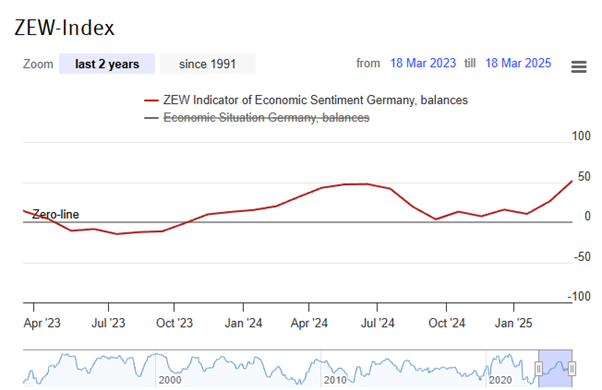
Source: Centre for European Economic Research (ZEW)
Renewed expectations for further Federal Reserve tightening kept the dollar supported as policymakers continued to warn about persistent inflation risks.
 Fed, BOJ Hikes Lift Dollar as Oil Falls (21 – 25 September)
Global markets entered the week balancing tighter monetary policy against signs of easing Middle East energy risks. The Federal Reserve remains the main macro driver after raising rates to 3.75%–4.00%, its first hike since 2023, and signaling that another increase remains possible this year. The Dollar Index advanced to 100.4, while Treasury yields remained elevated. The Bank of Japan also tightened policy, raising rates to 1.25%, although dissent within the board suggested that future increases could come at a slower pace.
Detail Falling Oil Prices Support Metals (09.21.2026)Easing oil prices offered some relief to financial markets as renewed diplomatic efforts in the Middle East reduced immediate inflation concerns.
Then Join Our Telegram Channel and Subscribe Our Trading Signals Newsletter for Free!
Join Us On Telegram!


