


Inflation in Germany continued to moderate in March 2025, with consumer prices rising at a slower annual pace, according to provisional data released by the Federal Statistical Office (Destatis).
The Consumer Price Index (CPI) increased by +2.2% compared to the same month last year, reflecting ongoing disinflationary trends in Europe’s largest economy.
On a monthly basis, prices edged up by +0.3% compared to February 2025, indicating that while overall inflation is slowing, price pressures have not yet fully abated.
The Harmonised Index of Consumer Prices (HICP), which allows for cross-country comparison within the European Union, showed a similar pattern:
These figures are closely watched by the European Central Bank (ECB) as it evaluates the region’s monetary policy direction.
Despite easing headline inflation, core inflation, which strips out the volatile components of food and energy, is projected to remain elevated at +2.5% in March 2025. This persistent core price pressure highlights that while energy costs have likely stabilized, other sectors such as services, rents, and industrial goods continue to contribute to inflation dynamics.
The latest data suggests that Germany’s inflation path is broadly in line with expectations, offering cautious optimism that headline inflation may continue to trend toward the ECB’s 2% medium-term target. However, the stickiness in core inflation could prompt policymakers to adopt a more gradual approach to further monetary easing.
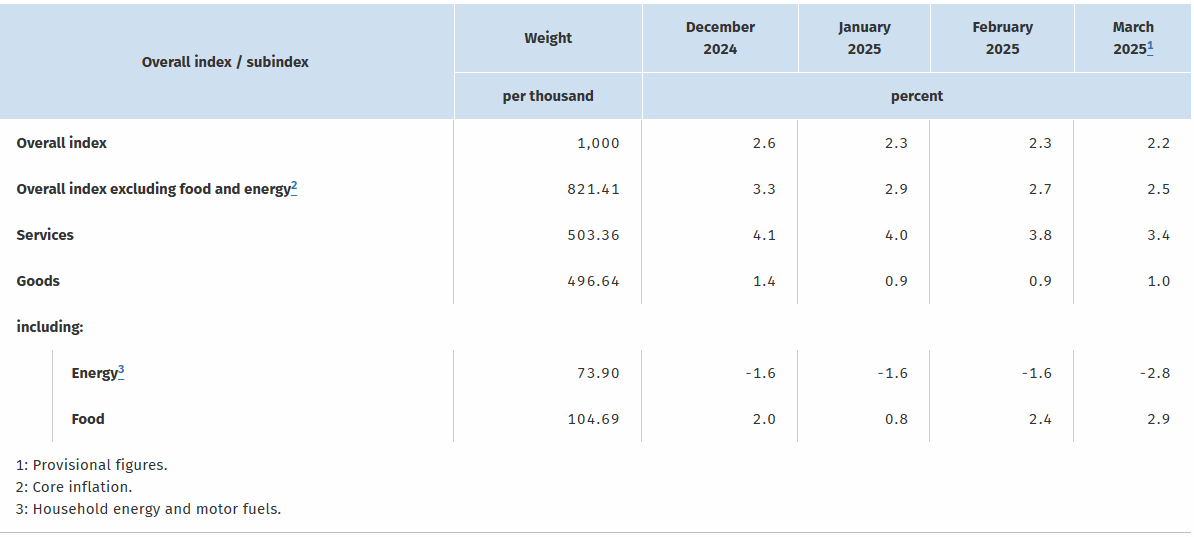
Source: Destatis
Global markets ended the week with broad U.S. dollar weakness after the Treasury announced plans to expand long-term debt buybacks, adding liquidity and pressuring yields.
Detail Dollar Weakens as Falling Yields Lift Markets (08.20.2026)Global markets responded to falling U.S. Treasury yields after expanded government bond buybacks eased long-term borrowing costs and pressured the dollar.
Detail Euro Hits Two-Month High as Metals Fall (08.19.2026)Global markets remained focused on diverging central bank expectations, rising bond yields, and renewed Middle East tensions.
DetailThen Join Our Telegram Channel and Subscribe Our Trading Signals Newsletter for Free!
Join Us On Telegram!


