


UK wage growth held steady in the three months to June 2025, with regular pay excluding bonuses rising 5 percent year-on-year to £679 per week, according to data from the Office for National Statistics (ONS). The pace matched the previous period and market expectations, remaining at the slowest rate in nearly three years.
The stability in pay growth comes as policymakers closely monitor labour market conditions for signs of persistent inflationary pressures.
Public sector pay growth accelerated to 5.7 percent from 5.5 percent, the fastest increase since the three months to February. Private sector wage growth edged down to 4.8 percent from 4.9 percent.
Among industries, wholesale, retail, hotels, and restaurants recorded the largest annual increase at 6.8 percent, followed by services at 5.0 percent, manufacturing at 4.6 percent, construction at 4.2 percent, and finance and business services at 3.1 percent. The data reflects stronger pay pressures in consumer-facing sectors.
Adjusted for inflation, real wages rose 0.9 percent over the period, marking the weakest growth since the three months to July 2023. Analysts suggest that while higher public sector pay could boost consumption in the near term, the moderation in overall wage growth may reduce pressure on the Bank of England to keep monetary policy restrictive for an extended period.
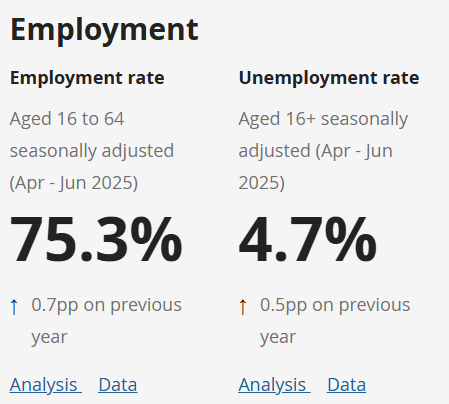
Source: UK Office for National Statistics
Houthi missile attacks on Saudi Aramco and stepped-up Iranian strikes on tankers in Hormuz deepened worries over supply, while the IMF flagged threats to global growth from the Middle East conflict, high debt levels and a potential AI-boom reversal.
Detail Fed Hike Bets Lift Dollar (10.13.2026)The US dollar climbed to an 18-month high as investors awaited key inflation reports and weighed expectations for another Federal Reserve rate hike in December.
Detail Easing Oil Prices Support Markets (10.12.2026)Energy markets cooled on Monday as Brent crude slipped toward $103 a barrel, ending a two-session rally. Declining oil prices and easing Treasury yields provided support to major currencies and precious metals as investors awaited upcoming US inflation data.
Then Join Our Telegram Channel and Subscribe Our Trading Signals Newsletter for Free!
Join Us On Telegram!


