




US manufacturing contracted further in September as output and new orders dropped amid weak demand and political uncertainty.
The US manufacturing sector continued to slide deeper into contraction at the end of Q3, with sharper declines in output and new orders in September, driven by weak demand and political uncertainty. Employment experienced its steepest drop since early 2010, excluding the pandemic period. However, business confidence increased slightly, driven by optimism for post-presidential election improvements.
While input cost inflation eased somewhat, it remained notable, and firms increased their selling prices at the fastest pace since April. The seasonally adjusted S&P Global US Manufacturing PMI dropped to 47.3 in September from 47.9 in August, marking the third straight month of deteriorating conditions and the worst since June 2023.
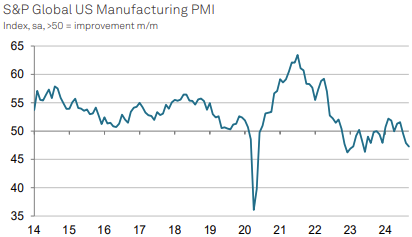
Source: S&P Global PMI. ©2024 S&P Global.
Global markets remained dominated by dollar strength as geopolitical tensions and rising energy prices reshaped monetary expectations.
 Oil Tanker Attacks Create Volatility
Recent strikes on oil tankers in the Persian Gulf have exposed the extreme vulnerability of global energy supplies. Footage of burning vessels near the Iraqi coastline has saturated financial media, serving as a reminder to market participants of the risks inherent in the region. Whenever tensions escalate in this region, energy traders immediately begin pricing in the possibility of supply disruptions.
Detail Dollar Leads as Markets Reprice Risk (03.12.2026)Currency markets remained under pressure as energy-driven inflation concerns and ongoing geopolitical tensions continued to support the U.S. dollar.
Then Join Our Telegram Channel and Subscribe Our Trading Signals Newsletter for Free!
Join Us On Telegram!


