


Factory gate prices in the United States dropped in March, defying expectations and signaling a potential softening in inflation pressures.
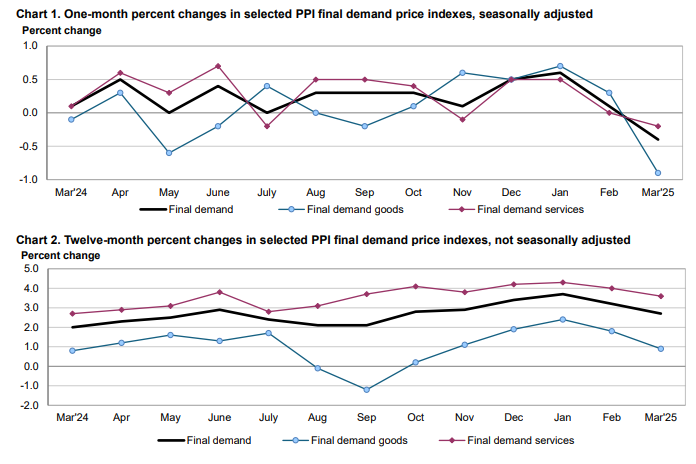
According to the U.S. Bureau of Labor Statistics, the Producer Price Index (PPI) for final demand fell by 0.4 percent compared to the previous month. This marks the first monthly decline since October 2023 and follows a 0.1 percent increase in February. Market forecasts had anticipated a 0.3 percent rise.
On a yearly basis, the PPI rose by 2.7 percent. This is the lowest annual increase in six months and falls short of the expected 3.3 percent.
The overall decrease in producer prices was mainly due to a 0.9 percent drop in prices for final-demand goods. This represents the largest monthly decline since October 2023. A sharp 11 percent decrease in gasoline prices played a major role, along with notable declines in prices for chicken eggs, beef and veal, fresh and dry vegetables, diesel fuel, and jet fuel.
Prices for final demand services decreased by 0.2 percent in March. This was the sharpest monthly decline since July 2024. Leading the drop was a 1.3 percent fall in machinery and vehicle wholesaling. Other service categories that saw price declines included airline passenger services, food retailing, apparel and accessories retailing, partial automobile sales, and hotel room rentals.
The core PPI, which excludes the more volatile food, energy, and trade services categories, edged up by just 0.1 percent in March. This came in below the market expectation of a 0.3 percent increase. Over the past 12 months, core PPI has risen by 3.3 percent, down from 3.5 percent in February. This suggests that underlying inflation pressures may be easing.
The March PPI report provides some relief amid broader concerns about inflation persistence. Slowing producer prices, particularly in core categories, may support the Federal Reserve’s cautious stance on future interest rate adjustments as it weighs signs of economic cooling against inflation risks.
Source: US Bureau of Labor Statistics
Escalating Middle East tensions pushed oil prices higher following a deadly drone strike on Saudi Aramco's Shaybah facility, renewing inflation concerns and expectations for further Federal Reserve tightening.
Rising oil prices renewed inflation concerns as uncertainty surrounding the US-Iran conflict and continued disruptions in the Strait of Hormuz reinforced expectations for further monetary tightening.
Elevated oil prices and rising Treasury yields weighed on precious metals as persistent geopolitical tensions reinforced inflation concerns and expectations for further Federal Reserve tightening.
Then Join Our Telegram Channel and Subscribe Our Trading Signals Newsletter for Free!
Join Us On Telegram!


