


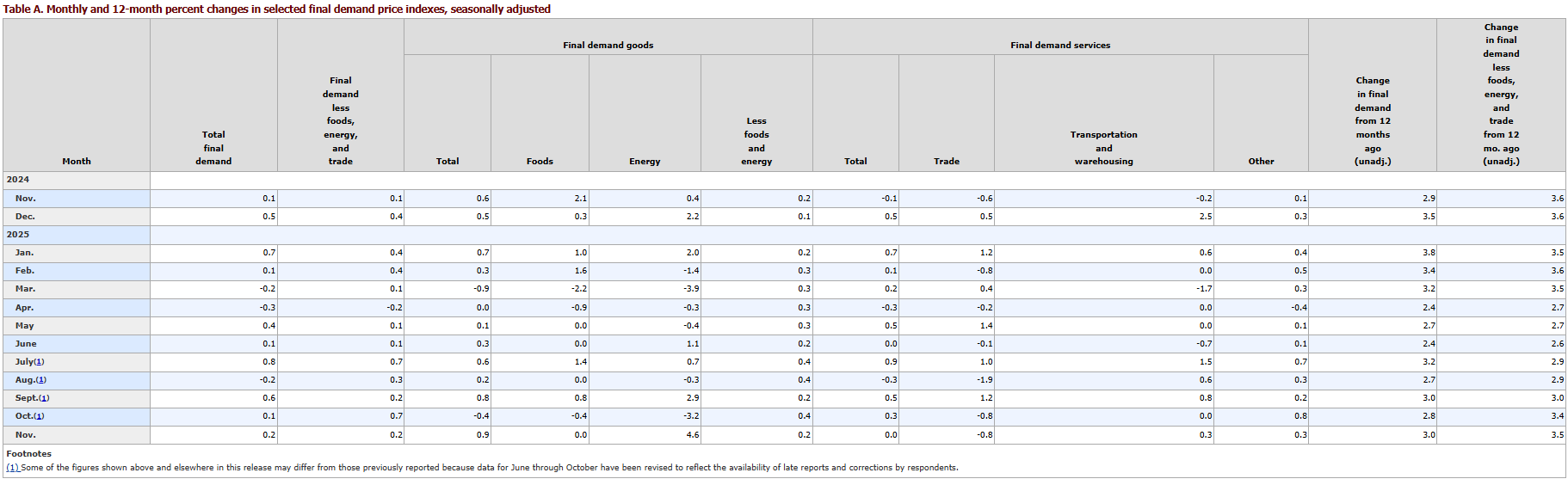
New data from the Bureau of Labor Statistics (BLS) shows that U.S. producer prices increased by 0.2% month-over-month in November, aligning with analyst predictions. This follow-up to October's 0.1% rise suggests that while inflation at the factory gate is not accelerating rapidly, it remains on a gradual upward trajectory.
On a yearly basis, the headline Producer Price Index (PPI) climbed to 3.0%, exceeding the 2.7% consensus estimate. The release of this report was significantly delayed due to a record-breaking 43-day federal government shutdown (October 1 – November 12, 2025), which disrupted data collection and created a backlog of critical economic indicators.
The underlying trend remains mixed:
While monthly cost pressures for producers appear to be cooling, the elevated annual rate indicates that higher costs remain firmly embedded in the supply chain.
This report arrives on the heels of Tuesday’s consumer inflation data, which indicated a slight cooling in Core CPI. Together, these figures present a complex picture for the Federal Reserve. While the consumer-side slowdown is encouraging, the "stickier" producer inflation may limit the central bank's room for aggressive rate cuts. Markets currently anticipate that the Fed will maintain its cautious stance at the upcoming January meeting as it waits for the data distortions caused by the shutdown to fully clear.
Escalating Middle East tensions pushed oil prices higher following a deadly drone strike on Saudi Aramco's Shaybah facility, renewing inflation concerns and expectations for further Federal Reserve tightening.
Rising oil prices renewed inflation concerns as uncertainty surrounding the US-Iran conflict and continued disruptions in the Strait of Hormuz reinforced expectations for further monetary tightening.
Elevated oil prices and rising Treasury yields weighed on precious metals as persistent geopolitical tensions reinforced inflation concerns and expectations for further Federal Reserve tightening.
Then Join Our Telegram Channel and Subscribe Our Trading Signals Newsletter for Free!
Join Us On Telegram!


