


Markets shifted toward risk-on sentiment as easing geopolitical tensions and uncertainty around Federal Reserve policy pressured the U.S. dollar. EUR/USD climbed toward 1.18, reaching multi-month highs, while sterling also advanced to a seven-week peak.
The Japanese yen strengthened as USD/JPY pulled back from the 160 level, supported by improving sentiment and expectations of a potential Bank of Japan rate hike. In commodities, gold and silver rebounded on diplomatic hopes and easing inflation concerns, though both remain below earlier highs. Overall, markets remain optimistic but cautious, with attention on upcoming U.S. data and developments in Middle East negotiations.
| Time | Cur. | Event | Forecast | Previous |
| 15:15 | USD | ADP Employment Change Weekly | - | 26.00K |
| 15:30 | USD | PPI (MoM) (Mar) | 1.2% | 0.7% |
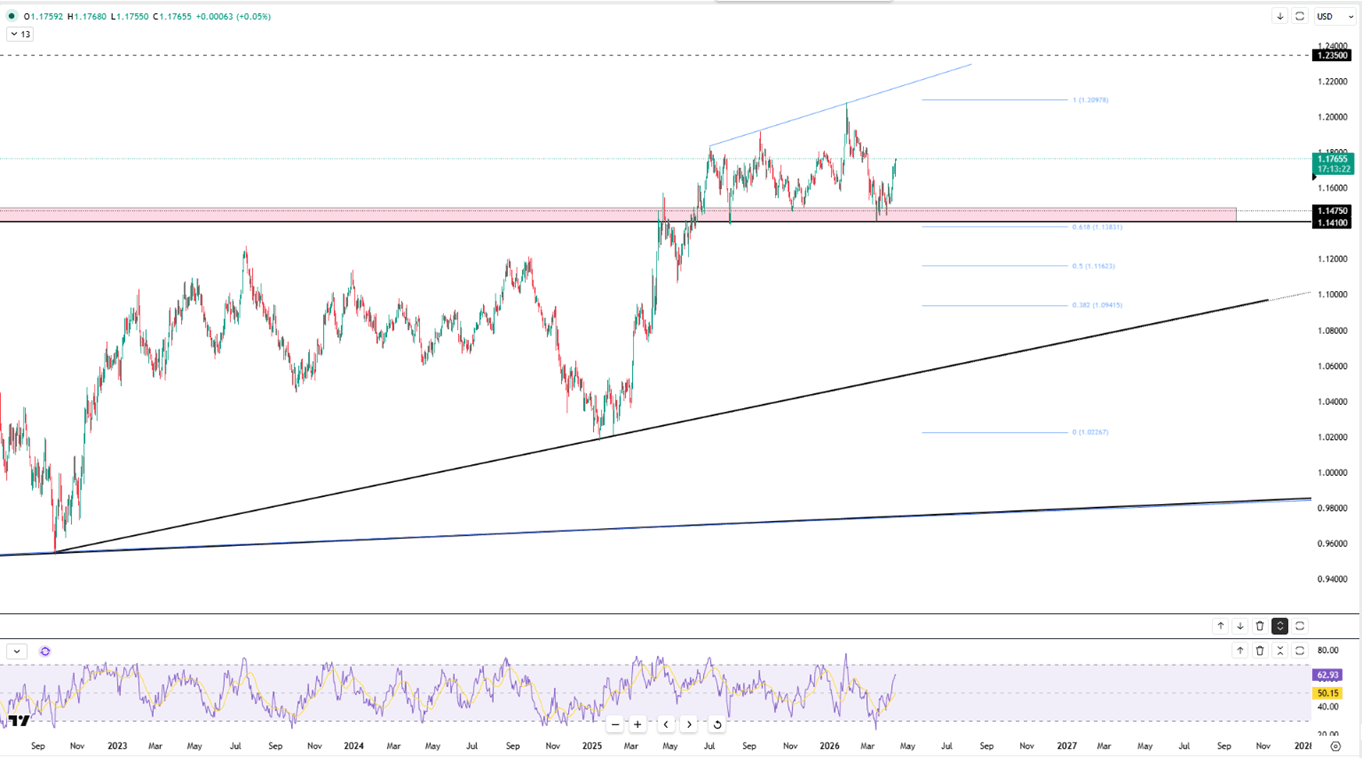
EUR/USD rose to the 1.1765–1.1770 zone, hitting a peak not seen since March as the US dollar suffered its eighth straight day of losses. Hopes for a diplomatic breakthrough between the US and Iran, coupled with unclear Federal Reserve policy, have dampened dollar demand. While improved risk appetite lifted the euro toward the 1.1800 mark, persistent threats to the Strait of Hormuz and potential energy shortages may cap these gains by restoring the dollar's appeal as a safe haven.
For EUR/USD, the initial resistance is seen at 1.1770, while the closest support is positioned at 1.1640.
| R1: 1.1770 | S1: 1.1640 |
| R2: 1.1800 | S2: 1.1570 |
| R3: 1.1830 | S3: 1.1400 |
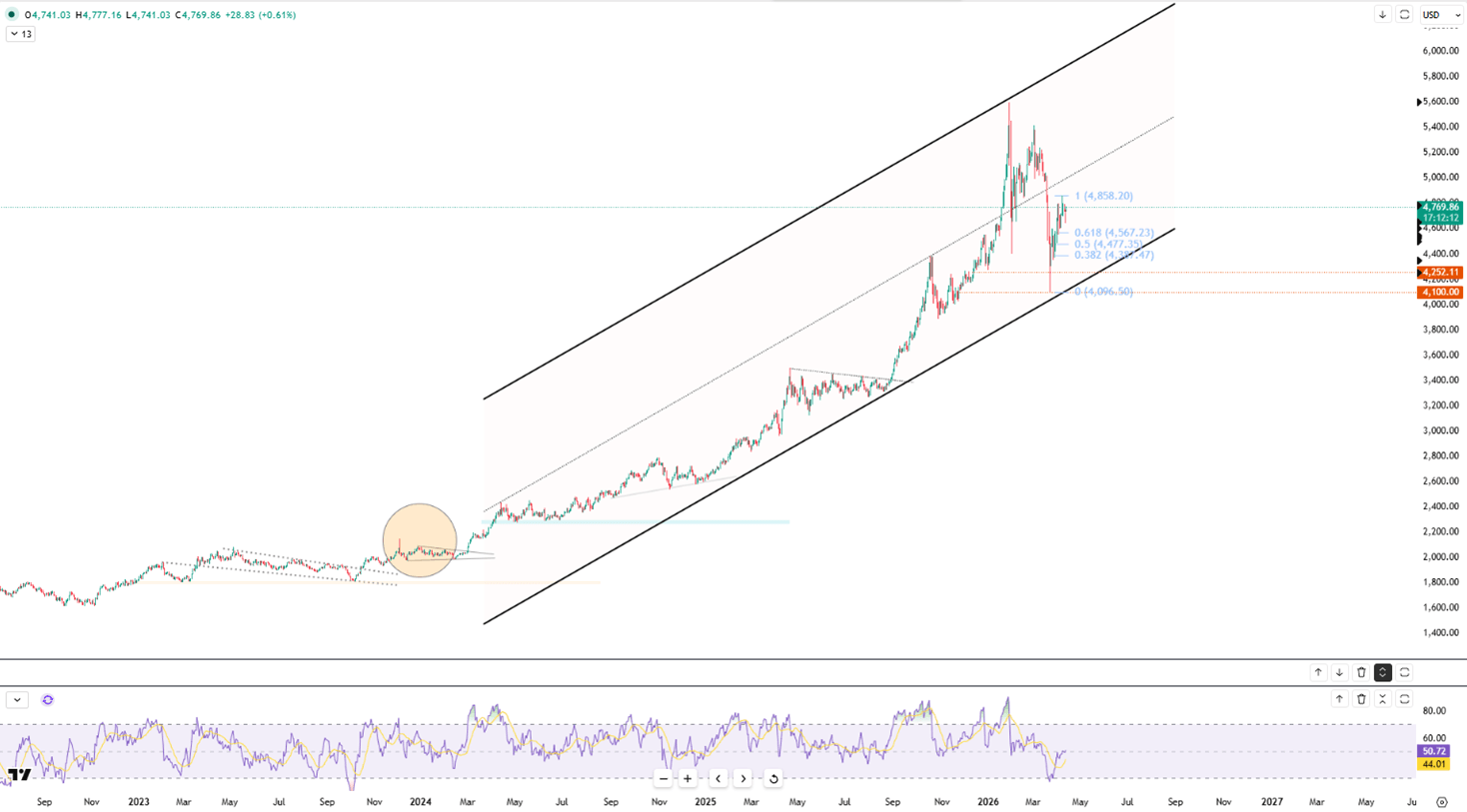
Gold climbed to approximately $4,760 on Tuesday, rebounding as the US and Iran signaled interest in negotiating a long-term ceasefire before their current truce expires. President Trump noted that Iran initiated contact following the US naval blockade of the Strait of Hormuz, while Iranian President Pezeshkian expressed readiness for talks under international law. Easing oil prices further dampened inflation fears, lowering expectations for higher interest rates. Even with this recovery, gold remains roughly 10% below its valuation from the start of the conflict.
First resistance is seen at $4800, with initial support near $4610.
| R1: 4800 | S1: 4610 |
| R2: 4920 | S2: 4500 |
| R3: 5000 | S3: 4420 |
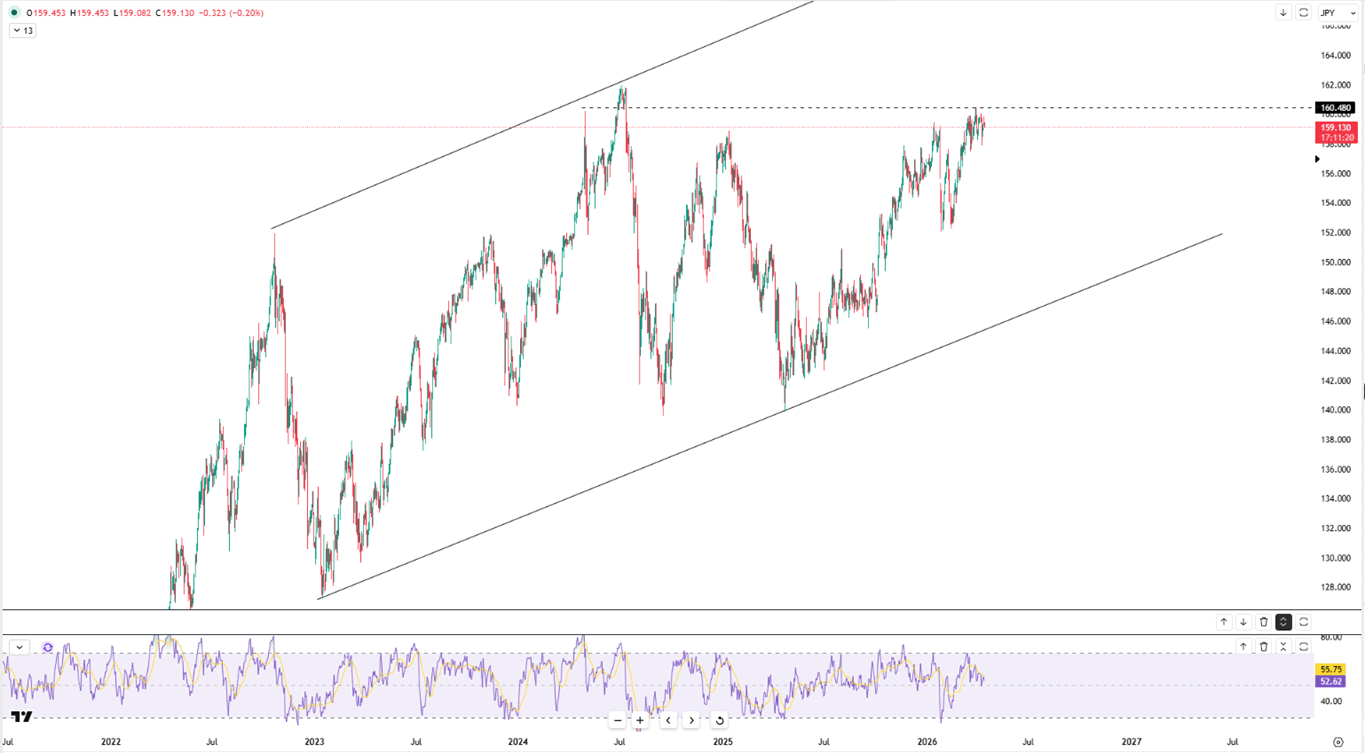
USD/JPY pulled back from the 160.00 level as improving market sentiment dampened demand for the safe-haven US dollar. Optimism regarding a potential resolution to the US–Iran conflict encouraged investors to move away from defensive positions. The yen found support as traders anticipated a Bank of Japan rate hike in April, following the decision to hold rates at 0.75% in March. Market focus now shifts to US Producer Price Index data and upcoming Federal Reserve remarks, both of which are expected to influence interest rate outlooks and drive further volatility.
Initial resistance stands at 160.20, while the first support is located at 159.00.
| R1: 160.20 | S1: 159.00 |
| R2: 160.80 | S2: 158.10 |
| R3: 161.30 | S3: 156.80 |
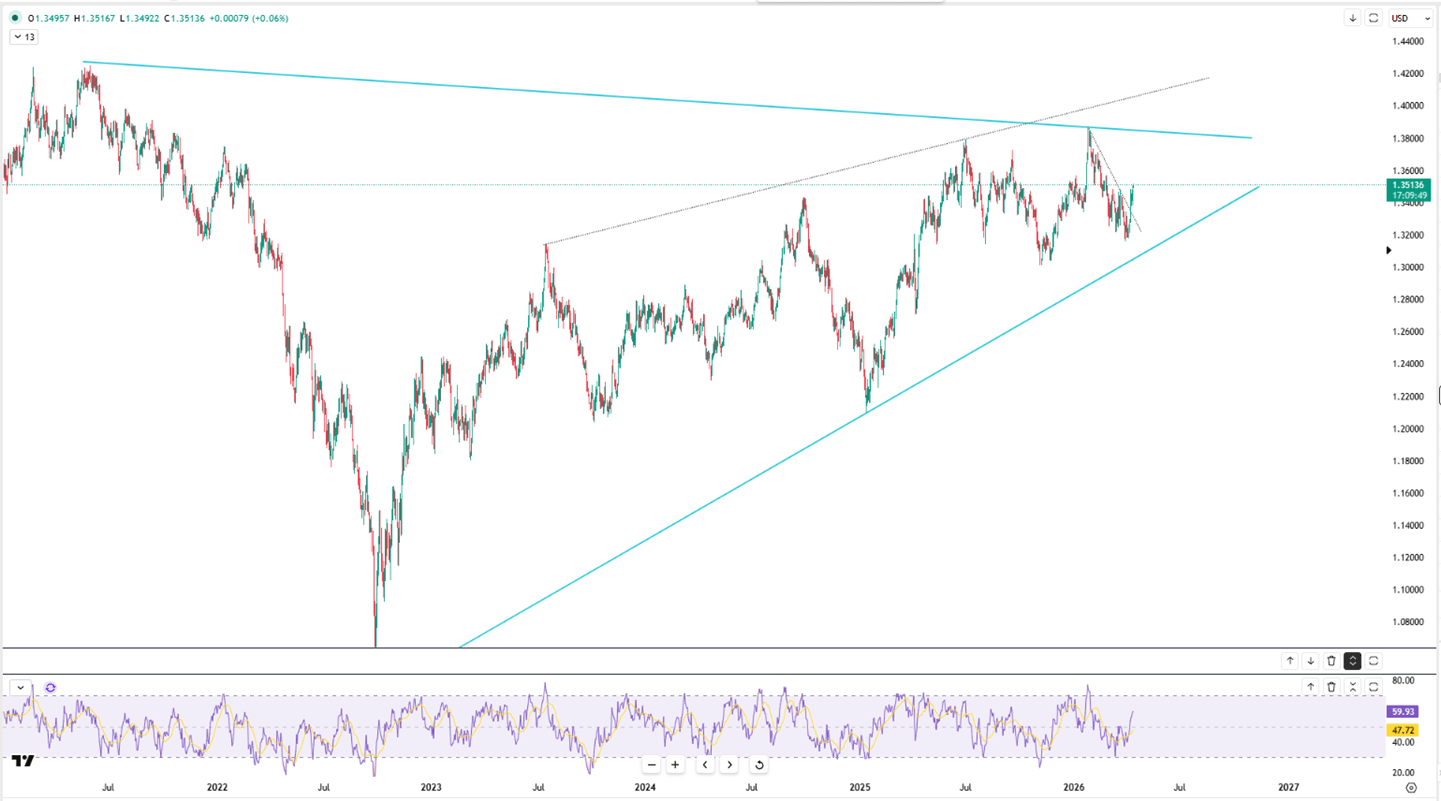
GBP/USD climbed past the 1.3500 threshold, reaching its highest point in seven weeks as the US dollar lost momentum. Although the announcement of a US blockade in the Strait of Hormuz caused a momentary flight to safety, investors quickly returned to riskier assets amid growing optimism for a diplomatic resolution between the US and Iran.
From a technical view, support stands near 1.3510, with resistance around 1.3350.
| R1: 1.3510 | S1: 1.3350 |
| R2: 1.3600 | S2: 1.3280 |
| R3: 1.3650 | S3: 1.3190 |
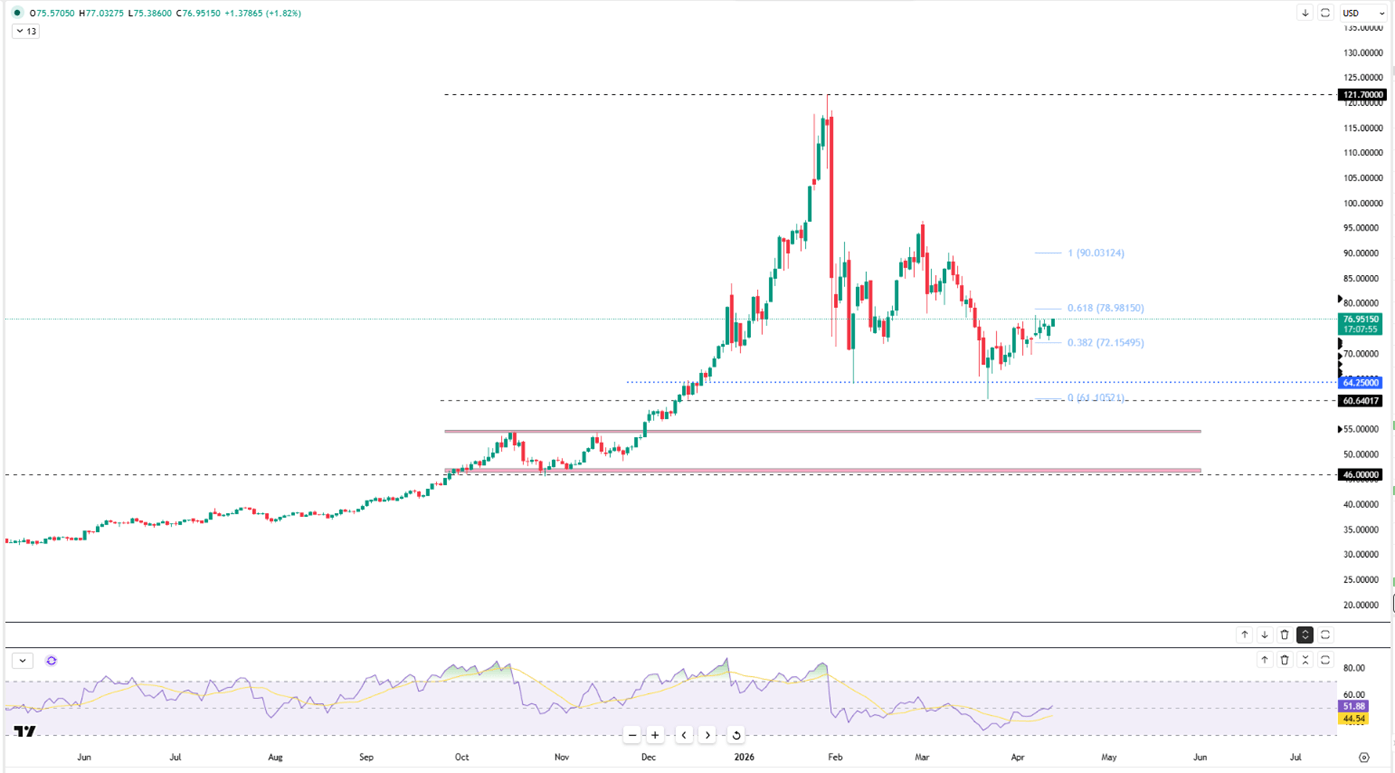
Silver rose toward $76 on Tuesday, recouping recent losses as the US and Iran signaled interest in negotiating a long-term ceasefire before their current truce ends. President Trump stated that Iran initiated contact following the US naval blockade of the Strait of Hormuz, while President Pezeshkian confirmed readiness for talks under international law. Easing oil prices further lowered inflation fears, softening the outlook for restrictive central bank policies and providing extra support for the metal.
From a technical view, resistance stands near $77.70 while support is located around $73.00.
| R1: 77.70 | S1: 73.00 |
| R2: 79.50 | S2: 71.50 |
| R3: 82.00 | S3: 69.00 |
Declining Treasury yields and rising geopolitical tensions supported precious metals as an equity market selloff increased demand for safe-haven assets.
 US Inflation Hits 3.7% as Energy Prices Surge
September’s inflation report reveals new price pressures across the US economy.
Detail Dollar Retreat Supports Metals (10.15.2026)A softer US dollar and declining Treasury yields offered some relief to financial markets as Federal Reserve officials signaled a willingness to pause rate adjustments.
Then Join Our Telegram Channel and Subscribe Our Trading Signals Newsletter for Free!
Join Us On Telegram!


