


Most people think they know money. You earn it, spend it, maybe save some. It feels simple. However, once you start asking what money is, things get a bit less clear.
For thousands of years, different civilizations all ended up using the same thing as money. Egyptians, Romans, and empires across Asia all chose gold. Not because it looked nice, but because it worked.
Then the system changed. Money stopped being tied to something real and became something we’re told to trust. It still works, you can still buy things, but over time, purchasing power has been quietly slipping.
That’s where gold comes in. Not as a trade, but to understand what’s really happening. Because once you understand gold, you start to see money differently.
Most people approach gold the same way they approach stocks or real estate. They ask if it’s a good investment, whether the price will go up, or if now is the right time to buy. That’s where the confusion starts.
Gold doesn’t behave like a typical investment; it doesn’t generate income. There’s no dividend, no rent, no yield. It just sits there, and that’s exactly the point.
Gold is not designed to grow your wealth in the way businesses or assets do. It’s designed to hold it. It acts more like a reference point, something you can measure everything else against. When currencies lose value, gold reflects that. When purchasing power drops, gold makes it visible.
So instead of asking what gold will do next, it’s more useful to ask what your money is doing. Because in many cases, gold isn’t moving as much as it seems. It’s the currency around it that’s changing.
There’s a simple rule that changes how you look at money once you hear it: follow what can’t be printed.
Most of what we deal with today can be created when needed. More currency can be issued, more liquidity can be added, and more credit can be extended. It’s part of how the system works. The side effect is that the value of each unit slowly gets diluted over time.
That’s why scarcity matters.
Gold stands out because it sits outside that system. You can’t create it with a policy decision or a keyboard. It must be mined, refined, and physically brought into circulation. That process takes time, effort, and real cost.
Out of all the elements on earth, why did gold become money in the first place? Obviously, it wasn’t just because it looks good.
Gold has a combination of properties that make it naturally suitable. It doesn’t rust or decay over time. It can be melted, divided, and reshaped without losing its quality. It’s durable, portable, and most importantly, it’s scarce. Every ounce has a process before turning into an economic value.
If you took all the gold ever mined in human history and melted it into one place, it would only fill a few Olympic-sized swimming pools. When you think about that against a world of billions of people and an ever-expanding financial system, the contrast becomes clear. Supply is limited, while claims on value keep growing.
A simple way to understand what that means in real life is to look at purchasing power over time.
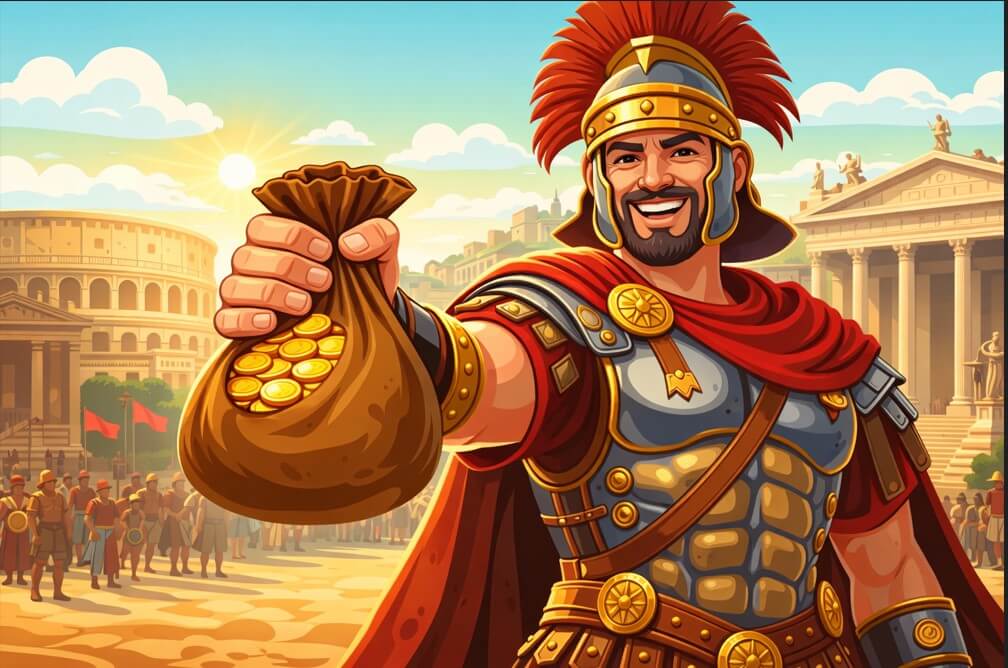
Two thousand years ago, a Roman centurion earned roughly one ounce of gold per month. With that, he could afford a high-quality outfit, something that reflected status and function. Today, if you look at what one ounce of gold buys, it’s not that different. You can still get a well-made suit, a pair of quality shoes, and the basics that go with it.
The point is not that gold became more valuable. It’s that it stayed consistent. What changed was the currency around it. While money systems evolved, expanded, and in many cases lost value over time, gold remained a stable reference point.
Before modern fiat systems, paper money was not really “money” in the way we think of it today. It was a claim.
If you held dollars, you were essentially holding a receipt for gold stored somewhere in the system. You could, at least in theory, exchange that paper for physical gold. The paper itself had value because it represented something real behind it.
This setup was about convertibility. The system worked because there was a clear link between currency and a limited, physical asset.
Over time, paper became more convenient than carrying metal. Transactions became faster, trade expanded, and financial systems grew more complex. But underneath it all, gold remained the anchor.
Key points of the system:
This structure created a different kind of financial environment. Money supply couldn’t expand freely, and that helped keep purchasing power more stable over time.
The system wasn’t perfect, but it imposed a level of discipline that modern systems no longer have.
For a while, the system worked as intended. The dollar was tied to gold, and global currencies were tied to the dollar. That created stability, but it also came with limits.
Over time, those limits started to clash with rising spending, geopolitical pressure, and the need for flexibility. What followed was not a single event, but a gradual shift that changed how money works today.
After World War II, the United States held the largest share of global gold reserves. In 1944, a group of countries came together and built a system around that reality. The dollar was fixed to gold, and other currencies were linked to the dollar.
This created a clear structure. As long as the dollar remained tied to gold, the system had an anchor. Trade expanded, economies grew, and for a period, stability continued. The idea was simple. Keep money connected to something limited, and the system stays disciplined.
By the 1960s, the pressure started to build. The United States was spending heavily on war and domestic programs, while the supply of gold remained the same. More dollars were being created than the system could support.
Other countries noticed. If the number of dollars kept rising, could they all still be backed by gold? Confidence started to weaken. Some countries, most notably France, began asking for their gold instead of holding dollars.
That was the turning point. The system depended on trust, and that trust was starting to crack.
In 1971, the system reached its limit. Facing growing pressure and a potential run on gold reserves, the U.S. made a decisive move.
President Richard Nixon announced that the dollar would no longer be convertible into gold. What was described as a temporary measure became permanent. The link between money and gold was effectively cut.
From that moment on, the system changed. The dollar was no longer tied to a physical asset. It became a currency backed by policy, trust, and government control. That shift still defines how money works today.
Fiat money has value because governments say it does. It’s not tied to gold or any physical asset. Instead, it relies on trust, policy decisions, and the stability of the system behind it.
That flexibility makes it easy to manage, but it also means supply can expand much faster than real value over time.
When that trust weakens, what you hold can quickly lose its meaning.
Inflation is explained as prices going up or a decline in purchasing power. When more money enters the system, each unit becomes slightly less valuable. You may still have the same amount in your account, but what it can buy changes slowly.
The effect is not equal for everyone.
People who hold cash or rely on fixed income tend to lose ground over time. Their money buys less, even if the numbers look the same. On the other hand, those who own assets like real estate, stocks, or gold often benefit, because those assets tend to adjust as prices rise.
This creates a quiet shift in wealth. It moves from savers to borrowers, and from those holding cash to those holding assets. It doesn’t happen overnight, and that’s why it goes unnoticed. Over the years, the impact becomes hard to ignore.
Once you see inflation this way, it stops being just an economic term and starts looking like a structural force shaping who gains and who falls behind.
For years, gold has been dismissed as outdated. You’ve probably heard it described as a “barbarous relic” or something that no longer fits in a modern financial system.
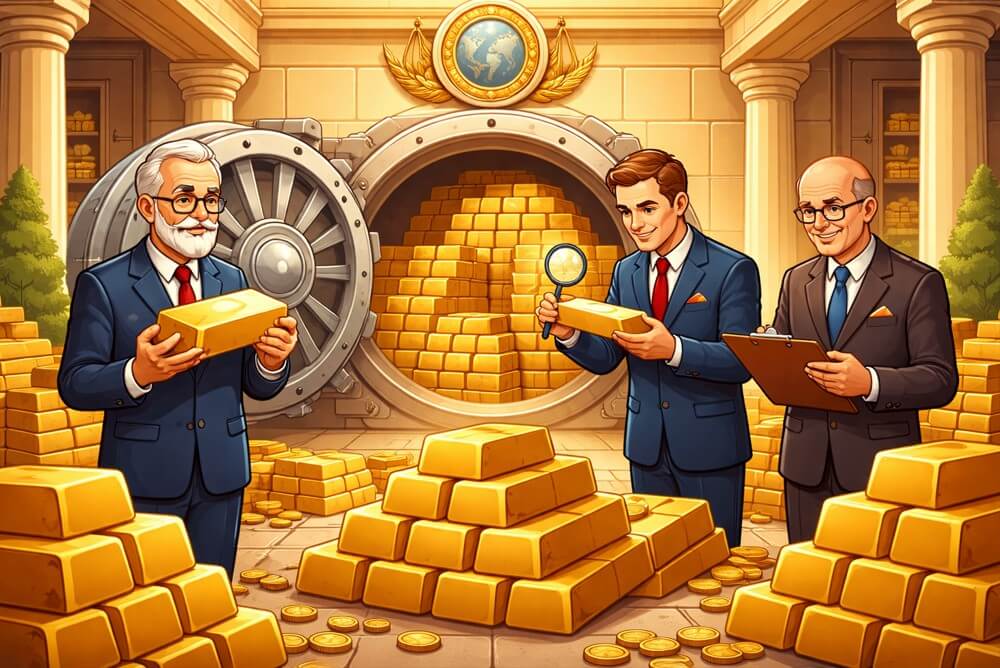
If that were really the case, central banks wouldn’t be buying it.
In recent years, they’ve been adding gold to their reserves at a steady pace at record levels, and it’s not just one or two countries. It’s a broad trend across both emerging and developed economies.
Gold is not tied to another country’s currency. It’s not dependent on policy decisions. It doesn’t carry counterparty risk in the same way financial assets do. When a central bank holds gold, it holds something that isn’t someone else’s liability.
There are also strategic reasons behind this shift. Some countries want to reduce their exposure to the dollar. Others are more aware of how quickly financial assets can be frozen or restricted in a geopolitical conflict.
Gold demand today is not only about inflation or market cycles. It is increasingly tied to how countries think about control, independence, and risk.
One of the key trends behind this shift is de-dollarization. Some countries are gradually reducing their reliance on the U.S. dollar in trade and reserves. This does not mean the dollar is disappearing, but it does mean that alternatives are being explored more seriously than before.
Sanctions have also played a major role. In recent years, large amounts of foreign reserves held in dollars have been frozen or restricted. That changed the way many governments view their own assets. If reserves can be blocked, they are no longer fully under your control.
Gold offers a different profile. It cannot be frozen in the same way, and it does not rely on trust between governments.
That combination is driving a new wave of demand. As financial systems become more political and fragmented, gold is once again being used as a neutral form of reserve.
Sign up in seconds for free, access your platform, and start trading with ease.

 How Index Futures Influence the Stock Market Open
How do index futures influence the stock market open? Learn what pre-market moves reveal about opening prices, market sentiment, and trader psychology.
Detail What Is the Nasdaq?
What is the Nasdaq? Learn how the Nasdaq Composite Index works, which stocks it includes, and what influences its performance.
Detail What Is the FTSE 100?
The FTSE 100 tracks the largest companies listed on the London Stock Exchange. Explore how it is calculated and what influences its performance.
DetailThen Join Our Telegram Channel and Subscribe Our Trading Signals Newsletter for Free!
Join Us On Telegram!


