


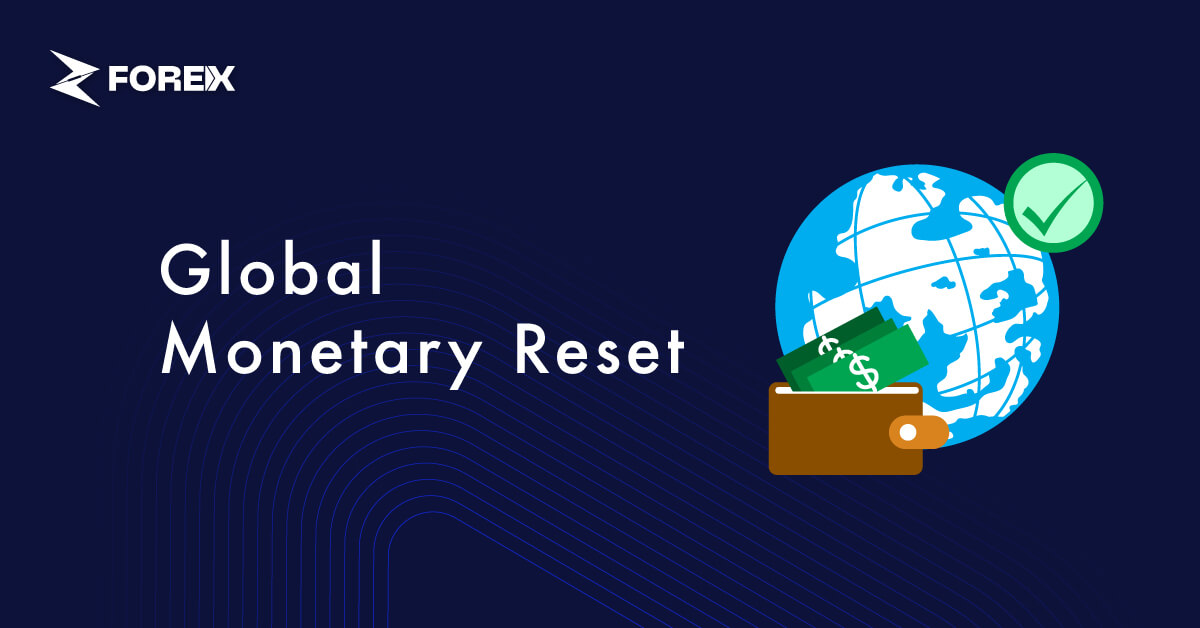
The US Treasury Secretary Scott Bessent made a statement in April 2026 that deserves more attention than it received. He stated that we are in the middle of a “Bretton Woods realignment.” It may sound technical at first, but the message is quite direct.
The global monetary system is going through a shift. US debt is approaching $40 trillion, and gold is trading near record levels. The dollar’s share in global reserves has been trending lower for years, and more countries are exploring alternatives to dollar-based trade.
These developments point to a system that is being adjusted from the inside. The last time the rules of money changed at this scale, the outcomes were very different.
Those who understood what was happening early were able to benefit, while those who stayed with old assumptions faced losses over time.
The transition is already underway. Monetary policies have been evolving quietly over the past decade, and recent developments are making that change more visible.
Today’s system runs on trust and flexibility. Governments can expand spending; central banks can support markets, and liquidity can be added when needed. This has helped sustain growth, but it also comes with long-term side effects such as rising debt and persistent inflation.
What we are seeing now is a transition phase. Policymakers are adjusting the structure while the system is still functioning. For investors, this matters more than the idea of a sudden reset. The rules are being reshaped in real time, and positioning for that shift becomes more important than trying to predict a single turning point.
The reset is unlikely to come as a single event or announcement. It is more likely to unfold through a series of coordinated policy shifts that reshape how the system operates over time.
At the center of it is a move toward rebalancing. Decision makers are looking at currency strength, trade dynamics, financial regulation, and global coordination all at once. The goal is to make the system more sustainable under current pressures, even if that means changing some of the long-standing rules.
This kind of transition usually feels gradual at first. Adjustments in currencies, trade flows, and capital allocation begin to show up before the full picture becomes clear. By the time the shift is widely recognized, markets have often already started to reprice.
One of the clearest directions in this shift is a weaker dollar. A strong dollar makes exports expensive and weakens global competitiveness.
Policymakers appear to be leaning toward a different balance. A weaker dollar can support domestic production and improve trade positioning.
This would not happen fast. It would likely come through tariffs, trade policy, and gradual pressure on currency levels.
What could this mean:
The second move focuses on making the financial system more flexible. After 2008, banks operated under tighter regulations. Now the direction appears to be shifting toward easier lending and fewer constraints.
The idea is simple. More accessible credit can support growth, investment, and economic activity. Policymakers also want to bring digital assets and blockchain infrastructure closer to the traditional financial system to improve efficiency.
This comes with a clear trade-off. When lending becomes easier and regulation is lighter, risk tends to build inside the system. That risk may not be visible at first, but it usually shows up later in the cycle.
Practically means that:
The third move focuses on rebuilding domestic production. The goal is to reduce reliance on external supply chains and bring manufacturing closer to home.
This is where tariffs and trade policies come into play. By making imported goods more expensive, goverments aim to shift demand toward locally produced alternatives. Energy production and infrastructure are being positioned as key drivers of this transition.
The framework often referenced here is simple: stronger growth, controlled deficits, and higher energy output. It points to a broader attempt to realign the real economy alongside the financial system.
That means:
The reset is not limited to the US. Other economies are also adjusting their position within the global system, and in many cases, moving faster than expected.
One of the clearest trends is the gradual move away from the dollar in international trade. More countries are settling transactions in local currencies and building alternative payment systems to reduce reliance on traditional channels.
Central banks also continue to increase their gold reserves. This reflects a broader effort to diversify and strengthen financial positions in a more uncertain and fragmented environment.
There are basically two ways this transition could play out. It might be a slow, steady move where we have time to adapt and make small fixes as we go. On the other hand, it could pick up speed very quickly if the pressure from global trade, debt, and currency values start to pile up all at once.
In the real world, things usually land somewhere in the middle. However, looking at both extremes is the best way to understand the risks we are facing.
If the system evolves gradually, we see a step-by-step change. The dollar weakens slowly, production shifts take their time, and the markets adjust without any major heart attacks. You will still see some volatility, but it generally stays contained within a steady climb.
In this case, it may make sense to focus on steady positioning rather than trying to react to every short-term move.
If the pressure builds up too quickly, the whole process can accelerate. Currency shifts get sharper, inflation jumps, and markets start to react much more aggressively.
In a scenario like this, prices reset very fast, and anyone who didn’t get into position early might struggle to catch up. Here, it becomes much more important to focus on protection and flexibility rather than chasing after every new opportunity.
Periods like this tend to expose weak positioning more than bad timing. The system is shifting, and many investors continue to follow habits that worked in a different environment. Understanding where the risks sit can be more valuable than trying to predict the exact outcome.
Holding cash may feel safe, especially during uncertainty. Over time, inflation and currency shifts can quietly reduce its real value, turning safety into slow loss.
Keeping a portion of liquidity makes sense, but sitting fully in cash for long periods can limit your ability to adapt as assets reprice. Even a simple allocation shift can make a meaningful difference over time.
Keeping most assets tied to a single currency increases vulnerability. Even diversified portfolios can carry hidden exposure, especially when revenues and risks are globally connected.
Reviewing where your investments generate income from can reveal a more accurate picture. In many cases, exposure is broader than it appears, but relying on one currency still adds unnecessary risk.
Trying to perfectly time a macro shift rarely works in practice. Markets often move before expectations are fully priced in, leaving late reactions behind.
A more practical approach is to build positions gradually and stay flexible. This reduces the pressure to “get it right” at one specific moment while still allowing participation in the broader trend.
As the system adjusts, capital tends to move toward areas that can hold value or benefit from structural changes. This does not happen overnight, but early signals often appear in a few key asset groups.
Gold continues to stand out as a form of protection rather than a growth trade. Central banks are increasing their holdings, and this steady demand reflects its role as a reserve asset during uncertain periods.
On the equity side, sectors tied to the real economy may gain attention. Manufacturing, energy, and companies involved in domestic production can benefit if reshoring policies continue to develop.
Digital assets are also part of the conversation, but the focus is shifting. Institutional interest is leaning more toward blockchain infrastructure and controlled integration, rather than the speculative side of the market.
Sign up in seconds for free, access your platform, and start trading with ease.

 How Index Futures Influence the Stock Market Open
How do index futures influence the stock market open? Learn what pre-market moves reveal about opening prices, market sentiment, and trader psychology.
Detail What Is the Nasdaq?
What is the Nasdaq? Learn how the Nasdaq Composite Index works, which stocks it includes, and what influences its performance.
Detail What Is the FTSE 100?
The FTSE 100 tracks the largest companies listed on the London Stock Exchange. Explore how it is calculated and what influences its performance.
DetailThen Join Our Telegram Channel and Subscribe Our Trading Signals Newsletter for Free!
Join Us On Telegram!


