


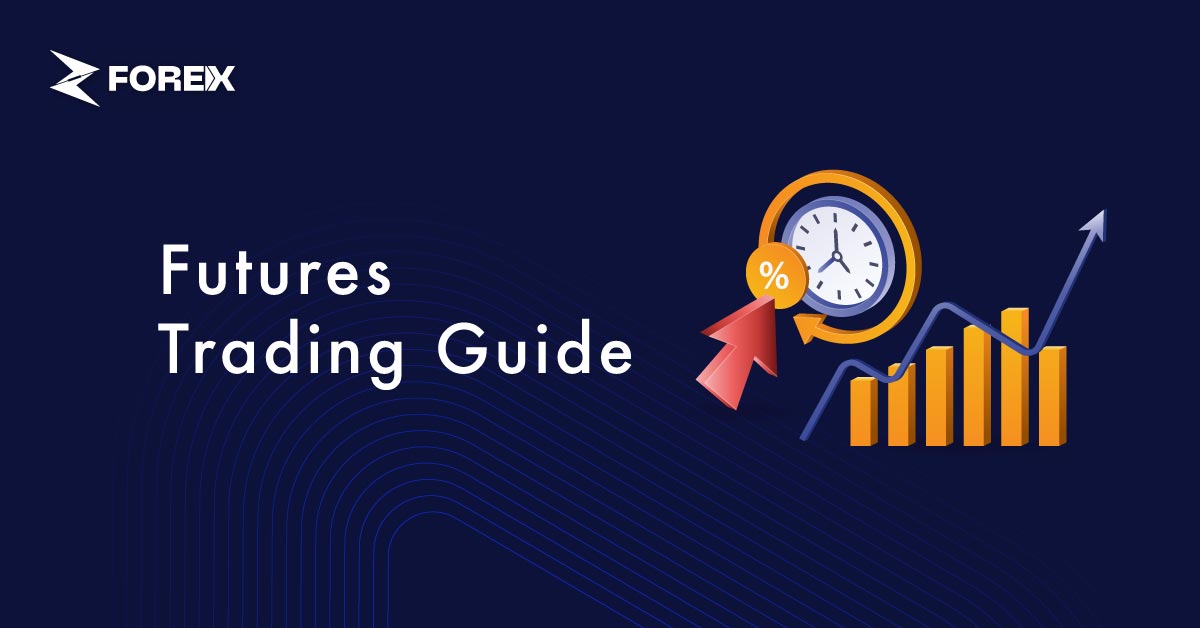
Futures are traded every single day all over the world. People use them to trade everything from oil and gold to major stock indexes, foreign currencies, bonds, and even crypto. But trading them is completely different from just buying an asset on the spot at today's regular market price.
A futures contract operates with its own specific set of conditions. It comes tied to a fixed contract size, an expiration date, a minimum price move value, margin rules, and a final settlement method.
Futures are just standard contracts that live on financial exchanges. They are binding agreements where you commit to buy or sell a specific asset at a locked-in price on a set date down the road. These contracts detail the exact size of the trade, when it expires, how much a tiny price tick is worth, and how the deal wraps up at the end.
A futures contract always requires two matching sides. Let us say a trader buys a crude oil futures contract at $75.00. A single crude oil contract binds you to exactly 1,000 barrels.
If the market price ticks up to $76.00, that is a $1.00 move per barrel. That means the trader makes a quick $1,000 profit before taking fees into account. But the math cuts both ways. If oil drops from $75.00 down to $74.00, that same trader instantly loses $1,000.
Futures exist because prices are always moving. For example, a farmer may want to lock in a price before selling crops. An airline may want to manage fuel costs. A fund manager may want to protect a stock portfolio before an important market event.
This is the main idea behind these instruments. They help market participants manage future price risk.
But futures are also used by traders. A trader may not want to buy real oil, gold, or wheat. They may only want to trade the price movement. Futures make this possible through a standardized contract.
So, futures have two main uses. They can help reduce risk. They can also create trading opportunities.
In futures markets, you trade the contract that follows its price. This could be gold, crude oil, Nasdaq, EUR futures, or another instrument. Then the trader checks the contract details. These details show how much one contract is worth, how much each price move means, and when the contract expires.
After that, the trader decides on direction. If they expect the price to rise, they buy the futures contract. If they expect the price to fall, they sell the futures contract.
The trade can be closed before expiry. Most short-term traders do this. They open a position, manage the risk, and close the trade when their plan is complete.
Going long means buying a contract. A trader takes a long position when they feel pretty sure the market is headed up.
For instance, they might grab some gold futures if they think gold is about to catch a bid and climb.
If the price takes off after getting in, the trader is making money. If it rolls over and drops, they are in the red.
The important point is simple. A long futures trade benefits from rising prices.
Going short is just a trader's way of saying they are selling a contract first.
A trader takes a short position when they feel pretty confident the market is on its way down. For instance, you might short some Nasdaq futures if you think the tech index is about to slide.
If the price drops after you get in, your trade moves straight into the green.
Before trading any futures product, you need to check the contract specifications. These are the basic rules of the contract.
They show what you are trading. They also show how much risk one contract can carry.
A contract may look simple on the chart. But the details behind it are important. One contract can represent barrels of oil, ounces of gold, bushels of wheat, or a stock index value.
Here are the main details to check:
|
Contract Detail |
What It Means |
|---|---|
| Underlying asset | The market the contract follows |
| Contract size | How much exposure one contract gives |
| Tick size | The smallest price movement |
| Tick value | The value of one tick |
| Expiry date | When the contract ends |
| Settlement type | How the contract is settled |
| Margin requirement | The capital needed to open and hold the trade |
| Trading hours | When the contract can be traded |
These details help traders understand the real size of the position. They also help traders calculate risk before entering the market.
For beginners, contract size and tick value are the most important parts.
Contract size shows how much of the asset one futures contract represents.
Two markets can move by the same amount, but the result may be very different. It depends on the contract size.
For example, one crude oil futures contract may represent 1,000 barrels. If oil moves by $1, the contract value changes by $1,000.
This is why beginners should not look at price movement alone. A small move on the chart can create a large profit or loss in the account.
Tick size is the smallest price move a futures contract can make.
Tick value is the money value of that move.
These two details help traders understand how much they can gain or lose when the price moves. They are also useful when setting a stop-loss or target.
For example, a market may move by only a few ticks. That may look small on the chart. But if the tick value is high, the money impact can still be large.
Let’s say one futures contract has a tick value of $12.50.
If the market moves 8 ticks in your favor, the trade gains $100.
If the market moves 8 ticks against you, the trade loses $100.
The basic calculation is simple:
Tick value × number of ticks × number of contracts
|
Contracts |
Tick Value |
Market Move |
Result |
|---|---|---|---|
| 1 contract | $12.50 | 8 ticks | $100 |
| 2 contracts | $12.50 | 8 ticks | $200 |
| 5 contracts | $12.50 | 8 ticks | $500 |
The more contracts you trade, the faster the result changes. This is useful when the trade works. It is also dangerous when the market moves against you.
Futures positions don't just sit there; they get updated at the end of every single trading day. The market calls this daily routine the mark-to-market process.
If the market moves your way, the cash winnings get dropped straight into your balance that evening. But if the trade goes south against you, the losses get pulled right out of your account before the next opening bell.
This can happen while the trade is still open. You do not need to close the position for the daily profit or loss to affect your balance.
For beginners, this is an important point. Futures trading is not only about the final exit price. Daily price changes can also affect your margin level and account balance.
Futures contracts do not stay open forever. Each contract has an expiry date.
This is the date when the contract ends. Before that date, a trader usually needs to decide what to do with the position.
Most traders do not wait until final settlement. They close the trade before expiry or move into a later contract.
This move is called rollover. It means closing the current contract and opening a new one with a later expiry date.
For example, a trader may close the September oil contract and open the December oil contract. The trader still follows the same market but now uses a newer contract.
Rollover is important because each contract month can be traded at a different price. Beginners should always check the expiry date before opening a futures trade.
A futures quote shows the basic market information for a contract. It helps traders understand the current price, trading activity, and contract details.
At first, futures quotes may look confusing. But most of the fields are simple once you know what they mean.
|
Quote Item |
What It Means |
|---|---|
| Symbol | The code of the futures contract |
| Last price | The most recent traded price |
| Bid | The highest price buyers are offering |
| Ask | The lowest price sellers are asking |
| Volume | How many contracts were traded |
| Open interest | How many contracts are still open |
| Expiry month | The month when the contract ends |
| Daily change | How much the price moved during the session |
Futures contracts often use short codes. These codes show the product, expiry month, and year.
For example, ESZ6 can mean an E-mini S&P 500 futures contract for December 2026.
In this example:
|
Code Part |
Meaning |
|---|---|
| ES | E-mini S&P 500 futures |
| Z | December |
| 6 | Year 2026 |
Month codes are common in futures trading. So, beginners should always check the full contract name before opening a trade. This helps avoid trading the wrong expiry month.
Futures and spot trading both follow market prices. But they do not work in the same way.
In spot trading, you trade the current market price. The trade is based on the price available now.
In futures trading, you trade a contract for a future date. The contract has fixed rules, such as expiry, contract size, and settlement method.
|
Feature |
Futures Trading |
Spot Trading |
|---|---|---|
| Price basis | Future contract price | Current market price |
| Expiry date | Yes | Usually no fixed expiry |
| Contract size | Standardized | More flexible |
| Margin | Commonly used | Depends on the product |
| Settlement | Cash or physical settlement | Usually immediate or near-immediate |
| Main use | Hedging and speculation | Direct price exposure |
A simple way to think about it is this: spot trading focuses on the price now. Futures trading focuses on a contract linked to a later date.
This is why futures need more attention before trading. The price chart is only one part of the trade. The contract details also matter.
Futures and options are both derivative products. This means their value comes from another market, such as gold, oil, an index, or a currency.
But there is one main difference. A futures contract creates an obligation to buy or sell based on the contract rules. An option gives the buyer the right to buy or sell, but not the obligation.
Options are more flexible for the buyer. But futures are often more direct. If the market moves up or down, the futures position reacts clearly to that price movement.
|
Feature |
Futures |
Options |
|---|---|---|
| Obligation | Yes | Only for the seller |
| Buyer’s right | No choice after entering | Right, but not obligation |
| Upfront cost | Margin requirement | Option premium |
| Expiry date | Yes | Yes |
| Price movement | Direct exposure | Depends on price, time, and volatility |
| Common use | Hedging and speculation | Hedging, speculation, and strategy building |
For beginners, the simple idea is this: futures are more direct, while options give more choice to the buyer.
Are futures good for beginner traders?
Futures can be difficult for beginners. They should first learn how the contract works before placing a real trade.
Can I lose more than my margin in futures trading?
Yes. Margin is not your maximum risk. It is only the amount needed to open or hold the position. If the market moves against you, losses can be larger than the margin used.
Do futures traders own the real asset?
Most traders do not own the real asset. They trade the price movement of the contract. Many positions are closed before expiry.
What happens if I hold a futures contract until expiry?
It depends on the contract. Some contracts are cash settled. Others may involve physical delivery. Beginners should always close or roll the position before expiry unless they fully understand the settlement rules.
Why do futures prices differ from spot prices?
Futures prices reflect more than the current market price. They can include interest rates, storage costs, dividends, supply expectations, and time until expiry.
What does rolling a futures contract mean?
Rolling means closing the current contract and opening a later expiry contract. Traders do this when they want to stay in the same market after the current contract is near expiry.
Is futures trading only for commodities?
No. Futures are used in many markets. These include indices, currencies, bonds, interest rates, metals, energy, agriculture, and crypto.
Sign up in seconds for free, access your platform, and start trading with ease.

 How Index Futures Influence the Stock Market Open
How do index futures influence the stock market open? Learn what pre-market moves reveal about opening prices, market sentiment, and trader psychology.
Detail What Is the Nasdaq?
What is the Nasdaq? Learn how the Nasdaq Composite Index works, which stocks it includes, and what influences its performance.
Detail What Is the FTSE 100?
The FTSE 100 tracks the largest companies listed on the London Stock Exchange. Explore how it is calculated and what influences its performance.
DetailThen Join Our Telegram Channel and Subscribe Our Trading Signals Newsletter for Free!
Join Us On Telegram!


