


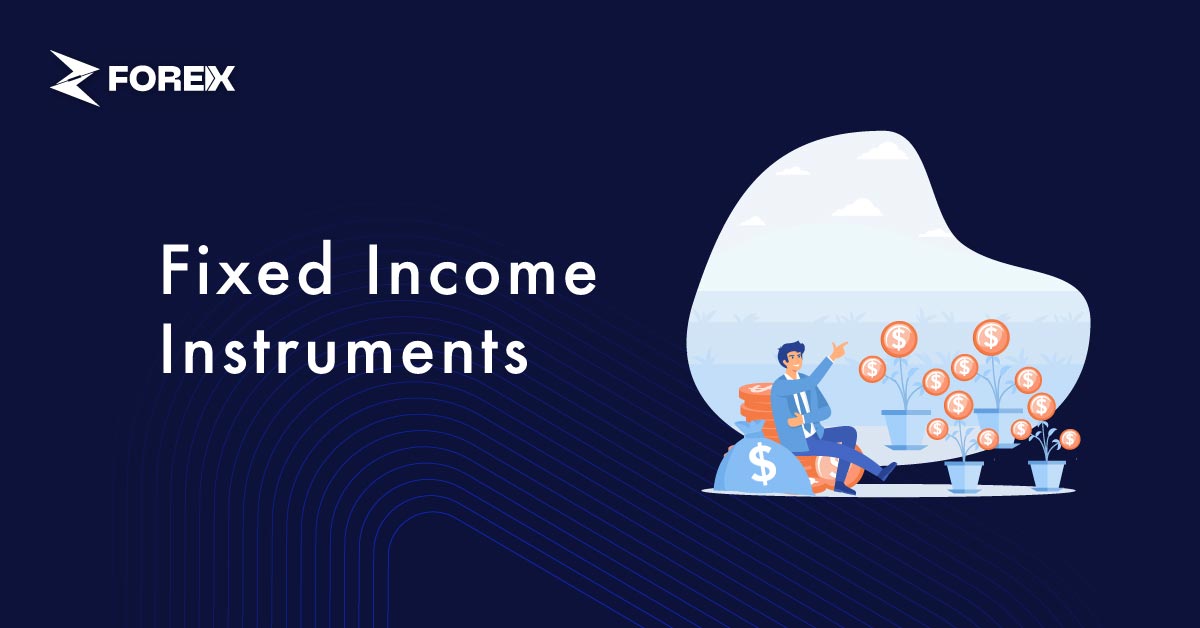
Not every investment is about buying an asset and waiting for its price to rise. Fixed income works differently. Instead of buying ownership, you lend money to a government, company, or financial institution in exchange for regular interest payments and the return of your principal at maturity.
Fixed income is a broad group of investments built around debt. Instead of buying part of a company, the investor lends money to a government, business, bank, or another institution. The borrower agrees to repay the money under set terms.
The return may come from regular interest payments, a discount between the purchase price and repayment value, or both. The payment structure is usually known in advance, although the market value of the investment can still change.
The term “fixed income” refers to the agreed payment rules. For example, a bond may pay a set interest rate every six months and return the original amount at maturity.
However, the income is not always completely fixed. Some products use floating interest rates that change with market conditions. Others, such as Treasury bills and zero-coupon bonds, make no regular interest payments. They are usually bought below their repayment value.
Fixed income also does not mean the investment price is fixed or the return is guaranteed. Prices can move when interest rates, inflation expectations, or the issuer’s financial condition change.
Bonds are the best-known type of fixed income investment, but the two terms are not the same. A bond is one specific debt instrument issued by a government, company, or other organization.
The wider fixed income category also includes Treasury bills, corporate notes, certificates of deposit, money market instruments, and inflation-linked securities. Bond funds and exchange-traded funds can also provide fixed income exposure by holding a portfolio of these products.
Fixed income investing is based on a simple lending arrangement. A government, company, or financial institution needs funding, so it borrows money from investors under agreed terms.
The process works like this:
Some instruments pay regular interest. Others are sold below their repayment value and generate a return when they mature.
What Happens at Maturity?
Maturity is the date when the investment term ends. For most individual bonds, the issuer repays the face value on this date and the agreement is completed.
However, some bonds can be repaid early by the issuer. Bond funds have no fixed maturity date because they continuously buy and replace securities.
Before comparing fixed income products, investors should understand a few basic terms:
Fixed income products differ by issuer, maturity, payment structure, and risk level. Some are designed for short-term cash management, while others may support long-term income or portfolio diversification.
|
Fixed income product |
Issuer or provider |
How returns are generated |
Common purpose |
Main risk |
|---|---|---|---|---|
| Government bonds | National governments | Interest payments and principal repayment | Income and capital preservation | Interest rate and inflation risk |
| Treasury bills | Governments | Bought below face value and repaid at full value | Short-term cash management | Reinvestment and inflation risk |
| Corporate bonds | Companies | Interest payments and principal repayment | Higher income potential | Credit and default risk |
| Municipal bonds | Local governments or public authorities | Interest payments and principal repayment | Income and public project financing | Credit and liquidity risk |
| Inflation-linked bonds | Governments or institutions | Payments adjust according to inflation | Protecting purchasing power | Market price and real interest rate risk |
| Floating-rate notes | Governments, banks, or companies | Interest rate resets periodically | Reducing exposure to rising rates | Credit risk and lower income when rates fall |
| Zero-coupon bonds | Governments or companies | Bought below face value and repaid at maturity | Saving for a future lump-sum expense | Interest rate and inflation risk |
| Certificates of deposit | Banks | Fixed interest paid over an agreed period | Short-term saving | Early withdrawal and inflation risk |
| Money market instruments | Governments, banks, or companies | Short-term interest or discount income | Liquidity and cash management | Credit and reinvestment risk |
| Bond funds and ETFs | Investment fund providers | Income and price changes from a bond portfolio | Diversification and easier market access | Market price and duration risk |
Investors can earn returns from fixed income in several ways:
The coupon rate alone does not show the investor’s full return. Purchase price, holding period, fees, taxes, and market conditions can all change the result.
The coupon rate is the interest rate applied to the instrument’s face value. Yield shows the return based on the price the investor pays.
For example, a bond with a $10,000 face value and an 8% coupon pays $800 per year. If the bond is purchased for $9,500, the investor still receives $800, so the yield is higher than 8%. If it is purchased for $10,500, the yield is lower.
Duration estimates how sensitive a bond or bond fund is to changes in interest rates. A higher duration means the price may move more when market rates change.
For example, a bond fund with a duration of five years may fall by roughly 5% if interest rates rise by one percentage point. If rates fall by the same amount, the fund may rise by around 5%. The actual result can differ.
Duration is different from maturity. Maturity shows when the principal is due to be repaid. But duration focuses on price sensitivity.
Fixed income products range from lower-risk government debt to high-yield and distressed bonds. In general, higher returns come with higher credit, market, or liquidity risk.
|
Fixed income category |
Income potential |
Price sensitivity |
Credit risk |
|---|---|---|---|
| Short-term government debt | Lower | Lower | Lower |
| Investment-grade corporate bonds | Moderate | Low to high | Moderate |
| Long-term government bonds | Moderate | Higher | Lower |
| Inflation-linked bonds | Moderate | Moderate | Lower |
| High-yield corporate bonds | Higher | Moderate | Higher |
| Emerging-market debt | Higher | Moderate to high | Higher |
| Distressed debt | Very high | Very high | Very high |
A high yield should not be viewed as free income. It means investors are being compensated for taking more risk.
Fixed income can add stability and regular income to a portfolio, but its benefits depend on the product, issuer, and market conditions. These instruments should not be treated as completely safe.
|
Advantages |
Disadvantages |
|---|---|
| Can provide regular interest income | Returns may be lower than equities over time |
| May reduce overall portfolio volatility | Inflation can reduce the real value of payments |
| Offers different maturity options | Prices may fall when interest rates rise |
| Can support planned future expenses | The issuer may fail to make payments |
| Has priority over shareholders if an issuer fails | Some instruments can be difficult to sell |
| Can diversify an equity-heavy portfolio | Higher-yield products carry higher risk |
| Some products offer inflation protection | Foreign bonds may add currency risk |
Beginners do not need a complex bond portfolio. The best approach is to invest with a clear goal and risk level.
The investor buys an individual bond and keeps it until the issuer repays the principal. This can make cash flows easier to plan, but the issuer’s credit quality still matters.
A bond ladder spreads money across several maturity dates. For example, an investor may hold bonds that mature in one, two, three, four, and five years.
As each bond matures, the money can be used or reinvested. This reduces the need to invest the full amount at a single interest rate.
This strategy connects the maturity date with a planned expense. An investor saving for a payment due in three years may choose a bond that matures near that date.
A diversified bond fund or ETF can provide exposure to many issuers and maturities through one investment. It may be easier for beginners, but the fund has no guaranteed repayment value on a set date.
Short-duration bonds are less sensitive to interest rate changes. They may suit investors who want lower price volatility or expect to use the money relatively soon.
A barbell combines short-term and long-term bonds while holding less in the middle. The short-term side provides flexibility, while the long-term side may offer higher income.
No strategy removes all risk. Investors should still review credit quality, duration, liquidity, fees, and currency exposure.
Can fixed income investments lose money?
Yes. Losses may come from issuer default, falling market prices, inflation, currency movements, or selling before maturity.
What happens if I sell a bond before maturity?
The bond is sold at its current market price. This price may be above or below the amount originally paid.
Is the fixed income product with the highest yield the best choice?
Not necessarily. A higher yield reflects higher credit, liquidity, currency, or interest rate risk.
How does inflation affect fixed income returns?
Inflation reduces the purchasing power of interest payments and principal. An investment can earn a positive return but still lose value in real terms.
Sign up in seconds for free, access your platform, and start trading with ease.

 How Index Futures Influence the Stock Market Open
How do index futures influence the stock market open? Learn what pre-market moves reveal about opening prices, market sentiment, and trader psychology.
Detail What Is the Nasdaq?
What is the Nasdaq? Learn how the Nasdaq Composite Index works, which stocks it includes, and what influences its performance.
Detail What Is the FTSE 100?
The FTSE 100 tracks the largest companies listed on the London Stock Exchange. Explore how it is calculated and what influences its performance.
DetailThen Join Our Telegram Channel and Subscribe Our Trading Signals Newsletter for Free!
Join Us On Telegram!


