


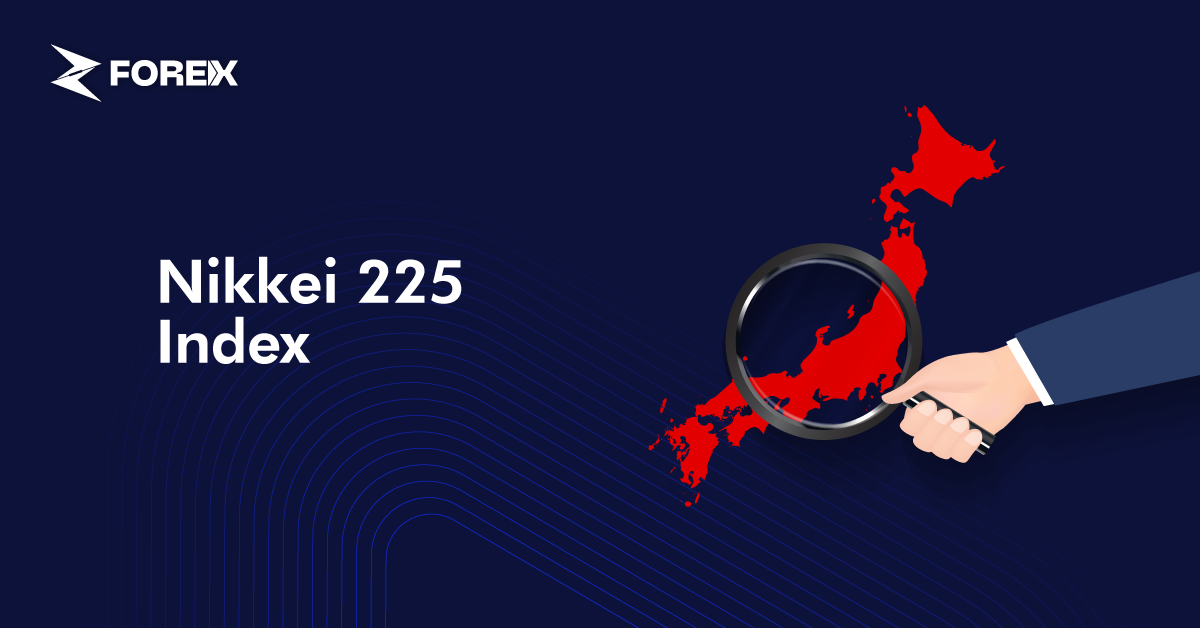
Japan’s stock market is much bigger than 225 companies, but the Nikkei 225 is the number most often used to follow its biggest moves. The index brings together major Tokyo-listed companies from technology, automobiles, industrials, consumer goods and healthcare.
The index includes many globally recognized Japanese companies, so its performance is influenced by more than domestic conditions. Currency movements, global trade and demand from major economies can all affect the businesses inside it.
The Nikkei 225 does not represent the entire Japanese stock market, however. It follows a selected group of large and actively traded companies. On trading platforms, products linked to the index may also appear under names such as Japan 225 or JP225.
Unlike many major stock indices, the Nikkei is price weighted rather than market-cap weighted, giving higher-priced shares more influence over its movements.
This means a company with a higher share price can have more influence on the index, even if another company has a much larger total market value.
In simple terms:
Higher share price → greater index weight → greater influence on the Nikkei 225
This structure can give certain high-priced stocks a surprisingly large effect on daily moves. Adjustments are made for stock splits and other corporate actions so that these events do not artificially change the index.
The list of constituents is also reviewed regularly, allowing the Nikkei to change as Japan’s corporate landscape develops.
The Nikkei brings together companies from many of Japan’s best-known industries. Toyota represents the country’s major automotive sector, while Sony and Nintendo add exposure to electronics and entertainment. Tokyo Electron is closely connected to the semiconductor industry, while Fast Retailing, the owner of Uniqlo, represents consumer and retail businesses.
The mix extends across several areas:
Company size alone does not determine which stocks matter most to the Nikkei. Because the index is price-weighted, a high-priced stock can have a greater impact than a much larger company with a lower share price.
Both indices are used to follow Japanese equities, but they are built very differently.
|
Nikkei 225 |
TOPIX |
|
|---|---|---|
| Main focus | Selected major Japanese companies | Broader Japanese equity market |
| Number of companies | 225 | Much broader coverage |
| Weighting | Price weighted | Market-cap weighted |
| Greater influence goes to | Higher-priced shares | Larger companies |
The difference in weighting is especially important. Toyota may be one of Japan’s largest companies by market value, but that does not automatically make it the most influential stock in the Nikkei. Higher-priced constituents can carry more weight despite having smaller market capitalizations.
This also explains why the Nikkei 225 and TOPIX can perform differently on the same day. A strong move in a handful of high-priced Nikkei constituents can lift the index even when the broader Japanese equity market is moving more modestly.
The yen has a strong connection to the Nikkei because many of Japan’s largest companies earn a significant share of their revenue overseas. Currency movements can change the value of those foreign earnings when they are converted back into yen.
A weaker yen can make overseas revenue worth more in local currency and can also make Japanese exports more competitive. A stronger yen can have the opposite effect, creating pressure for companies with large international businesses.
The relationship is especially relevant for industries such as automobiles, electronics and machinery. Still, a weaker yen does not automatically mean a higher Nikkei. Currency moves often reflect changes in interest rates, economic conditions and monetary policy, which can affect different sectors in different ways.
The Nikkei may be a Japanese index, but many of its companies depend heavily on demand outside Japan. Automakers sell vehicles worldwide, semiconductor companies serve the global technology industry, and machinery producers supply businesses across major economies.
Several areas can therefore influence the index:
This international exposure means the Nikkei can perform strongly even when Japan’s domestic economy is relatively weak. For many constituents, conditions abroad can be just as important as spending and growth at home.
Bank of Japan policy can reach the Nikkei through interest rates, bond yields and the yen. After decades of very low rates, changes in Japanese monetary policy can have a particularly noticeable effect on financial conditions and currency expectations.
Higher rates can support the yen, which may create pressure for exporters by reducing the value of overseas earnings. Banks can react differently, as higher rates may improve lending margins after a long period of extremely low borrowing costs.
The reason behind a BOJ move also matters. A rate increase accompanied by stronger wages and economic growth can produce a different response from tightening driven mainly by inflation concerns.
As a result, BOJ decisions rarely affect every part of the Nikkei in the same way.
The companies inside the Nikkei are also changing how they manage their capital. Corporate governance reforms in Japan have placed greater focus on profitability, capital efficiency and shareholder returns, encouraging businesses to reconsider how they use cash and other assets.
This has led to greater attention on areas such as:
These changes are important because Japanese companies have historically been known for holding large cash reserves and maintaining extensive shareholdings in other businesses. Pressure to use capital more efficiently has changed how some companies approach shareholders and investment decisions.
For the Nikkei, this adds another driver beyond the yen, BOJ policy and global demand: changes within Japanese companies themselves.
The Nikkei’s price-weighted structure means a small group of high-priced stocks can have a large effect on the index, even when other constituents are moving in the opposite direction. This can be especially noticeable when technology or semiconductor stocks make sharp moves.
Comparing the Nikkei with TOPIX, alongside sector performance and the number of stocks rising or falling, can help show whether a move is broad or concentrated among a few influential companies.
The index can also provide insight into forces affecting large Japanese businesses. The yen is particularly important: a weaker currency may support exporters, while a rapid appreciation can pressure companies with substantial overseas earnings. BOJ policy, bond yields and global demand can also shape these moves.
Together, these signals provide more context on what is actually driving Japanese equities rather than relying on the Nikkei headline alone.
A daily move in the Nikkei rarely comes down to a single factor. Traders can connect changes in the index with developments affecting Japan’s largest companies and their international businesses.
Some useful areas to follow include:
For direct exposure, investors and traders can use products like ETFs, futures and options linked to the Nikkei 225. Some trading platforms also offer index-linked instruments under names such as Japan 225 or JP225.
The Nikkei 225 combines domestic factors with forces that reach well beyond Japan. BOJ policy and Japanese economic conditions matter, but so do the yen, global trade, semiconductor demand and the overseas earnings of major Japanese companies.
Its price-weighted structure adds another layer. Understanding which companies carry the most influence, alongside the economic forces affecting them, gives a clearer view of what a move in the Nikkei actually represents.
Sign up in seconds for free, access your platform, and start trading with ease.

 PAMM vs MAM vs Copy Trading: Key Differences
With PAMM, money participates in a managed pool. MAM keeps client accounts separate but gives the manager a central way to trade them. Copy Trading leaves the follower with an independent account and reproduces another trader’s positions there.
Detail What Happens When a Company Joins or Leaves the S&P 500?
How companies join or leave the S&P 500, what happens before and after the change, and the key announcement and effective dates that matter.
Detail What Is PAMM and How Does It Work?
Learn how PAMM accounts work, how profits, losses and manager fees are calculated, and what to check before allocating funds to a trading strategy.
DetailThen Join Our Telegram Channel and Subscribe Our Trading Signals Newsletter for Free!
Join Us On Telegram!


