


The Consumer Price Index for All Urban Consumers (CPI-U) increased by 0.5% in January on a seasonally adjusted basis, following a 0.4% rise in December, according to the U.S. Bureau of Labor Statistics.
Over the past 12 months, the overall CPI grew by 3.0% before seasonal adjustments.
The shelter index climbed 0.4% in January, accounting for nearly 30% of the total monthly increase in the all-items index. The energy index rose 1.1%, with gasoline prices increasing by 1.8%. Meanwhile, the food index saw a 0.4% rise, driven by a 0.5% increase in food at home prices and a 0.2% uptick in food away from home prices.
Excluding food and energy, the core CPI rose 0.4% in January. Notable contributors to this increase included motor vehicle insurance, recreation, used cars and trucks, medical care, communication, and airline fares. In contrast, categories such as apparel, personal care, and household furnishings recorded declines.
For the 12 months ending in January, the all-items index increased by 3.0%, slightly above the 2.9% rise recorded for the previous year ending in December. The core CPI, which excludes food and energy, rose 3.3% year-over-year. The energy index saw a modest 1.0% increase, while food prices rose 2.5% over the same period.
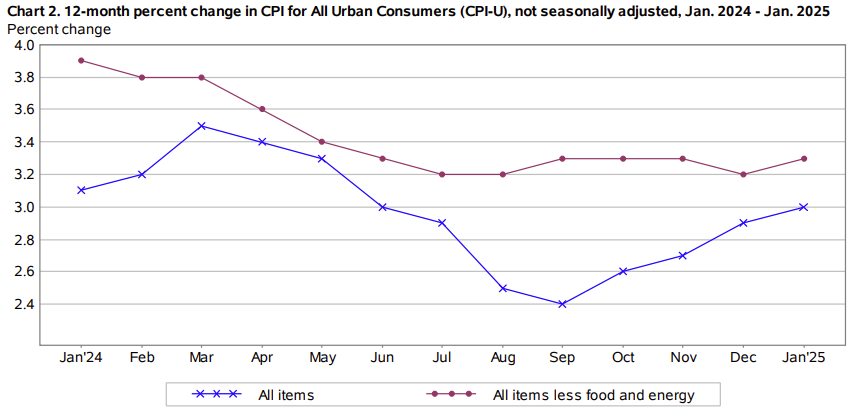
Source: U.S. Bureau of Labor Statistics
Meningkatnya ketegangan di Timur Tengah mendorong kenaikan harga minyak menyusul serangan pesawat nirawak yang mematikan terhadap fasilitas Shaybah milik Saudi Aramco, sehingga memicu kembali kekhawatiran akan inflasi serta ekspektasi terhadap pengetatan kebijakan lebih lanjut oleh Federal Reserve.
Detail Risiko Inflasi Kembali Muncul Seiring Naiknya Harga Minyak (21/10/2026)Kenaikan harga minyak memicu kembali kekhawatiran akan inflasi, sementara ketidakpastian seputar konflik AS-Iran serta gangguan yang terus berlanjut di Selat Hormuz memperkuat ekspektasi akan pengetatan kebijakan moneter lebih lanjut.
Detail Harga Minyak dan Ekspektasi Kenaikan Suku Bunga The Fed Berikan Tekanan pada Logam (20/10/2026)Harga minyak yang tinggi serta imbal hasil obligasi pemerintah (Treasury) yang meningkat memberikan tekanan pada logam mulia, di tengah ketegangan geopolitik yang terus berlanjut yang memperkuat kekhawatiran akan inflasi dan ekspektasi pengetatan kebijakan lebih lanjut oleh Federal Reserve.
DetailBergabunglah dengan Channel Telegram Kami dan Berlangganan Sinyal Trading Kami secara Gratis!
Bergabunglah dengan Telegram!


