


The Consumer Price Index for All Urban Consumers (CPI-U) increased by 0.5% in January on a seasonally adjusted basis, following a 0.4% rise in December, according to the U.S. Bureau of Labor Statistics.
Over the past 12 months, the overall CPI grew by 3.0% before seasonal adjustments.
The shelter index climbed 0.4% in January, accounting for nearly 30% of the total monthly increase in the all-items index. The energy index rose 1.1%, with gasoline prices increasing by 1.8%. Meanwhile, the food index saw a 0.4% rise, driven by a 0.5% increase in food at home prices and a 0.2% uptick in food away from home prices.
Excluding food and energy, the core CPI rose 0.4% in January. Notable contributors to this increase included motor vehicle insurance, recreation, used cars and trucks, medical care, communication, and airline fares. In contrast, categories such as apparel, personal care, and household furnishings recorded declines.
For the 12 months ending in January, the all-items index increased by 3.0%, slightly above the 2.9% rise recorded for the previous year ending in December. The core CPI, which excludes food and energy, rose 3.3% year-over-year. The energy index saw a modest 1.0% increase, while food prices rose 2.5% over the same period.
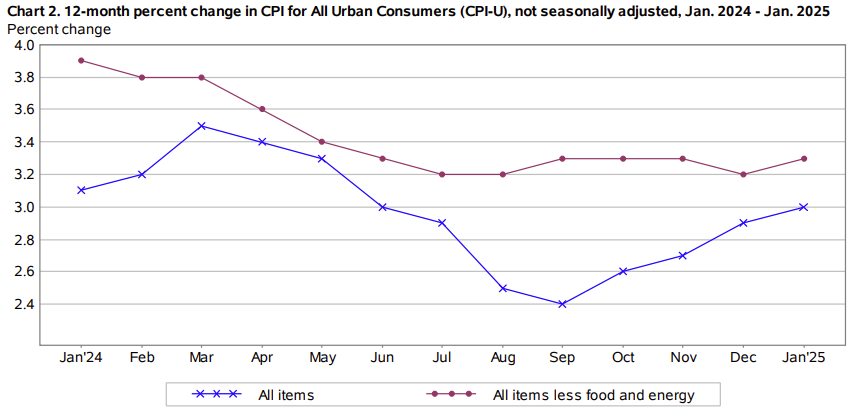
Source: U.S. Bureau of Labor Statistics
A deepening sell-off in technology and artificial intelligence stocks pressured financial markets, forcing investors to liquidate precious metals holdings to cover losses elsewhere.
Escalating Middle East tensions pushed oil prices higher following a deadly drone strike on Saudi Aramco's Shaybah facility, renewing inflation concerns and expectations for further Federal Reserve tightening.
Rising oil prices renewed inflation concerns as uncertainty surrounding the US-Iran conflict and continued disruptions in the Strait of Hormuz reinforced expectations for further monetary tightening.
Then Join Our Telegram Channel and Subscribe Our Trading Signals Newsletter for Free!
Join Us On Telegram!


