


Global markets remained volatile as geopolitical tensions and mixed economic signals shaped investor sentiment.
A hawkish ECB tone supported the euro, pushing EUR/USD toward $1.17 despite ongoing geopolitical risks and slowing growth. Sterling also rebounded above $1.35 on firm Bank of England signals, while the Japanese yen remained volatile amid suspected intervention and policy divergence with the Fed. In commodities, gold held above $4,600 and silver moved higher on a softer dollar, though both metals faced pressure from persistent inflation risks and tighter policy expectations. Overall, central bank outlooks and energy-driven inflation continue to shape market direction.
| Time | Cur. | Event | Forecast | Previous |
| All Day | CNY | China – Labor Day | - | - |
| All Day | EUR | Germany – Labor Day | - | - |
| 13:45 | USD | S&P Global Manufacturing PMI (Apr) | 54.0 | 54.0 |
| 14:00 | USD | ISM Manufacturing PMI (Apr) | 53.1 | 52.7 |
| 14:00 | USD | ISM Manufacturing Prices (Apr) | 80.0 | 78.3 |
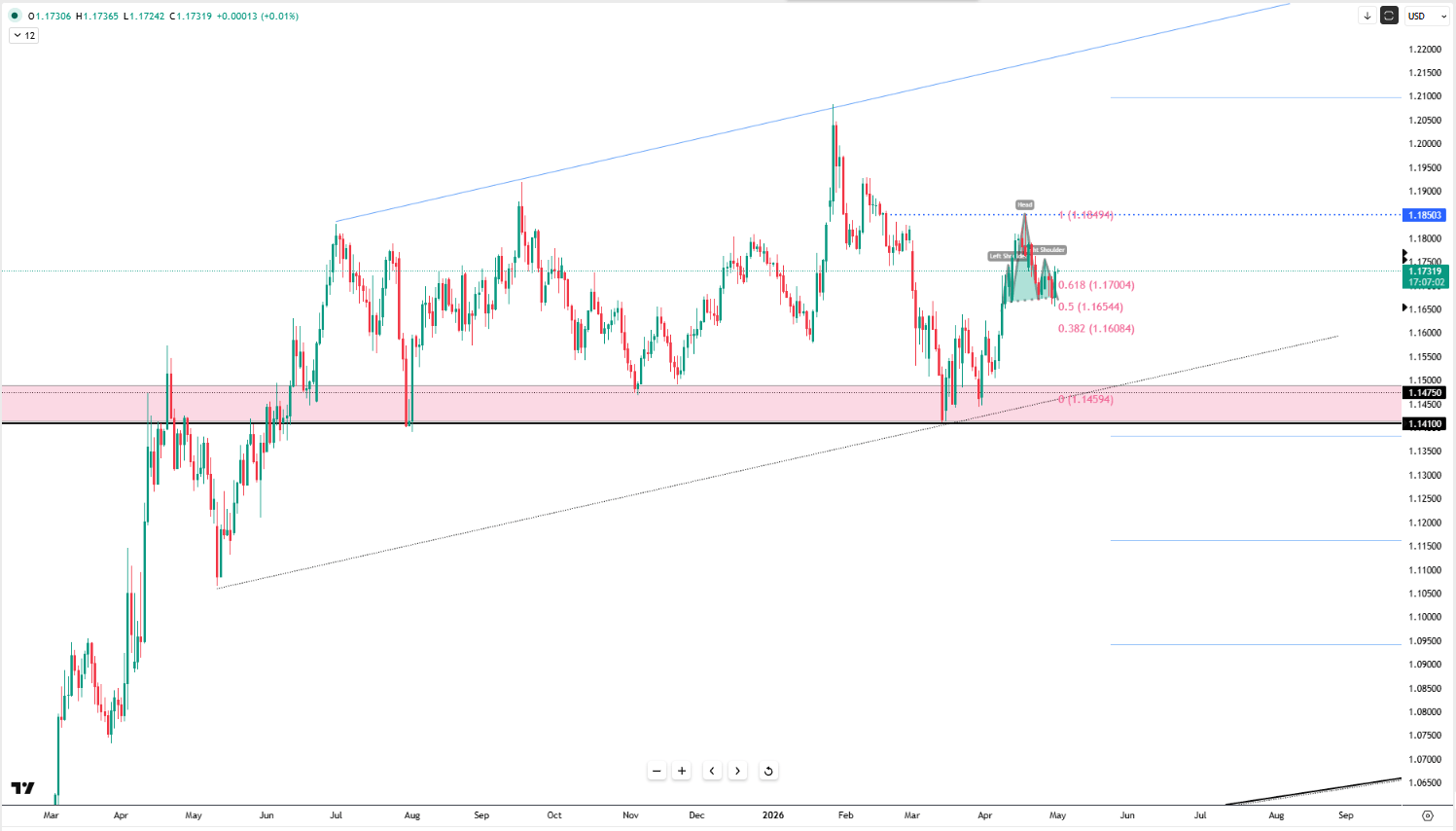
The Euro strengthened to $1.17, closing April over 1% higher against the Dollar. While the ECB held rates steady, President Christine Lagarde’s warnings regarding elevated inflation and growth risks fueled expectations for further tightening. April inflation climbed to 3%, exceeding targets, even as first-quarter growth slowed under the weight of energy disruptions from the Iran conflict. Investors remain focused on the ECB's pivot as they navigate a challenging environment of persistent price pressures and stagflationary risks.
For EUR/USD, the initial resistance is seen at 1.1760, while the closest support is positioned at 1.1690.
| R1: 1.1760 | S1: 1.1690 |
| R2: 1.1790 | S2: 1.1640 |
| R3: 1.1880 | S3: 1.1550 |
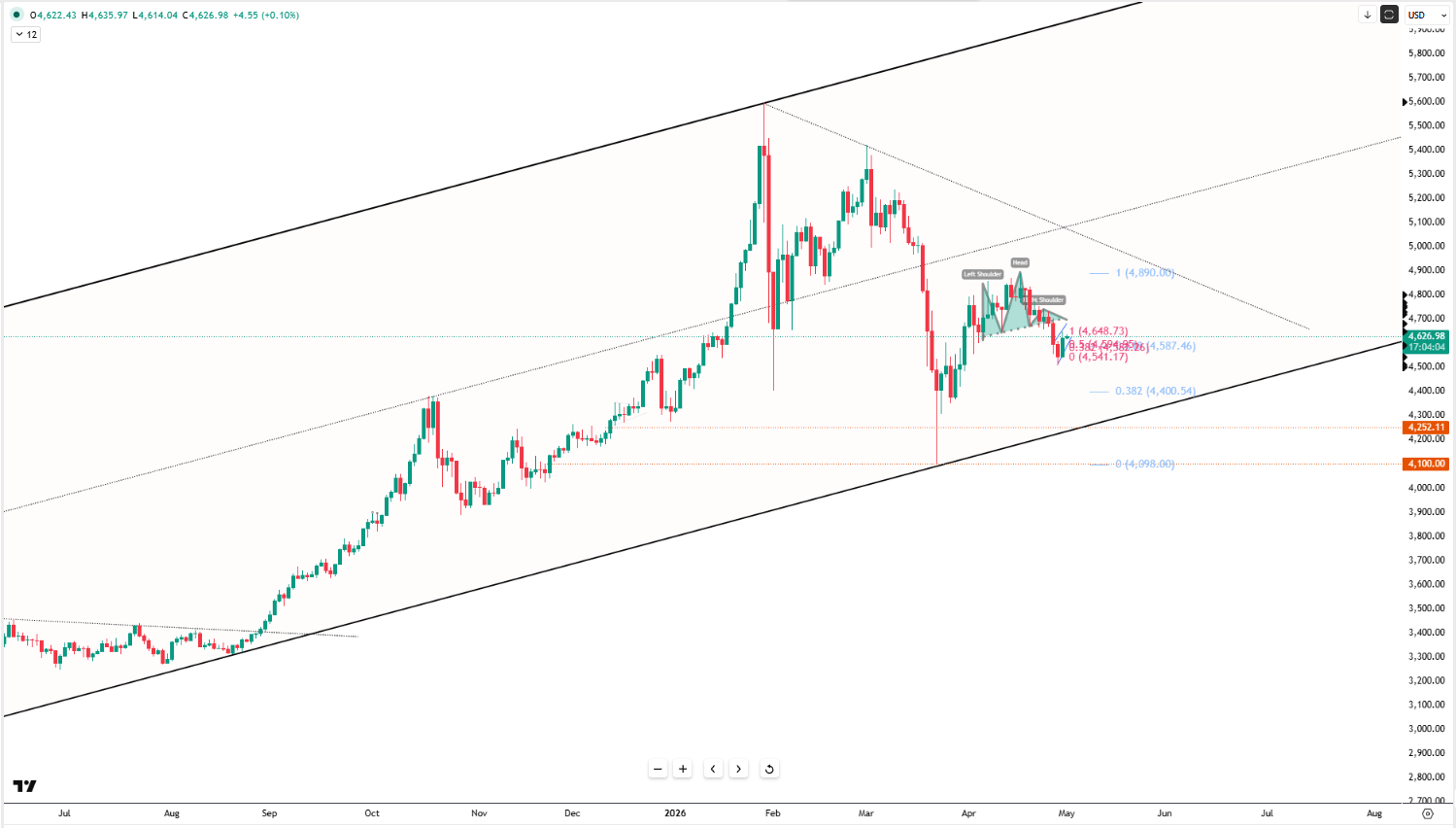
Gold maintained its position above $4,600 on Friday, buoyed by a softening Dollar following suspected Japanese currency intervention. Despite these gains, the metal faces its second weekly loss as hopes for a U.S.–Iran diplomatic breakthrough diminish and the Strait of Hormuz remains blockaded. Persistent geopolitical friction and energy shocks continue to underpin global inflation risks. Furthermore, the World Gold Council reports that central banks significantly ramped up bullion purchases in Q1, providing a structural floor for prices.
First resistance is seen at $4650, with initial support near $4580.
| R1: 4650 | S1: 4580 |
| R2: 4690 | S2: 4500 |
| R3: 4750 | S3: 4440 |
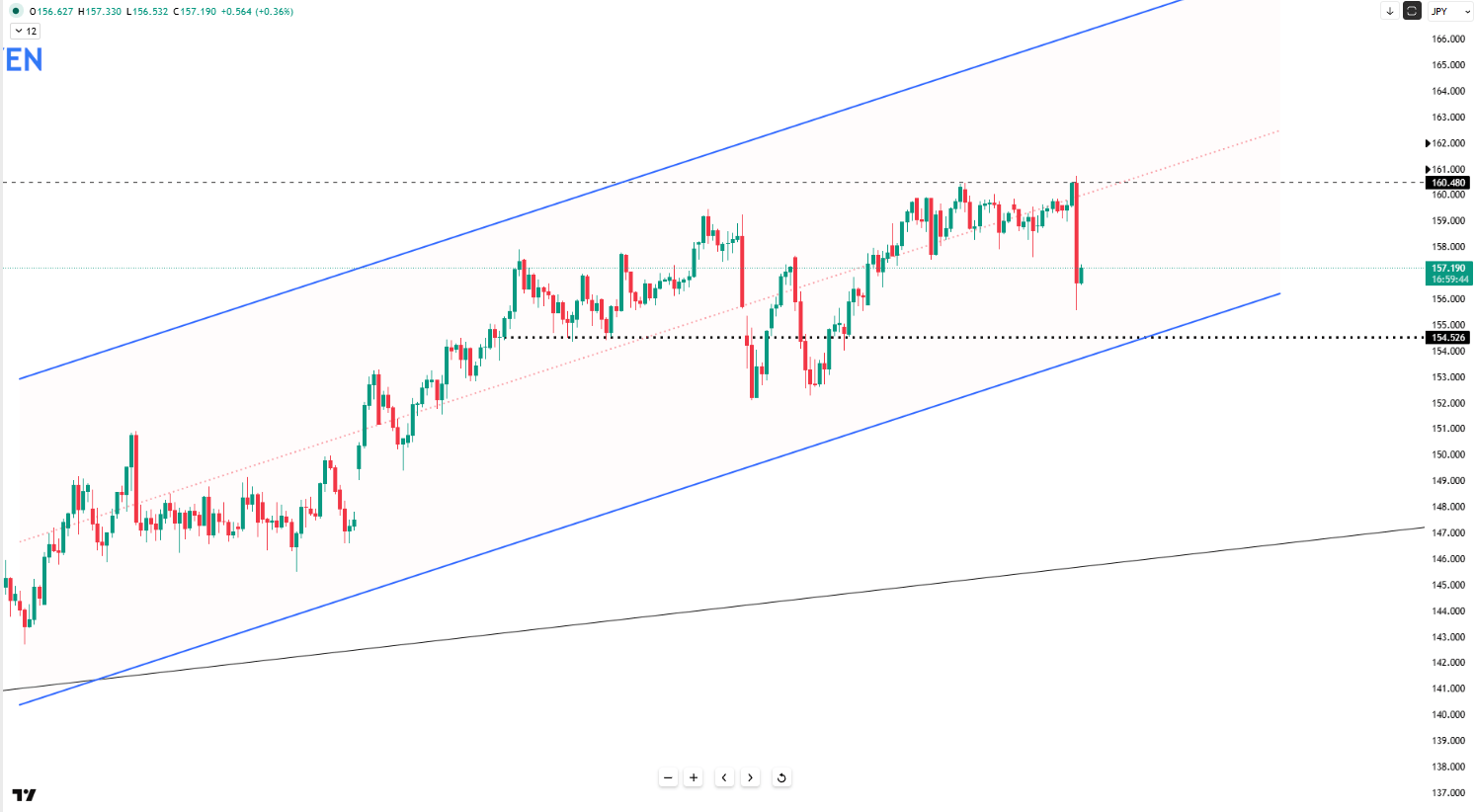
The Japanese Yen fluctuated around 157 per Dollar on Friday after a sharp rally to 155.5, widely attributed to suspected government intervention. This follows a slump beyond the critical 160 threshold earlier in the week, a level that has historically prompted official action. While the Ministry of Finance remains silent on direct maneuvers, authorities have repeatedly warned against "excessive" speculative selling. Despite these efforts, the significant interest rate gap between the Bank of Japan and the Federal Reserve continues to support the Dollar.
Initial resistance stands at 157.90, while the first support is located at 156.80.
| R1: 157.90 | S1: 156.80 |
| R2: 158.50 | S2: 156.00 |
| R3: 160.00 | S3: 155.20 |
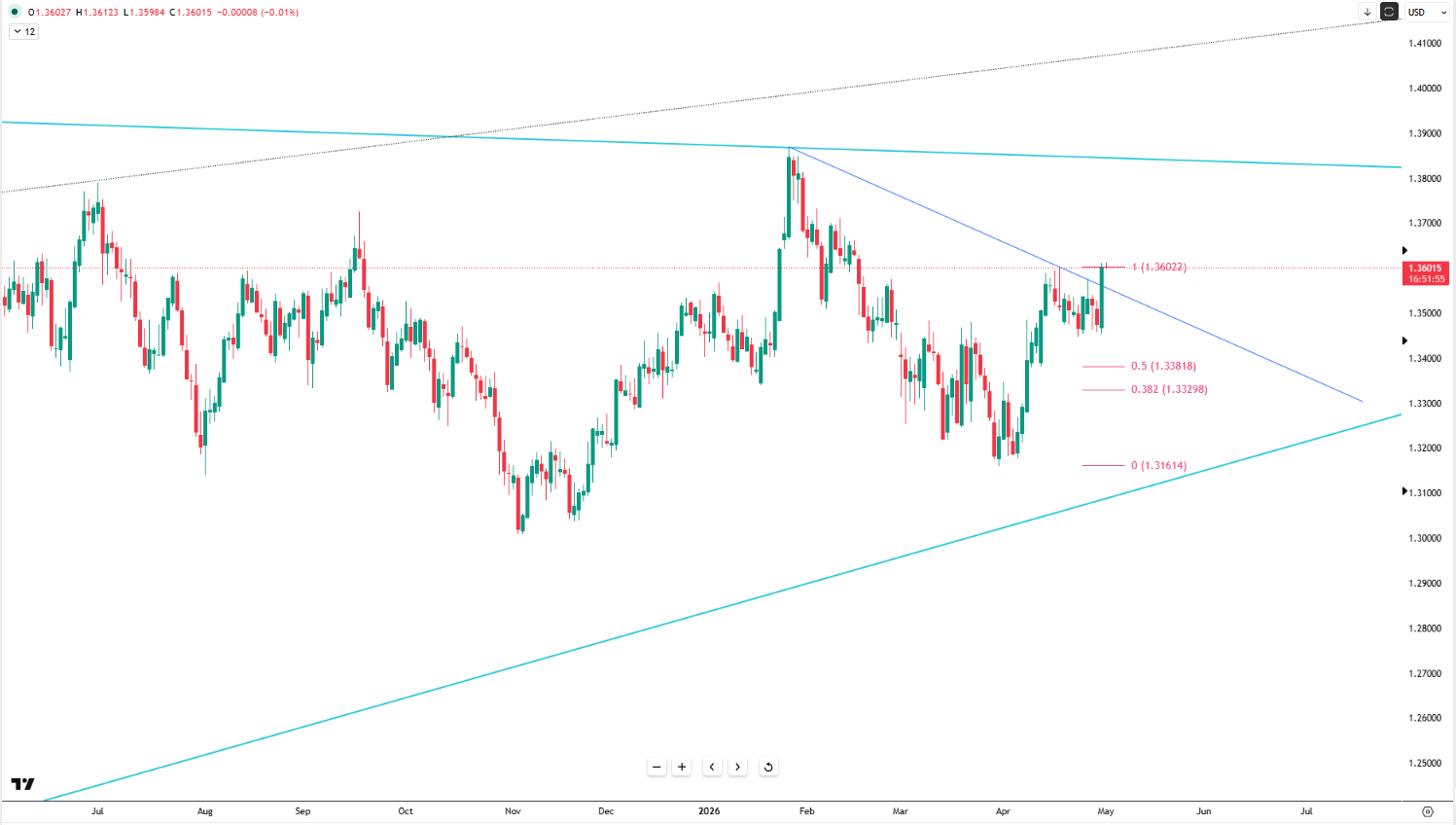
The British Pound climbed back above $1.35, on track for a 2.2% monthly gain against the Dollar. The Bank of England maintained interest rates at 3.75% in a decisive 8–1 vote, with policymakers signaling that while current levels are appropriate, further hikes remain possible. Officials emphasized the need to manage inflation and monitor escalating Middle East energy risks. This hawkish stance coincided with the Federal Reserve holding rates steady amidst mounting internal divisions among U.S. officials.
From a technical view, resistance stands near 1.3640, with support around 1.3550.
| R1: 1.3640 | S1: 1.3550 |
| R2: 1.3700 | S2: 1.3470 |
| R3: 1.3780 | S3: 1.3340 |
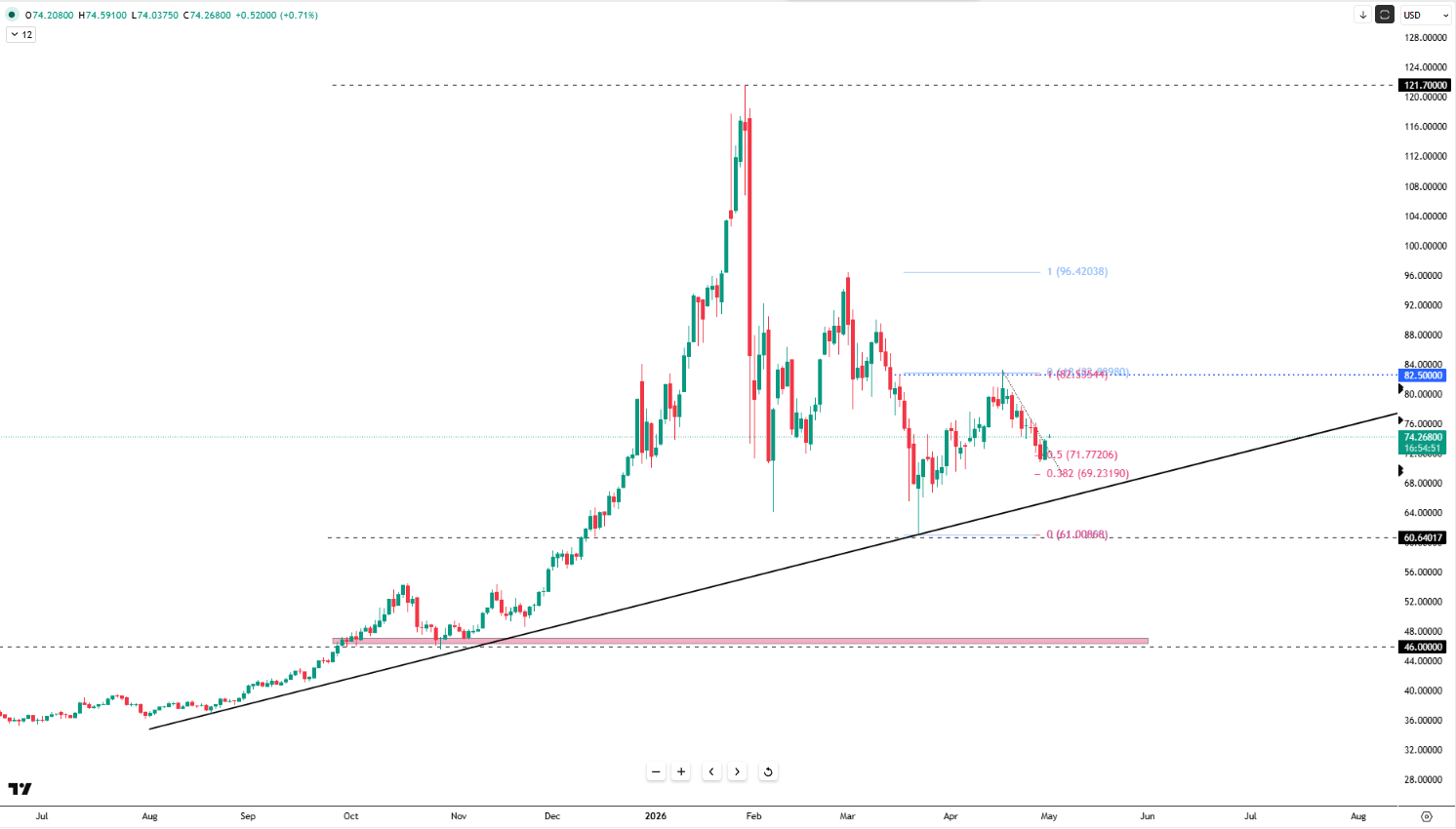
Silver climbed above $74 per ounce on Friday, supported by a softening Dollar following suspected Japanese currency intervention. Despite this recovery, the metal is headed for its second weekly decline as hopes for a U.S.–Iran diplomatic resolution dim and the Strait of Hormuz remains blockaded. Persistent geopolitical friction and energy supply shocks have heightened inflation risks, reinforcing expectations that central banks will maintain restrictive interest rate policies or pursue further tightening to stabilize global markets.
From a technical view, resistance stands near $74.70 while support is located around $73.50.
| R1: 74.70 | S1: 73.50 |
| R2: 75.90 | S2: 71.80 |
| R3: 77.50 | S3: 69.90 |
Sentiment improved at the start of the week as hopes for a potential US-Iran agreement reduced demand for the US dollar and eased concerns over energy supply disruptions.
Detail Memorial Day in the US Trading Hours (May 25, 2026)
Review the holiday schedule for affected instruments and plan your trading accordingly.
Detail Japan’s Inflation Slows, Yields Rise (05.22.2026)Japan’s 10-year government bond yield held near 2.78% on Friday, close to a three-decade high, even after softer inflation reduced expectations for an imminent Bank of Japan rate increase.
DetailThen Join Our Telegram Channel and Subscribe Our Trading Signals Newsletter for Free!
Join Us On Telegram!


