


Markets remained cautious on Thursday as investors balanced rising geopolitical risks with key central bank expectations. The dollar index neared a two-month high at 100 as Middle East conflict risks and inflation acceleration kept December Fed hike bets alive.
The euro stayed near its lowest levels in more than two months ahead of a widely expected ECB rate hike, while elevated energy costs continued to fuel inflation concerns across major economies. Gold and silver remained under pressure as stronger inflation data reinforced expectations for tighter monetary policy, while the yen hovered near two-year lows despite growing bets on further Bank of Japan tightening.
| Time | Cur. | Event | Forecast | Previous |
| 12:15 | EUR | Deposit Facility Rate (Jun) | 2.25% | 2.00% |
| 12:15 | EUR | ECB Interest Rate Decision (Jun) | 2.40% | 2.15% |
| 12:30 | USD | PPI (MoM) (May) | 0.7% | 1.4% |
| 12:30 | USD | Initial Jobless Claims | 220K | 225K |
| 12:45 | EUR | ECB Press Conference |
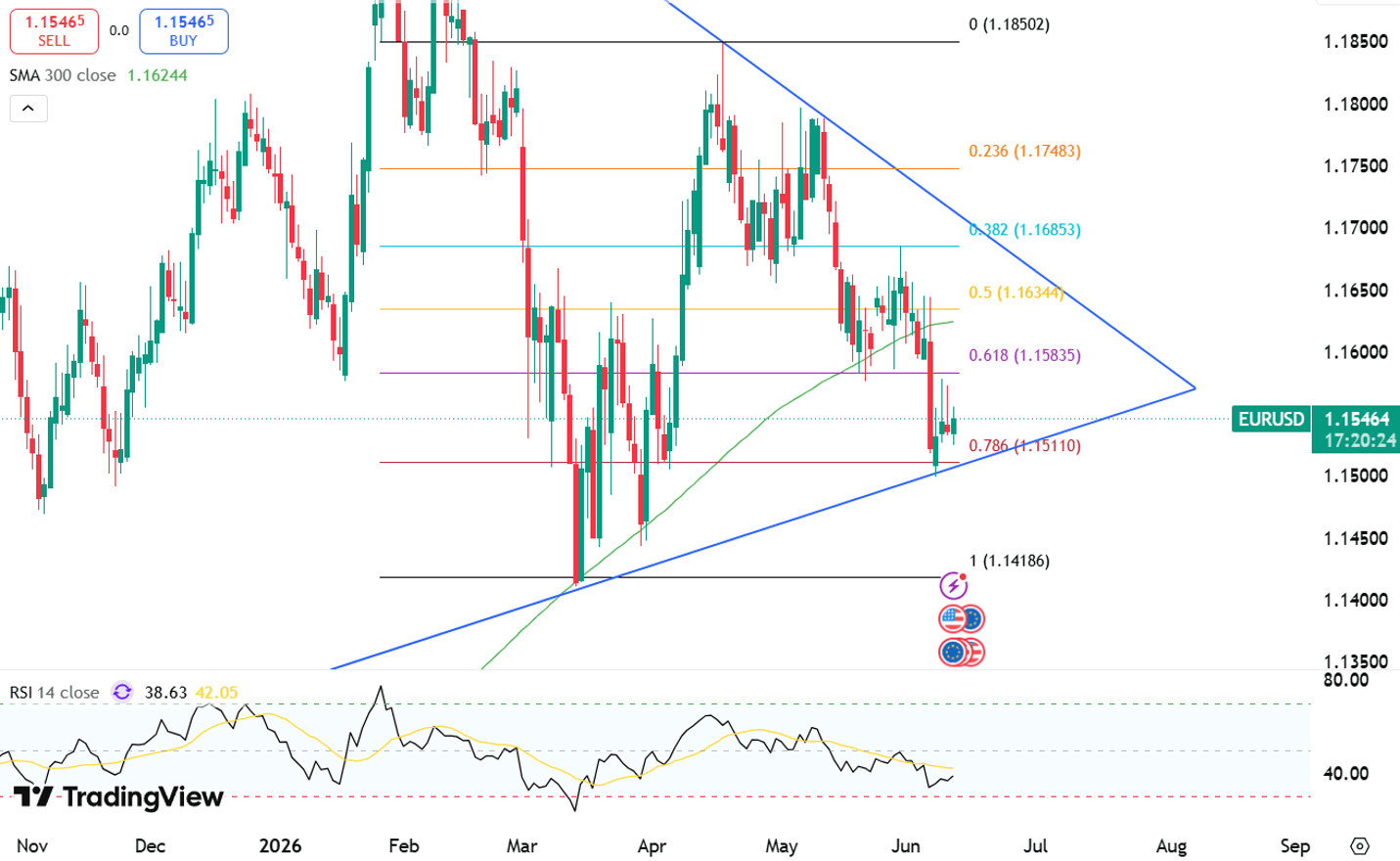
The euro stabilized near $1.154, remaining close to its lowest point in over two months as escalating U.S.–Iran frictions spurred safe-haven flows. Market participants are focused on the ECB's impending policy meeting, where a 25 basis point interest rate increase is broadly anticipated. Energy-driven inflation pressures from Middle East conflict persist, keeping the spotlight on President Christine Lagarde for future policy guidance.
For EUR/USD, the initial resistance is seen at 1.1570, while the closest support is positioned at 1.1520.
| R1: 1.1570 | S1: 1.1520 |
| R2: 1.1600 | S2: 1.1470 |
| R3: 1.1640 | S3: 1.1420 |
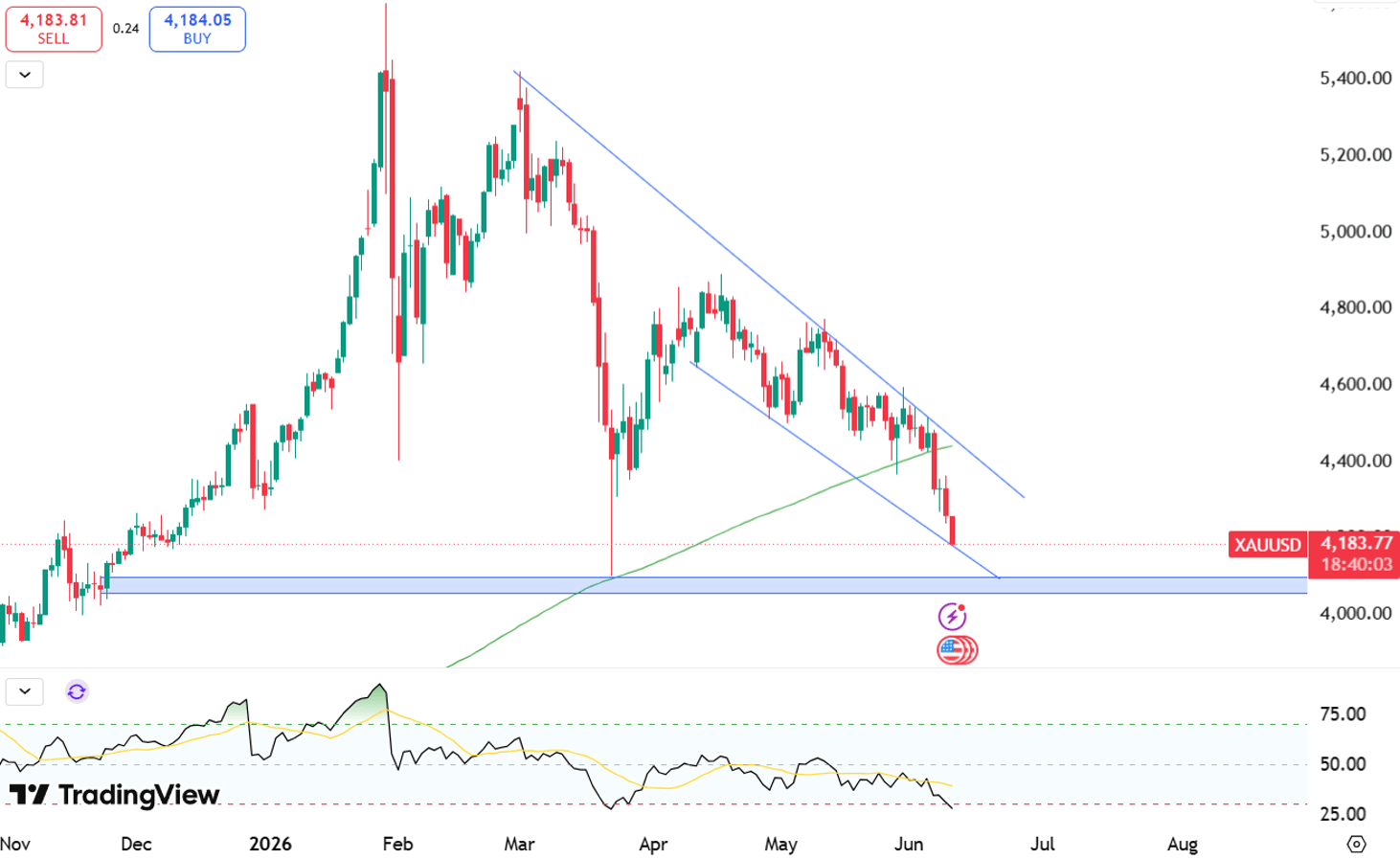
Gold dipped under $4,100 on Thursday as market participants weighed changing Middle East dynamics. Anticipation of fresh diplomatic negotiations following the conclusion of recent U.S. strikes on Iran helped soothe broader geopolitical anxieties. Nonetheless, active energy supply bottlenecks and sticky inflation limited the metal's decline. In addition, U.S. inflation climbed to a multi-year high, cementing expectations for a Federal Reserve interest rate increase later this year.
First resistance is seen at $4120, with initial support near $4000.
| R1: 4120 | S1: 4000 |
| R2: 4220 | S2: 3920 |
| R3: 4370 | S3: 3750 |
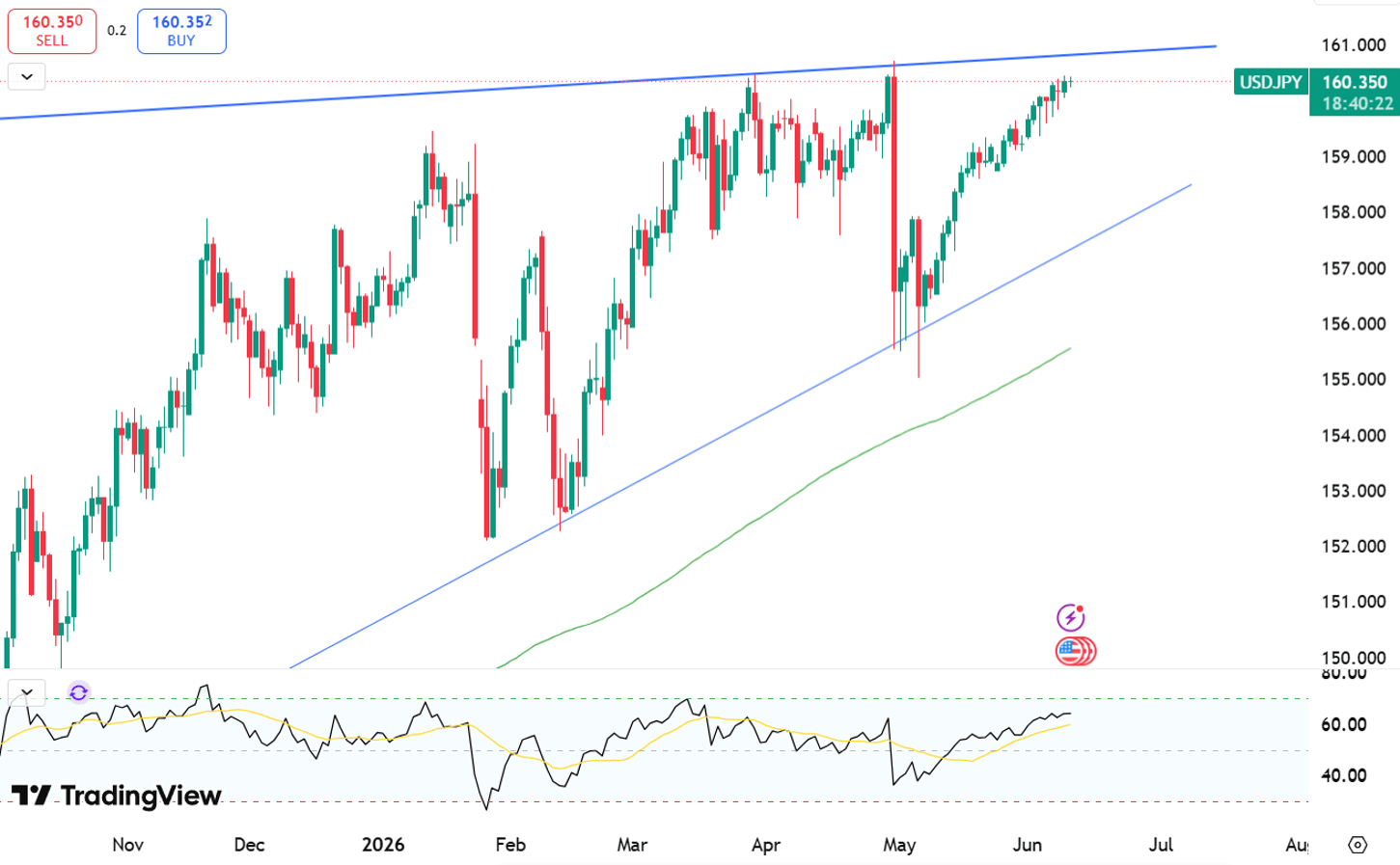
The Japanese yen traded near 160.5 against the dollar on Thursday, remaining close to a two-year low. Higher producer inflation, driven by surging energy costs, has intensified expectations that the Bank of Japan will hike interest rates next week. Market participants are monitoring Governor Kazuo Ueda for policy signals, with additional monetary tightening increasingly priced in for later this year.
Initial resistance stands at 160.90, while the first support is located at 159.40.
| R1: 160.90 | S1: 159.40 |
| R2: 161.50 | S2: 158.30 |
| R3: 162.40 | S3: 157.50 |
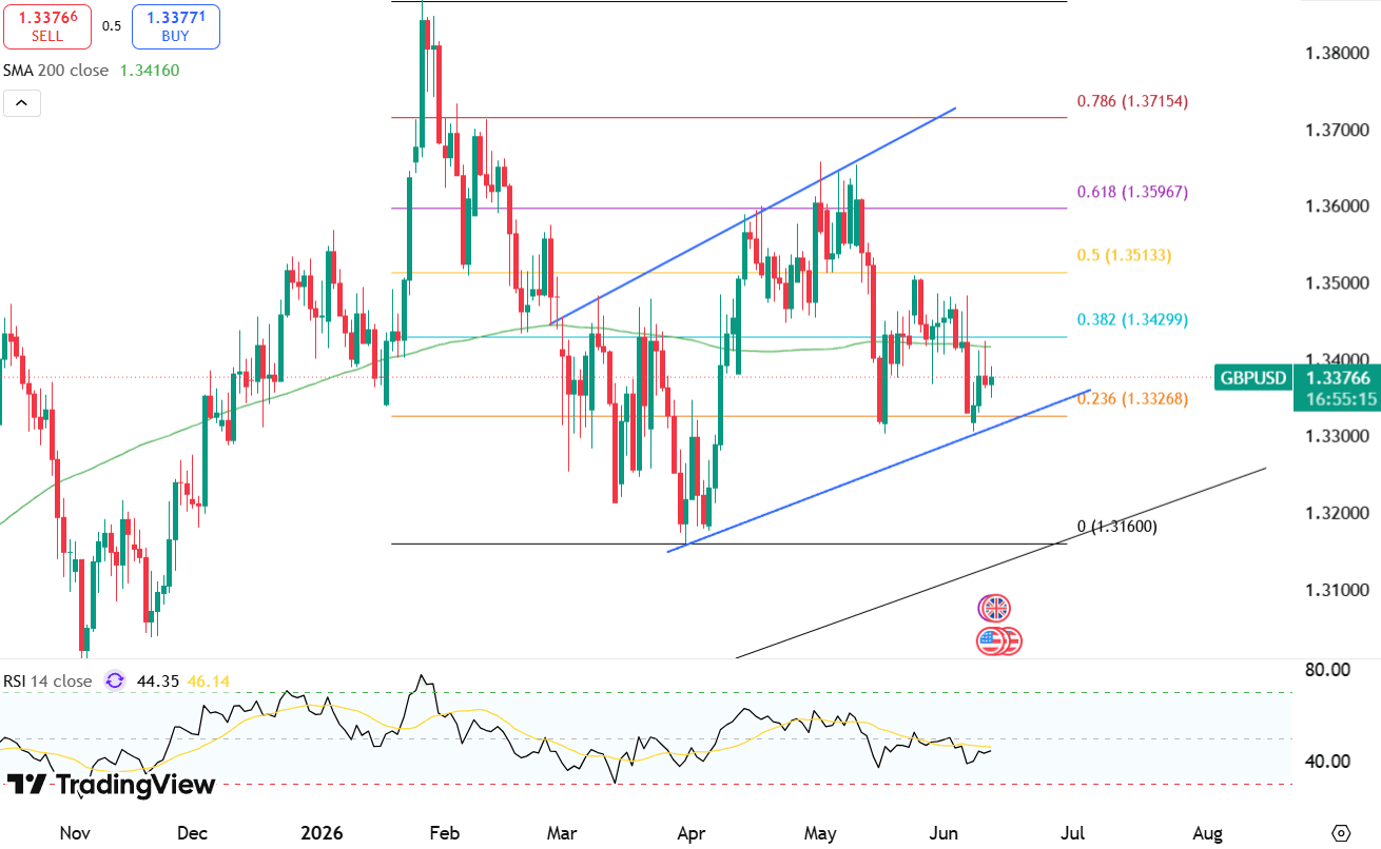
The British pound traded just under $1.34 as mounting Middle East frictions and expectations of tighter Bank of England policy drove sentiment. Fresh U.S.–Iran military actions heightened geopolitical risk, while rising energy costs worsened inflation anxieties. Markets now fully price in at least one BoE rate hike by September, despite internal policymaker debate over whether current monetary settings are already sufficiently restrictive.
From a technical view, resistance stands near 1.3410, with support around 1.3320.
| R1: 1.3410 | S1: 1.3320 |
| R2: 1.3460 | S2: 1.3240 |
| R3: 1.3530 | S3: 1.3200 |
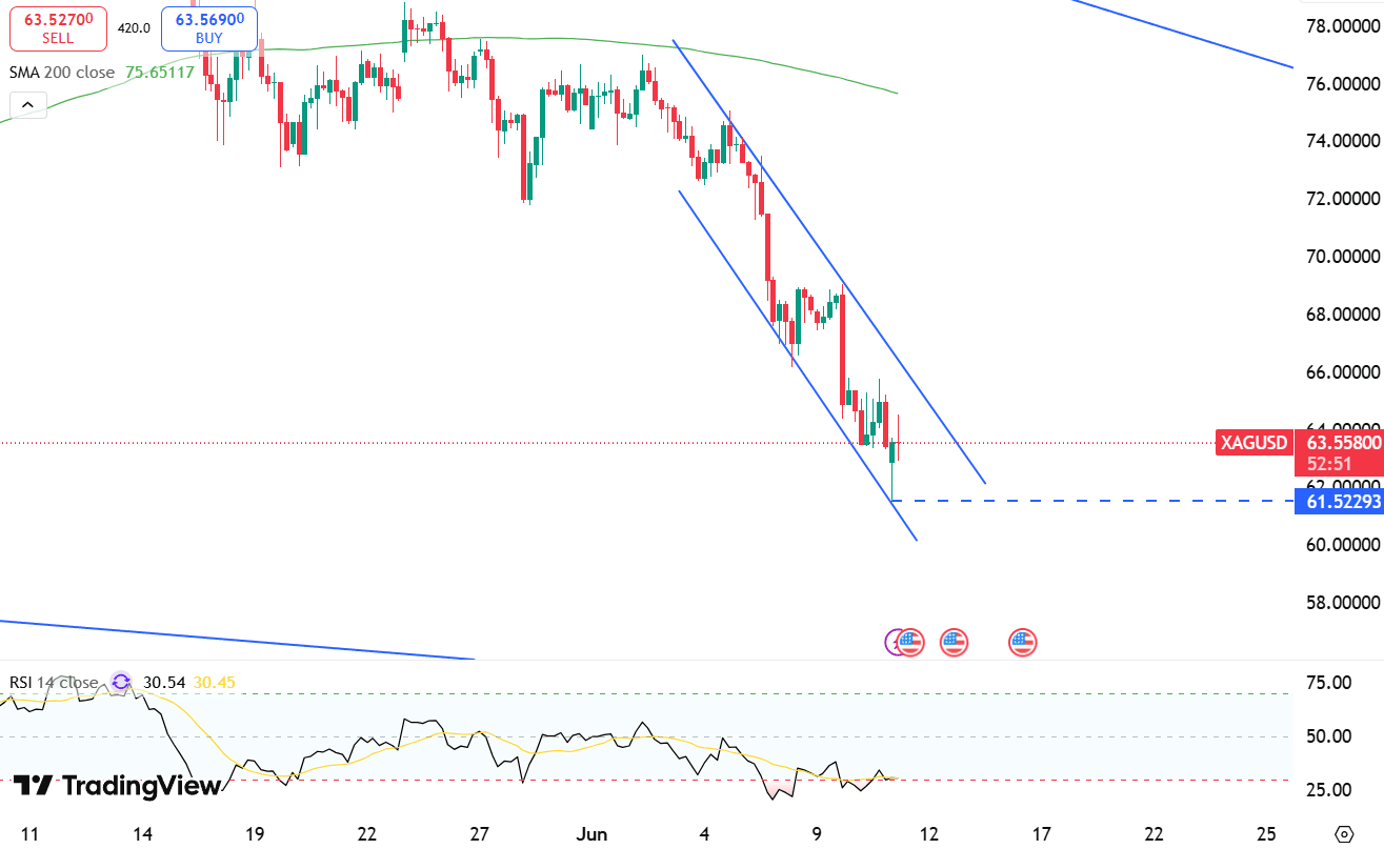
Silver held above $63 on Thursday as markets assessed fluid Middle East developments. While the conclusion of recent U.S. military strikes on Iran raised hopes for diplomatic talks and tempered immediate inflation fears, friction in the Strait of Hormuz and persistent supply bottlenecks kept the metal near multi-week lows. Furthermore, U.S. inflation hit a three-year high, cementing expectations for a Federal Reserve rate hike later this year.
From a technical view, resistance stands near $65.00, while support is located around $61.50.
| R1: 65.00 | S1: 61.50 |
| R2: 67.70 | S2: 60.00 |
| R3: 70.00 | S3: 58.20 |
Hawkish Federal Reserve meeting minutes reinforced expectations for another rate hike this year, pushing Treasury yields higher and supporting the US dollar.
Oil inventories are nearing depletion, increasing supply risks and supporting prices. Aramco estimates less than 6 billion barrels remain after over 1 billion barrels were drawn this year, while the IEA is preparing a 100-million-barrel release. The US 10-year Treasury yield stabilized near 5.31% on Wednesday, close to 24-year peaks, as markets awaited the Fed's minutes.
The dollar index steadied around 102 on Tuesday, near its highest since April 2025, as the euro weakened on French fiscal and political concerns and Spain's upcoming snap election, yet stabilized near 1.1220 after touching its lowest level since May 2025.
DetailThen Join Our Telegram Channel and Subscribe Our Trading Signals Newsletter for Free!
Join Us On Telegram!


