


Global markets traded cautiously as escalating U.S.–Iran tensions continued to fuel inflation concerns through higher oil prices.
Investors shifted their focus to the European Central Bank's upcoming policy decision while also monitoring expectations for the Federal Reserve and Bank of England. The stronger dollar kept pressure on major currencies, while gold and silver remained sensitive to rising Treasury yields and geopolitical developments.
| Time | Cur. | Event | Forecast | Previous |
| 06:00 | GBP | UK, Unemployment Rate (May) | 4.9% | 4.9% |
| 12:15 | USD | ADP Employment Change Weekly | 19.80K |
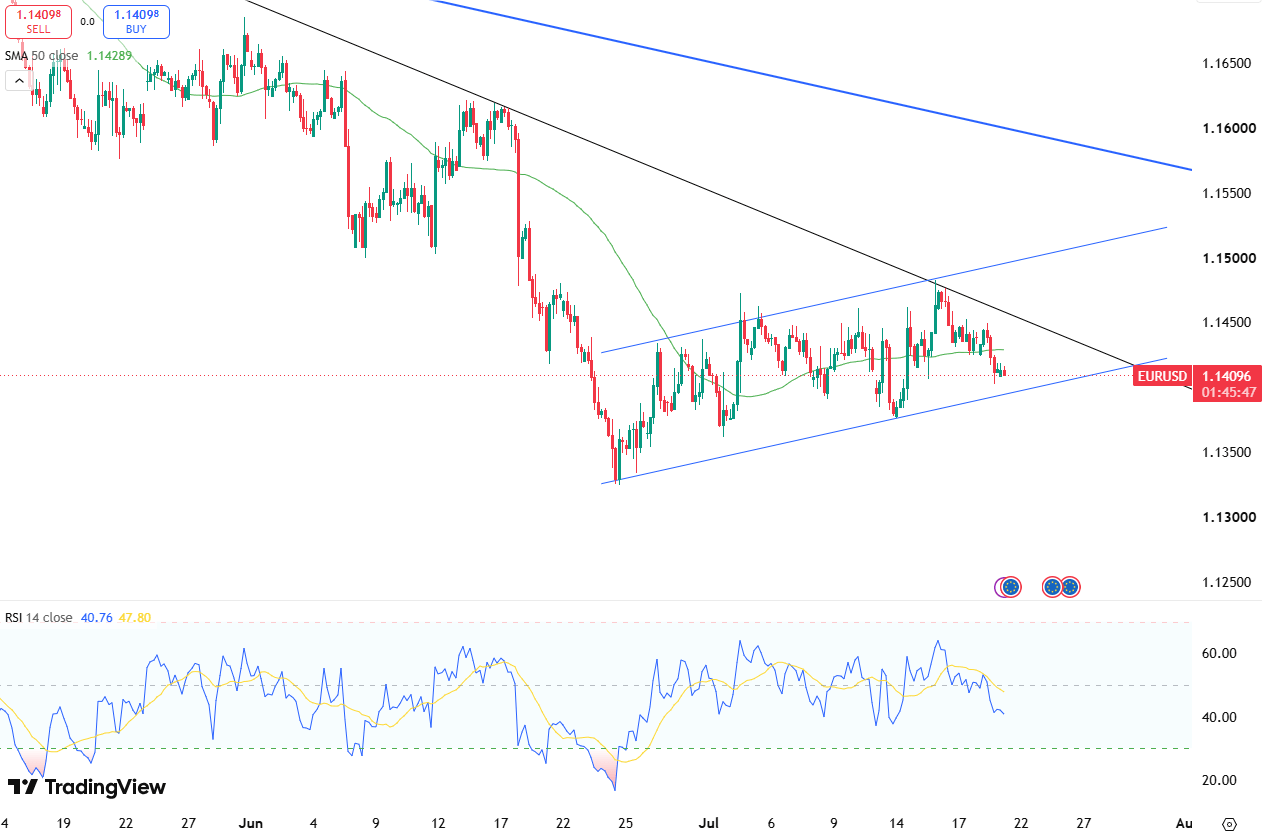
The Euro traded near $1.14, holding below its mid-June high as markets digest escalating Middle East conflicts and surging oil prices. Brent crude reached a one-month peak following retaliatory U.S.–Iran strikes. Focus now shifts to Thursday's ECB meeting, where rates are expected to hold steady after June's hike, though markets still price in two additional increases by early 2027.
The first resistance is positioned at 1.1440 while the support starts from 1.1390.
| R1: 1.1440 | S1: 1.1390 |
| R2: 1.1480 | S2: 1.1370 |
| R3: 1.1510 | S3: 1.1340 |
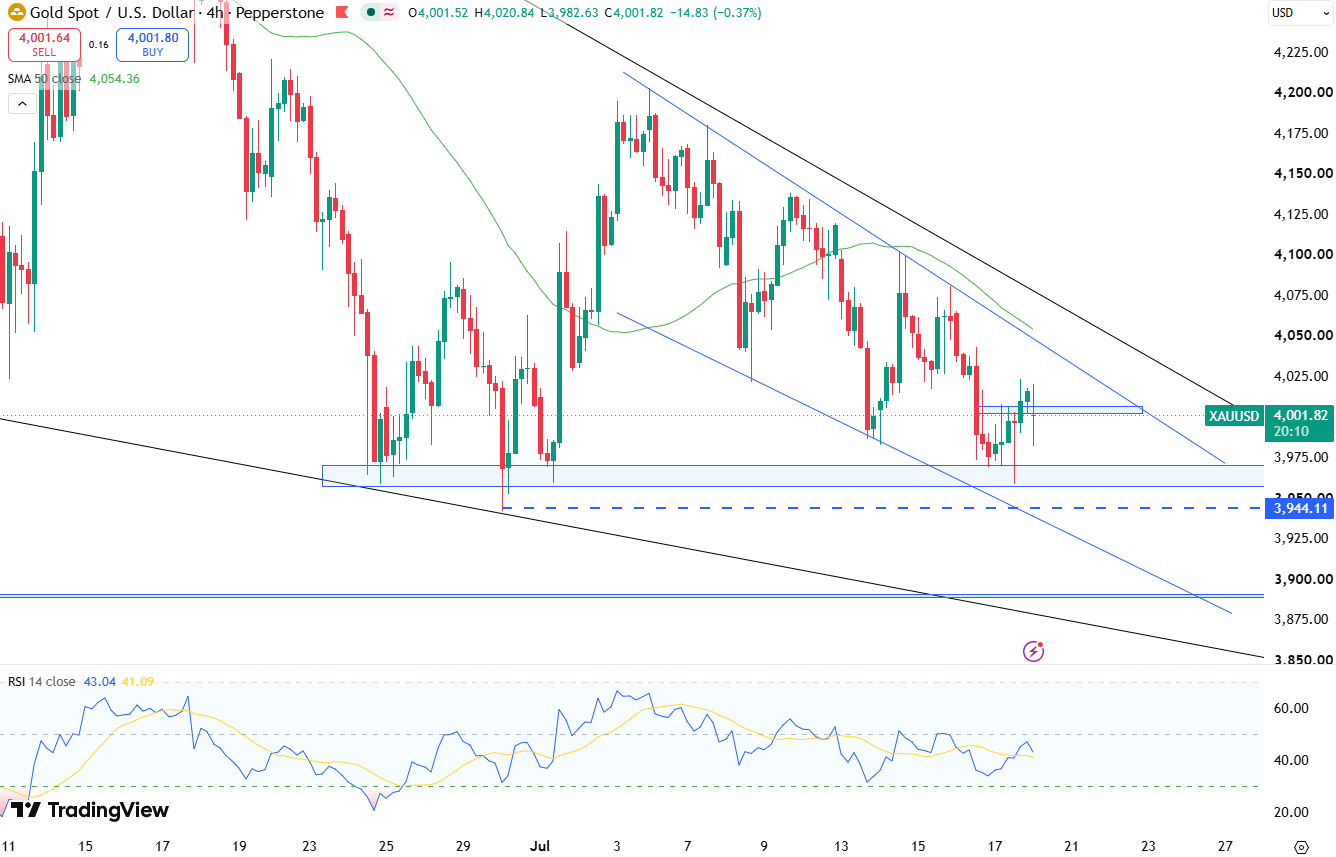
Gold steadied above $4,040, remaining near nine-month lows as the U.S.–Iran conflict keeps energy-driven inflation risks elevated. U.S. strikes reached a tenth day, with President Trump vowing retribution for troop deaths, alongside a Houthi Saudi maritime embargo. Amid potential 10-day ceasefire mediation signals, rising Treasury yields pushed September Fed rate-hike odds to 55%.
First resistance is seen at $4080, with initial support near $4000.
| R1: 4080 | S1: 4000 |
| R2: 4120 | S2: 3950 |
| R3: 4150 | S3: 3900 |
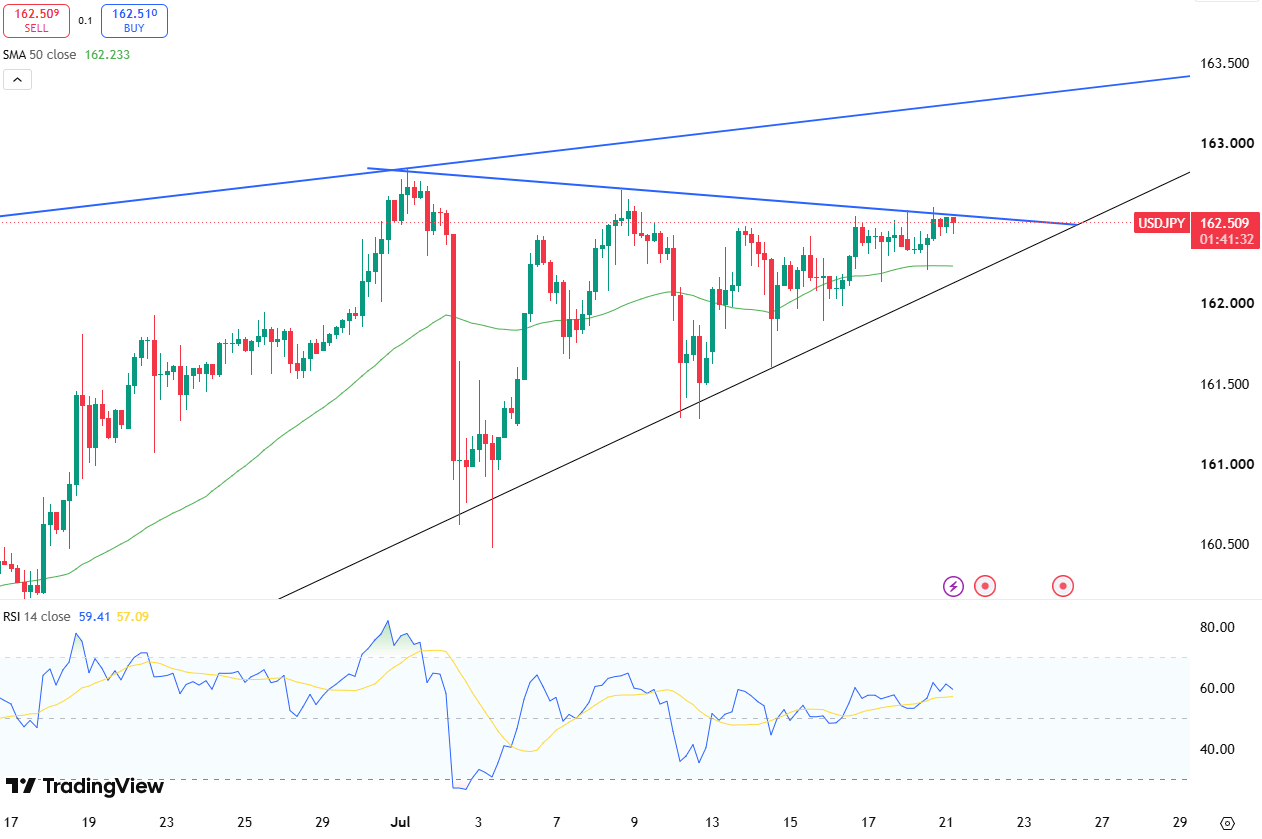
The Japanese Yen traded near 162.5 per dollar, hovering near its weakest levels since 1996. Escalating Middle East conflict, marked by U.S. strikes entering a tenth day and a Houthi Saudi maritime embargo, pushed crude oil higher, severely burdening resource-poor Japan. With Japan's heavy oil import dependence exacerbating trade pressures, the Yen remains vulnerable amid limited signs of Tokyo market intervention.
Initial resistance stands at 162.80, while the first support is at 162.20.
| R1: 162.80 | S1: 162.20 |
| R2: 163.30 | S2: 161.90 |
| R3: 163.70 | S3: 161.50 |
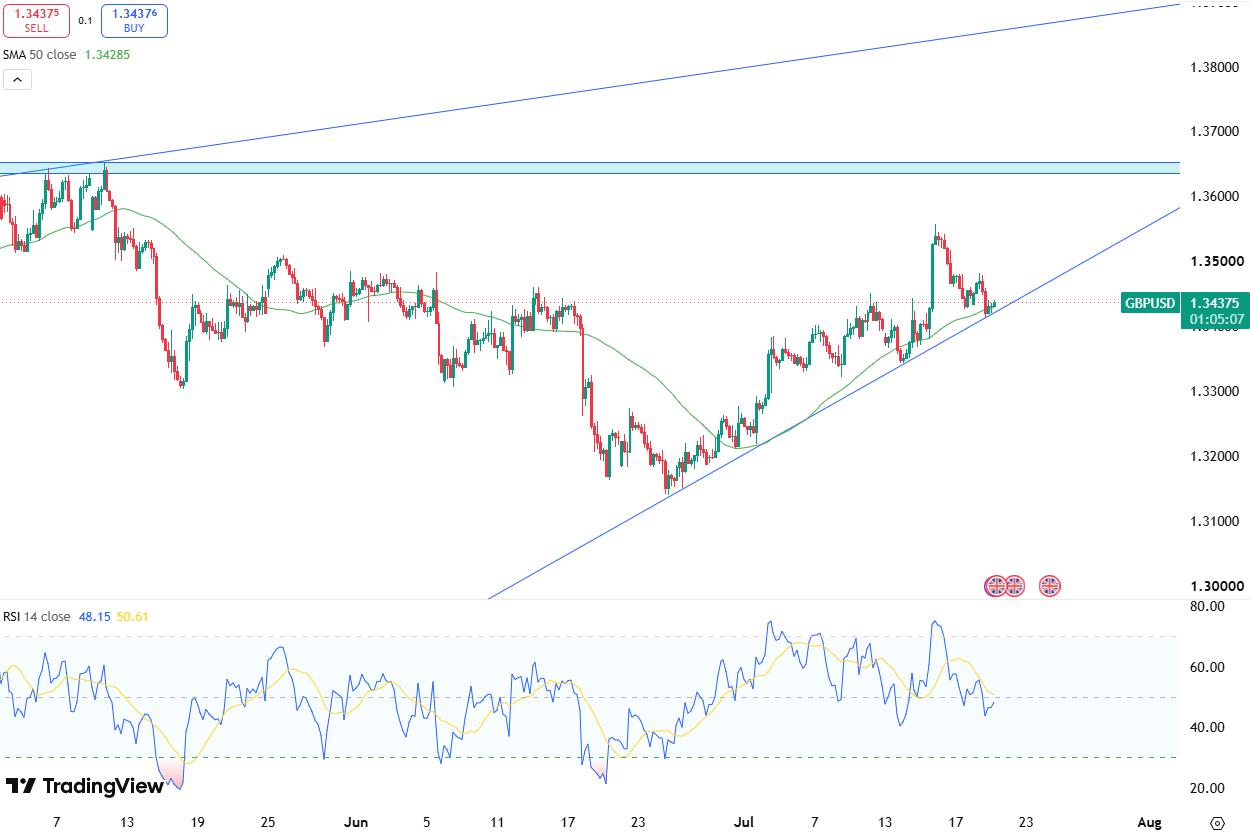
The British Pound faces intraday selling pressure, consolidating around 1.3435 after pulling back from multi-month highs. A surging Dollar, supported by safe-haven demand amid rising U.S.-Iran geopolitical tensions and elevated oil prices, weighs on Cable. Meanwhile, traders await upcoming UK employment and CPI data ahead of late-July Fed and BoE rate decisions.
From a technical view, resistance stands near 1.3500, with support around 1.3410.
| R1: 1.3500 | S1: 1.3410 |
| R2: 1.3540 | S2: 1.3340 |
| R3: 1.3600 | S3: 1.3270 |
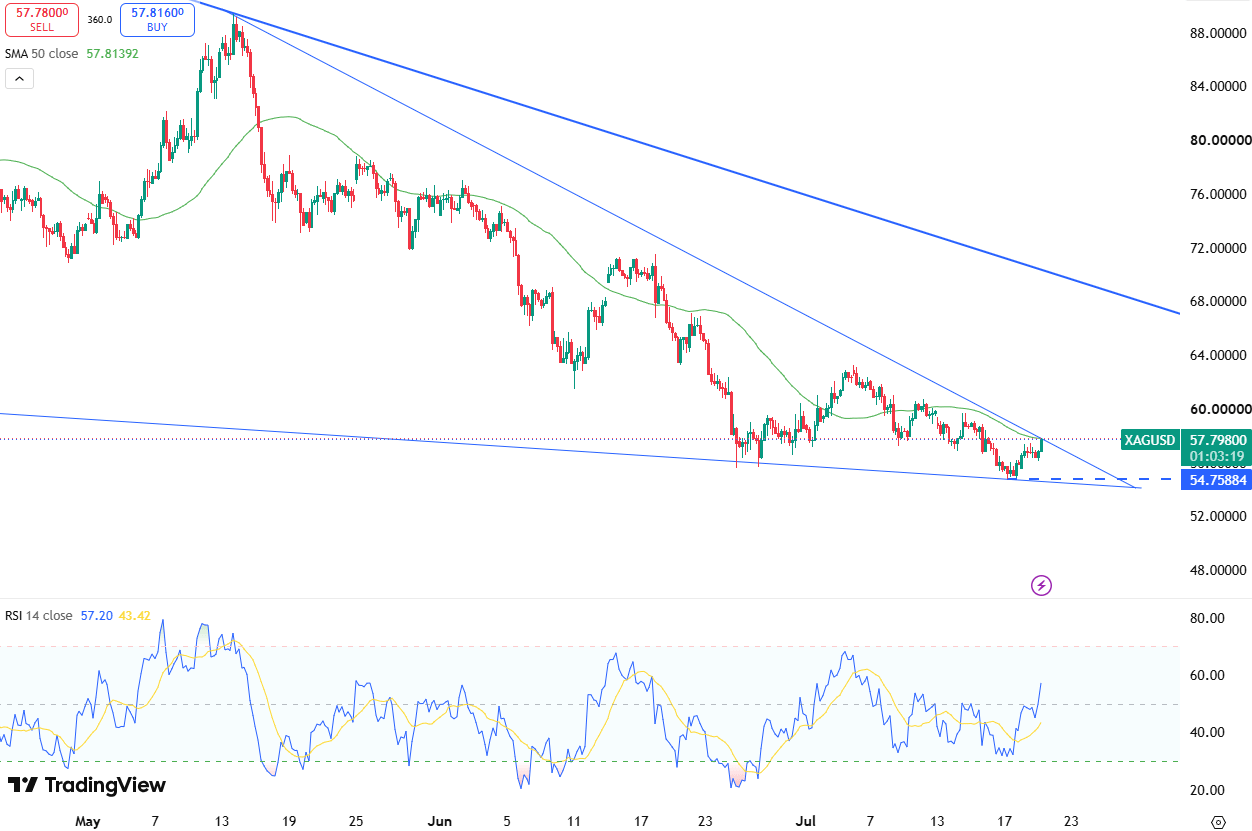
Silver rose toward $57 but hovered near eight-month lows as the U.S.-Iran conflict kept energy-driven inflation concerns intact. U.S. strikes entered a tenth day alongside a Houthi Saudi maritime embargo, even as Iran signaled potential mediator proposals for a 10-day ceasefire. Meanwhile, rising Treasury yields pushed market-implied probabilities for a September Federal Reserve rate hike to 55%, up from 51%.
From a technical view, resistance stands near $59.00, while support is located around $56.20.
| R1: 59.00 | S1: 55.20 |
| R2: 60.50 | S2: 55.00 |
| R3: 62.00 | S3: 53.20 |
Oil inventories are nearing depletion, increasing supply risks and supporting prices. Aramco estimates less than 6 billion barrels remain after over 1 billion barrels were drawn this year, while the IEA is preparing a 100-million-barrel release. The US 10-year Treasury yield stabilized near 5.31% on Wednesday, close to 24-year peaks, as markets awaited the Fed's minutes.
The dollar index steadied around 102 on Tuesday, near its highest since April 2025, as the euro weakened on French fiscal and political concerns and Spain's upcoming snap election, yet stabilized near 1.1220 after touching its lowest level since May 2025.
Detail Weak US Jobs Ease Fed Hike Bets (5 – 9 October)
Weak US labor market data shifted the monetary policy outlook after September nonfarm payrolls rose by only 29,000, well below the 90,000 forecast, while prior months were revised lower. Unemployment rose to 4.2%, and wage growth slowed to 3.0%, cutting the probability of an October Fed hike to around 20%. The Dollar Index fell below 102 after the report, but remained on course for a third consecutive weekly gain.
DetailThen Join Our Telegram Channel and Subscribe Our Trading Signals Newsletter for Free!
Join Us On Telegram!


