


Global markets extended their recovery on Wednesday as optimism surrounding the upcoming U.S.–Iran peace agreement increased risk appetite and eased inflation concerns.
Falling oil prices supported the euro and pound, while gold and silver held recent gains ahead of the Federal Reserve's first policy decision under Chair Kevin Warsh. Meanwhile, the Bank of Japan's recent rate hike and the upcoming Bank of England meeting kept central bank policy firmly in focus as investors assessed the outlook for further tightening.
| Time | Cur. | Event | Forecast | Previous |
| 09:00 | GBP | UK CPI (May) | 3.0% | 2.8% |
| 12:00 | EUR | Eurozone CPI (May) | 3.2% | 3.0% |
| 15:30 | USD | Retail Sales (May) | 0.5% | 0.5% |
| 16:30 | USD | US President Trump Speaks | - | - |
| 21:00 | USD | Fed Interest Rate Decision | 3.75% | 3.75% |
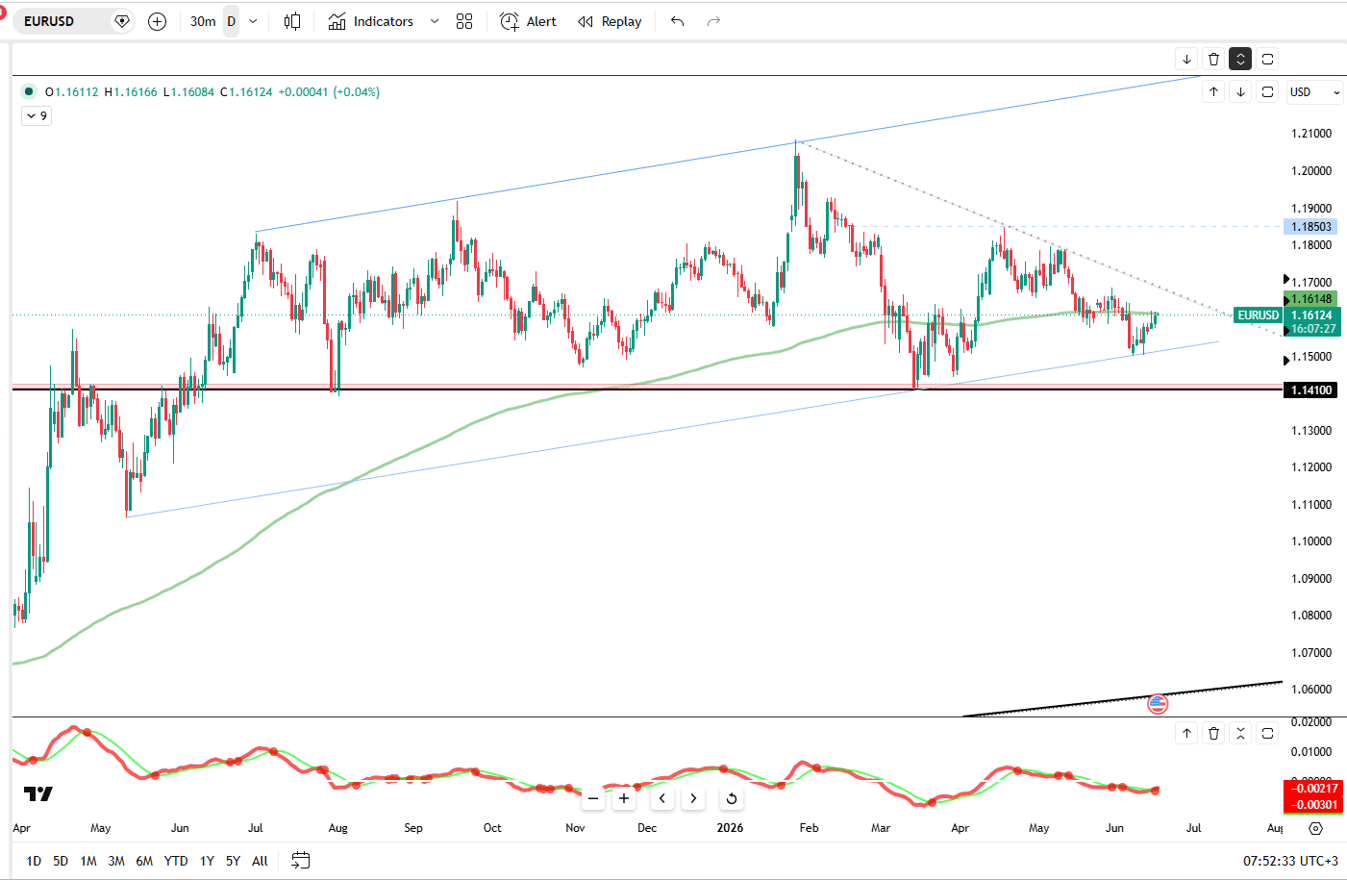
The euro climbed to $1.16, reaching its highest point since early June as global risk appetite returned following the U.S.–Iran agreement to end their three-month standoff. The framework, lifting the U.S. blockade and reopening the Strait of Hormuz, is set for signing in Switzerland this Friday. Plummeting oil prices have lowered inflation expectations, prompting markets to price in just 30 basis points of further ECB tightening this year. ECB President Christine Lagarde welcomed the diplomatic breakthrough, though Joachim Nagel cautioned that a complete recovery in oil supplies will take months, delaying immediate inflation relief.
The first resistance appears at 1.1625, while the support starts at 1.1565.
| R1: 1.1625 | S1: 1.1565 |
| R2: 1.1720 | S2: 1.1540 |
| R3: 1.1750 | S3: 1.1500 |
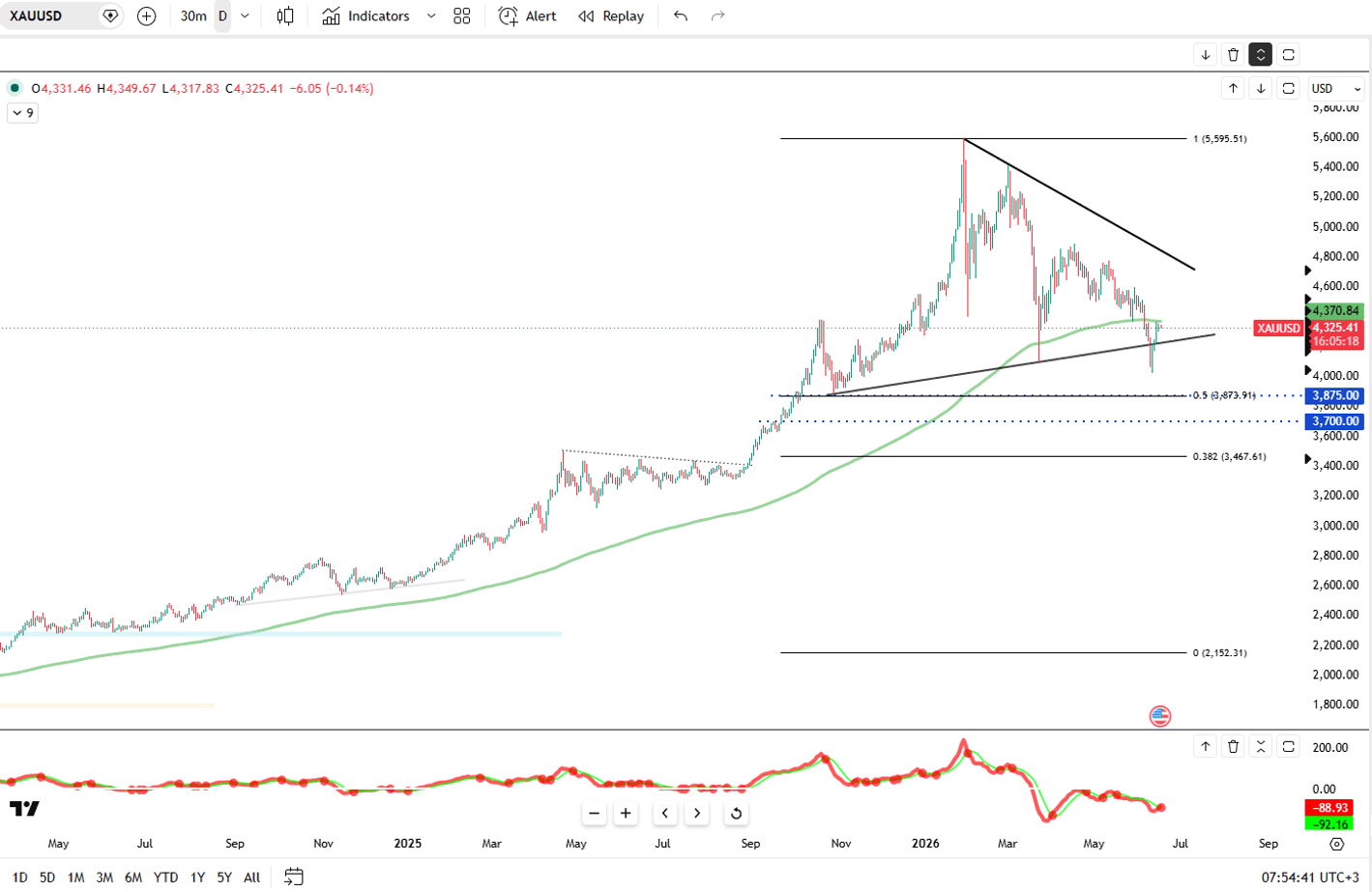
Spot gold stabilized above $4,300 per ounce on Wednesday, preserving a weekly gain of over 2% as market participants anticipated Friday's formal signing of a temporary U.S.–Iran peace pact in Switzerland. The treaty, which grants Tehran substantial economic concessions and resumes petroleum shipments via the Persian Gulf, has calmed global inflation anxieties. Meanwhile, focus shifts to the Federal Reserve's policy decision, the first chaired by Kevin Warsh, where interest rates should hold steady. This follows a busy central bank week where the RBA kept rates at 4.35% and the BOJ hiked to 1%.
First resistance is seen at $4,360, with initial support near $4,285.
| R1: 4360 | S1: 4285 |
| R2: 4377 | S2: 4150 |
| R3: 4425 | S3: 4100 |
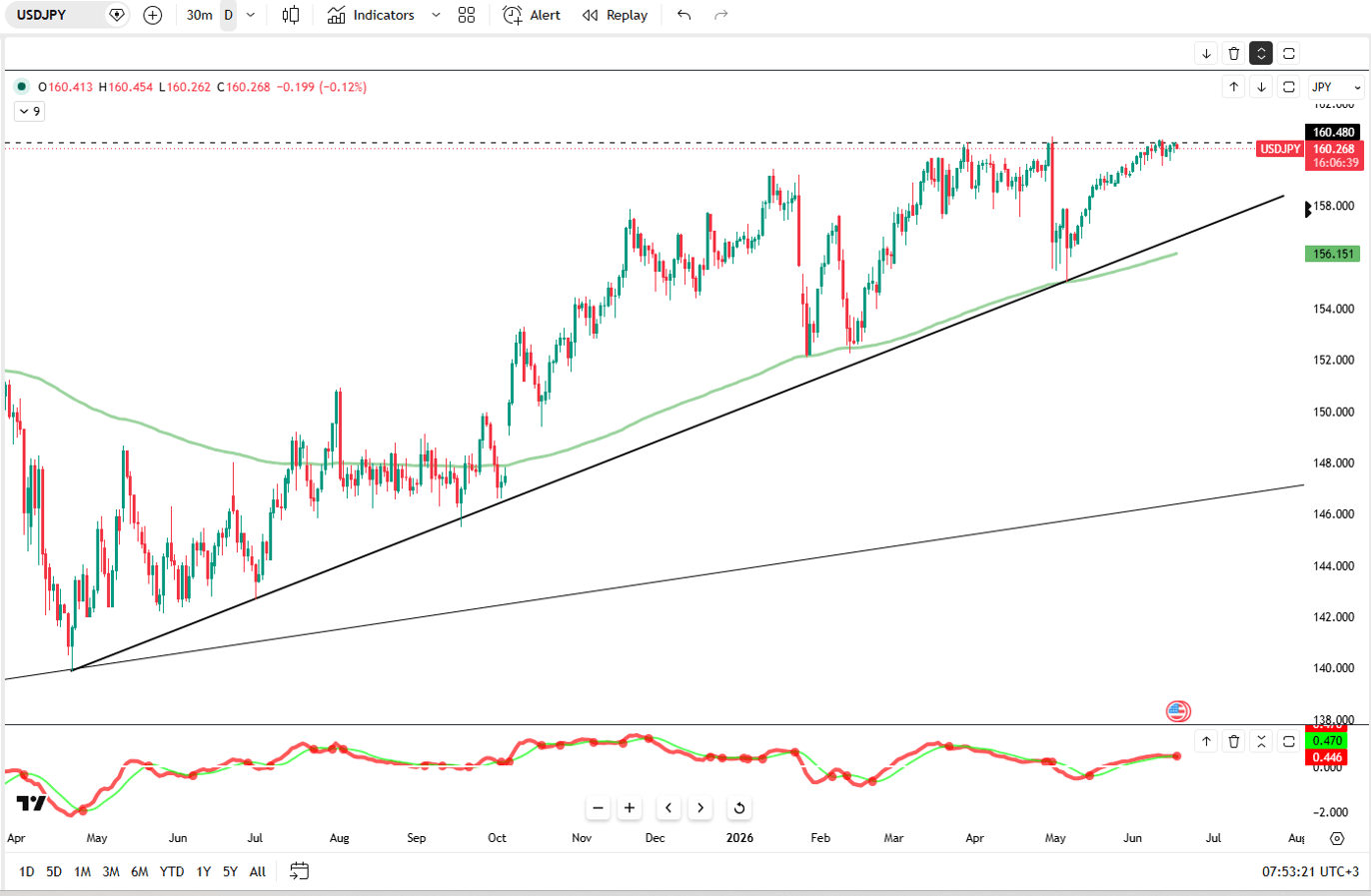
The Japanese yen stabilized around 160.4 per dollar on Wednesday, remaining subdued despite strong trade data and recent central bank tightening. Japan's May exports surged 17% year-on-year, marking the fastest growth since late 2022 due to higher automotive and semiconductor demand. This followed the Bank of Japan’s 25-basis-point interest rate hike to 1% to restrain inflation. However, internal policy division emerged as a dissenting board member highlighted mounting risks to economic growth and employment. The yen faces ongoing headwinds from persistent short-selling and carry trades, driven by the substantial yield differential between Japan and the United States.
Initial resistance stands at 160.50, while the first support is at 159.00.
| R1: 160.50 | S1: 159.00 |
| R2: 161.50 | S2: 158.30 |
| R3: 162.40 | S3: 157.50 |
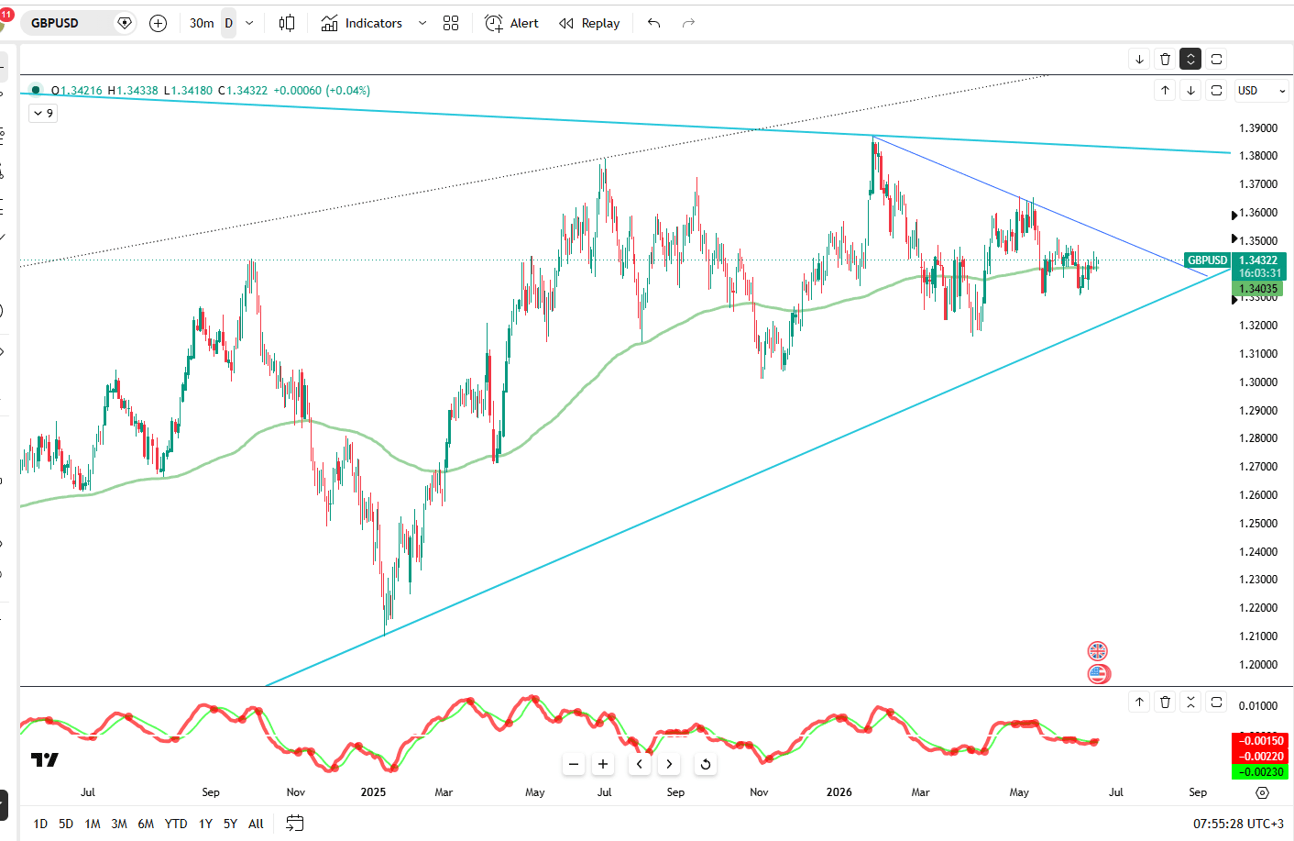
The British pound surged past $1.34, touching its highest level since early June as global risk appetite improved following the preliminary U.S.–Iran diplomatic accord. The framework, which lifts the U.S. blockade and reopens the Strait of Hormuz, is set for signing on Friday. Meanwhile, ahead of Thursday's Bank of England meeting, markets anticipate policymakers will split but ultimately hold interest rates at 3.75% to counter sticky inflation amid slower growth. Traders now price in just one additional rate hike this year, deferred toward December. Domestically, Thursday's Makerfield special election could also sway economic policy sentiment.
From a technical view, resistance stands near 1.3460, with support around 1.3400.
| R1: 1.3460 | S1: 1.3400 |
| R2: 1.3530 | S2: 1.3340 |
| R3: 1.3610 | S3: 1.3200 |
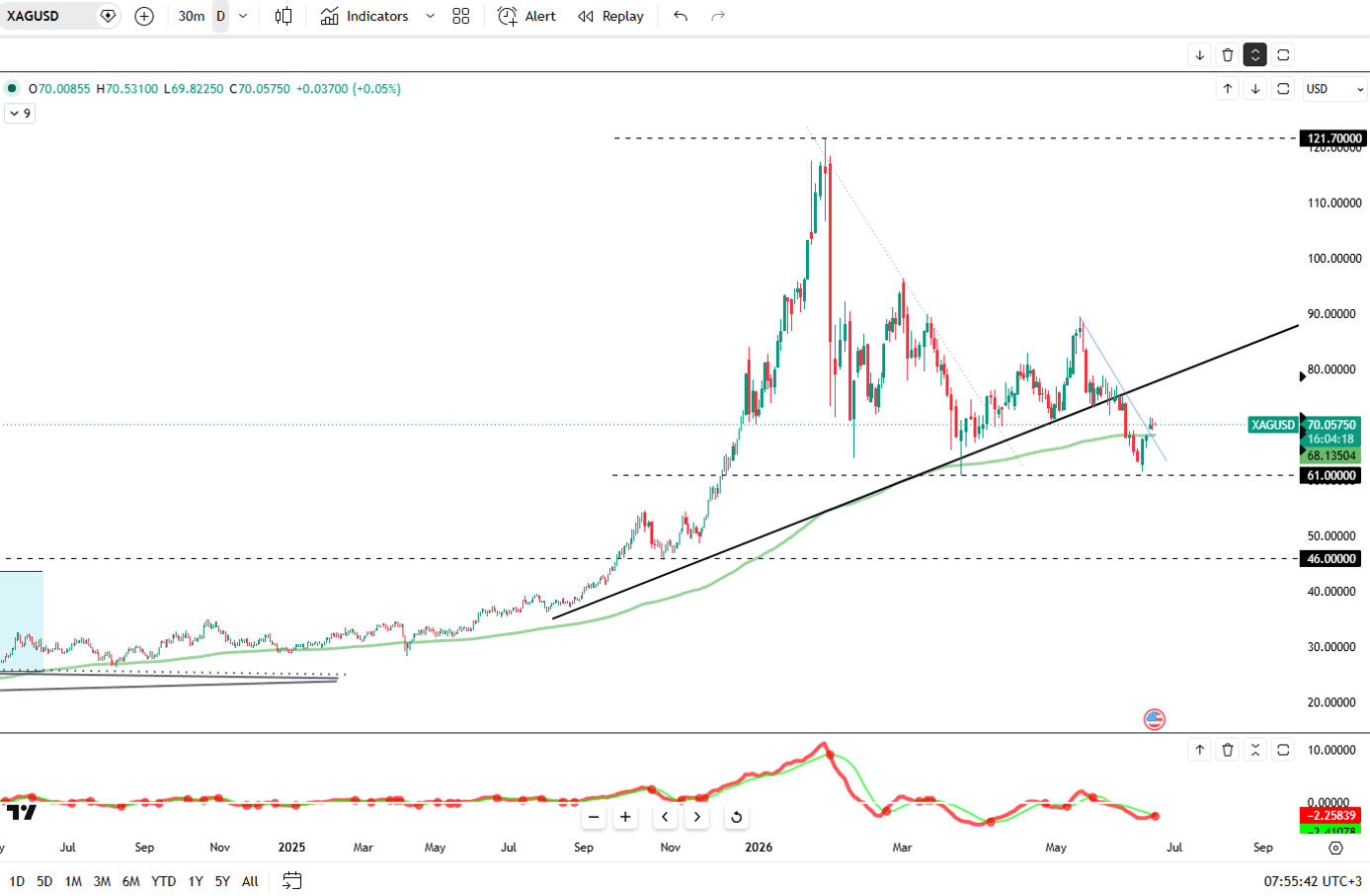
Silver stabilized around $70 per ounce on Wednesday, locking in a 3% weekly gain as financial markets anticipated Friday's signing of a short-term U.S.–Iran peace pact in Switzerland. The agreement will resume Iranian crude exports and clear Persian Gulf shipping routes, alleviating global inflation concerns. Investors are also focused on the Federal Reserve's monetary policy verdict, the first under Chair Kevin Warsh, where interest rates are expected to hold steady. This busy central bank week also saw the Reserve Bank of Australia maintain its 4.35% benchmark, while the Bank of Japan lifted borrowing costs to 1%.
From a technical view, resistance stands near $70.40, while support is located around $68.25.
| R1: 70.40 | S1: 68.25 |
| R2: 72.00 | S2: 66.05 |
| R3: 73.90 | S3: 63.20 |
Hawkish Federal Reserve meeting minutes reinforced expectations for another rate hike this year, pushing Treasury yields higher and supporting the US dollar.
Oil inventories are nearing depletion, increasing supply risks and supporting prices. Aramco estimates less than 6 billion barrels remain after over 1 billion barrels were drawn this year, while the IEA is preparing a 100-million-barrel release. The US 10-year Treasury yield stabilized near 5.31% on Wednesday, close to 24-year peaks, as markets awaited the Fed's minutes.
The dollar index steadied around 102 on Tuesday, near its highest since April 2025, as the euro weakened on French fiscal and political concerns and Spain's upcoming snap election, yet stabilized near 1.1220 after touching its lowest level since May 2025.
DetailThen Join Our Telegram Channel and Subscribe Our Trading Signals Newsletter for Free!
Join Us On Telegram!


