


Global markets remained relatively stable on Tuesday as investors assessed the impact of the newly ratified U.S.–Iran peace agreement and prepared for key central bank decisions.
The reopening of the Strait of Hormuz and the start of nuclear negotiations reduced geopolitical risks, weighing on the dollar and supporting major currencies. Attention now turns to the Federal Reserve's policy announcement under Chair Kevin Warsh, while the Bank of Japan's rate hike and expectations for further ECB and Bank of England tightening continue to shape market sentiment.
| Time | Cur. | Event | Forecast | Previous |
| 12:00 | EUR | ZEW Economic Sentiment (Jun) | -5.8 | -10.2 |
| 15:30 | USD | Import Price Index (MoM) (May) | 0.9% | 1.9% |
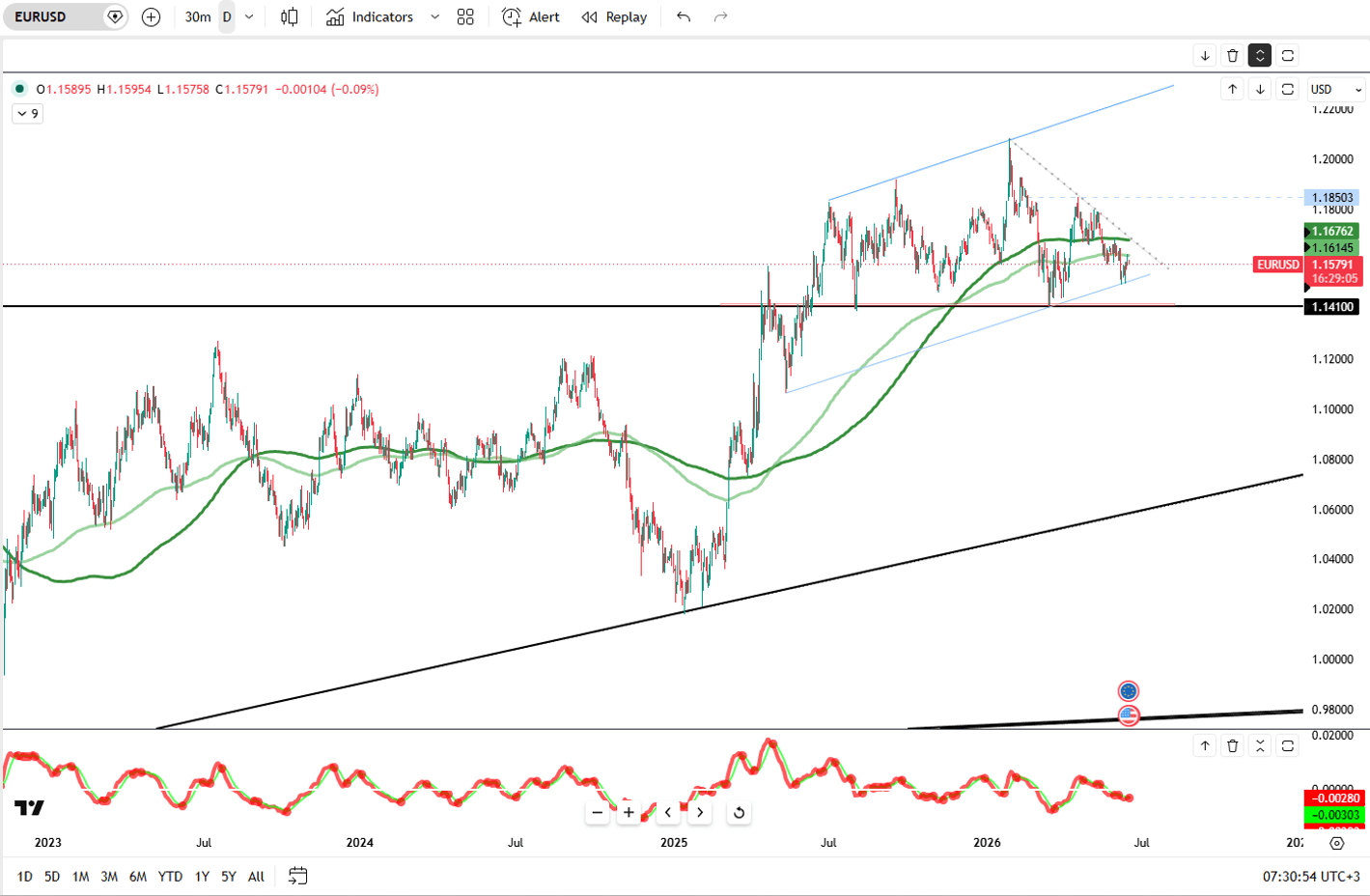
The euro stabilized just below 1.1600 on Tuesday, supported by a weakening dollar following the formal ratification of the landmark U.S.–Iran peace agreement. This signed accord reopens the Strait of Hormuz and initiates a 60-day window for nuclear talks, removing significant geopolitical friction. Meanwhile, investors continue to digest the ECB's recent interest rate hike to 2.25%, with another increase projected by September amid elevated 2026 inflation forecasts of 3.0%. Market focus now shifts to Wednesday's pivotal Federal Reserve decision under new Chair Kevin Warsh, where interest rates are widely anticipated to hold steady.
The first resistance level stands at 1.1600, while initial support is located at 1.1565.
| R1: 1.1600 | S1: 1.1565 |
| R2: 1.1625 | S2: 1.1540 |
| R3: 1.1720 | S3: 1.1500 |
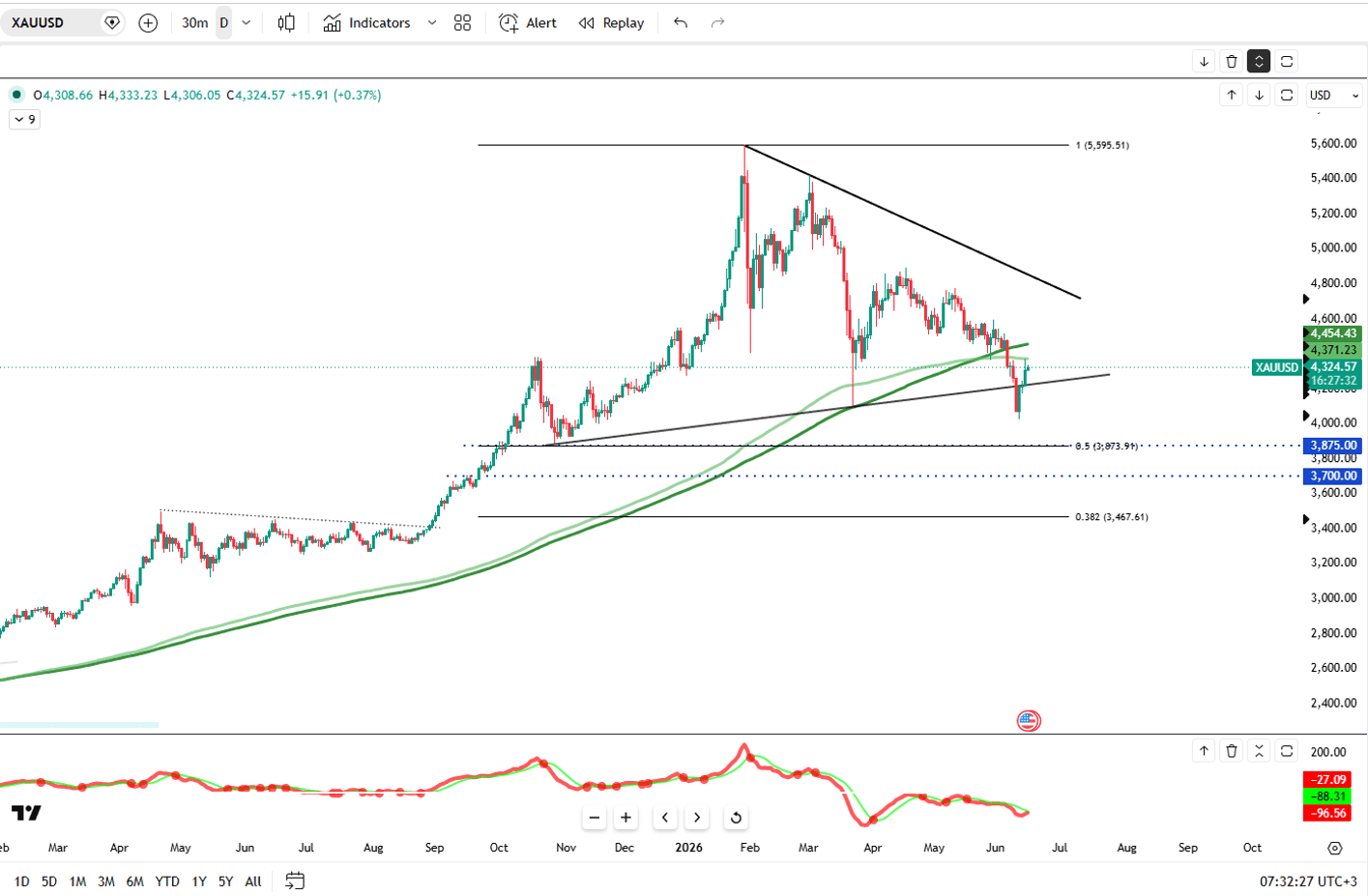
Gold prices consolidated above $4,300 per ounce on Tuesday, holding near $4,330 following a three-day rally sparked by the official virtual signing of the U.S.–Iran peace accord by President Donald Trump and Vice President JD Vance. The historic agreement reopens the Strait of Hormuz, diminishing the safe-haven premium that previously supported bullion. Having cleared past resistance at $4,220, gold is stabilizing well under January's record high of $5,590. While a recent ECB hike and firm U.S. economic data support a hawkish global outlook, investors await Wednesday's Federal Reserve decision under new Chair Kevin Warsh for fresh direction.
First resistance is seen at $4,360, with initial support near $4,285.
| R1: 4360 | S1: 4285 |
| R2: 4377 | S2: 4150 |
| R3: 4425 | S3: 4100 |
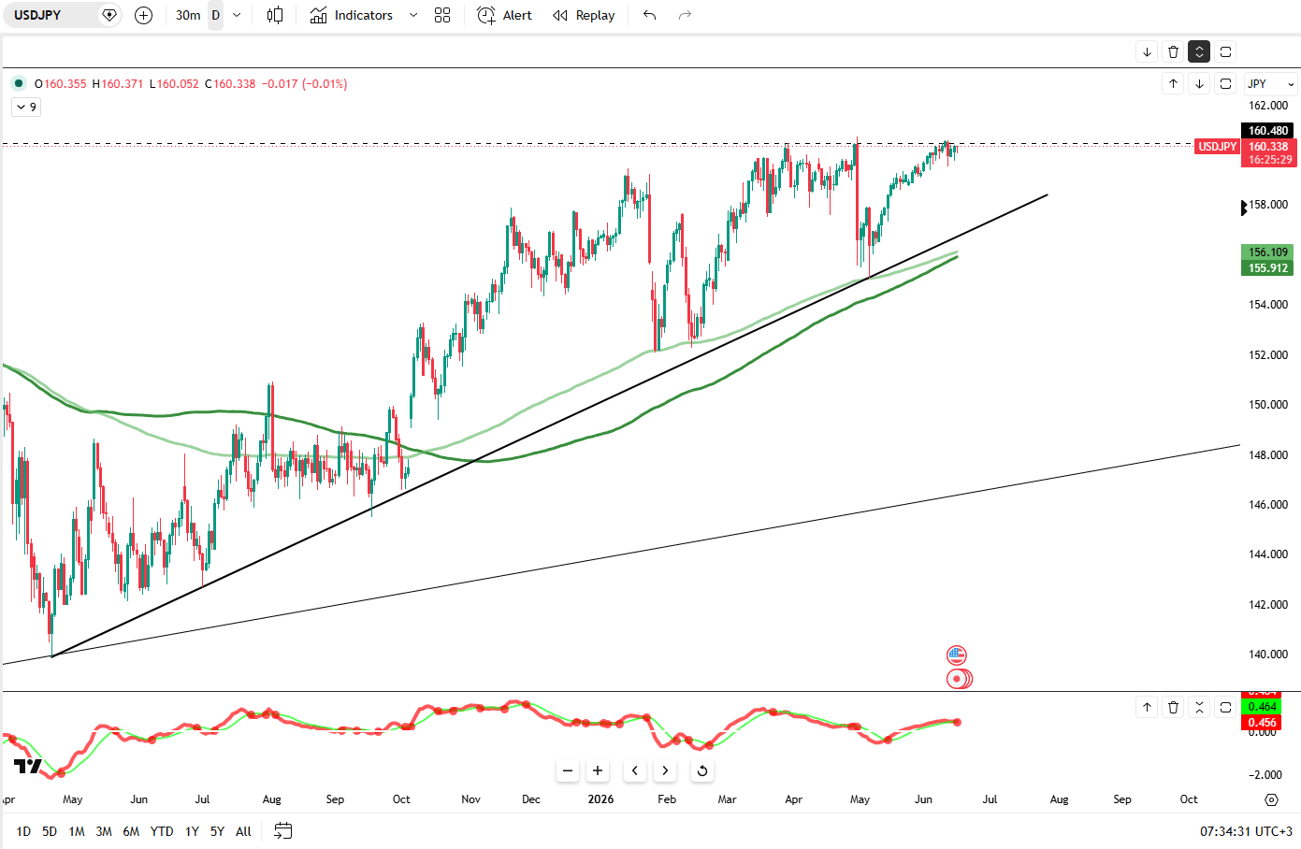
The Japanese yen appreciated toward 160.00 per dollar on Tuesday following the Bank of Japan's decision to raise interest rates by 25 basis points to 1%, marking its highest level since 1995. With Governor Kazuo Ueda hospitalized, Deputy Governor Shinichi Uchida guided the policy normalization move. Market attention is now focused on Uchida's press conference regarding the future pace of tightening and bond tapering. The yen also drew support from improving global risk sentiment after the formal ratification of the U.S.–Iran peace accord, which significantly alleviates energy security risks for import-dependent Japan.
Initial resistance stands at 160.50, while the first support is at 159.00.
| R1: 160.50 | S1: 159.00 |
| R2: 161.50 | S2: 158.30 |
| R3: 162.40 | S3: 157.50 |
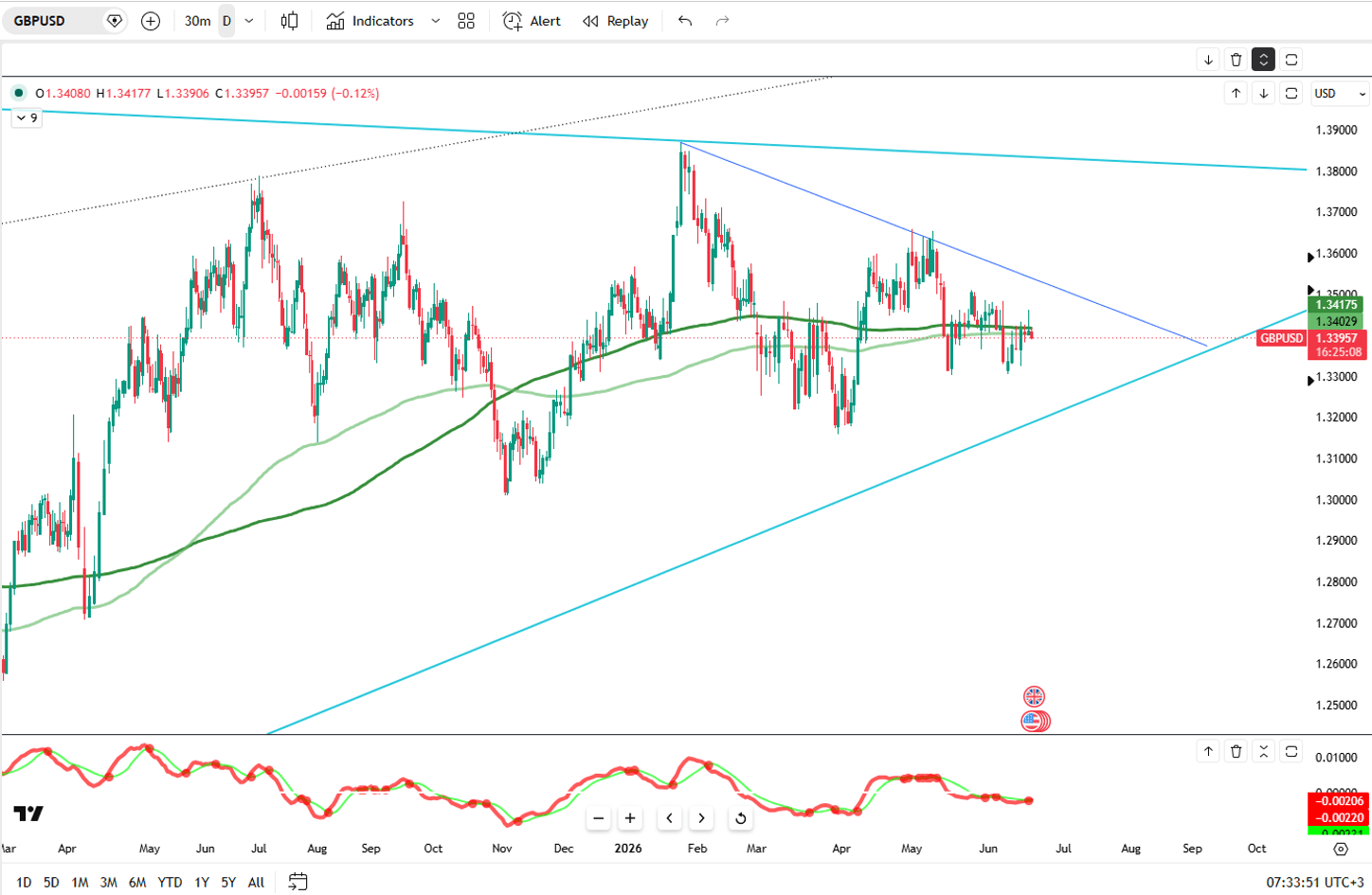
The British pound stabilized around $1.3405 on Tuesday, supported by the finalized U.S.–Iran peace agreement and expectations of a firm Bank of England stance. While the geopolitical breakthrough and falling energy prices cooled near-term inflation outlooks, persistent domestic price pressures mean markets are still pricing in a potential BoE rate hike this year. Investor focus now shifts to Wednesday's May inflation data and Thursday's BoE policy decision, where interest rates should hold at 3.75%.
From a technical view, resistance stands near 1.3460, with support around 1.3400.
| R1: 1.3460 | S1: 1.3400 |
| R2: 1.3530 | S2: 1.3340 |
| R3: 1.3610 | S3: 1.3200 |
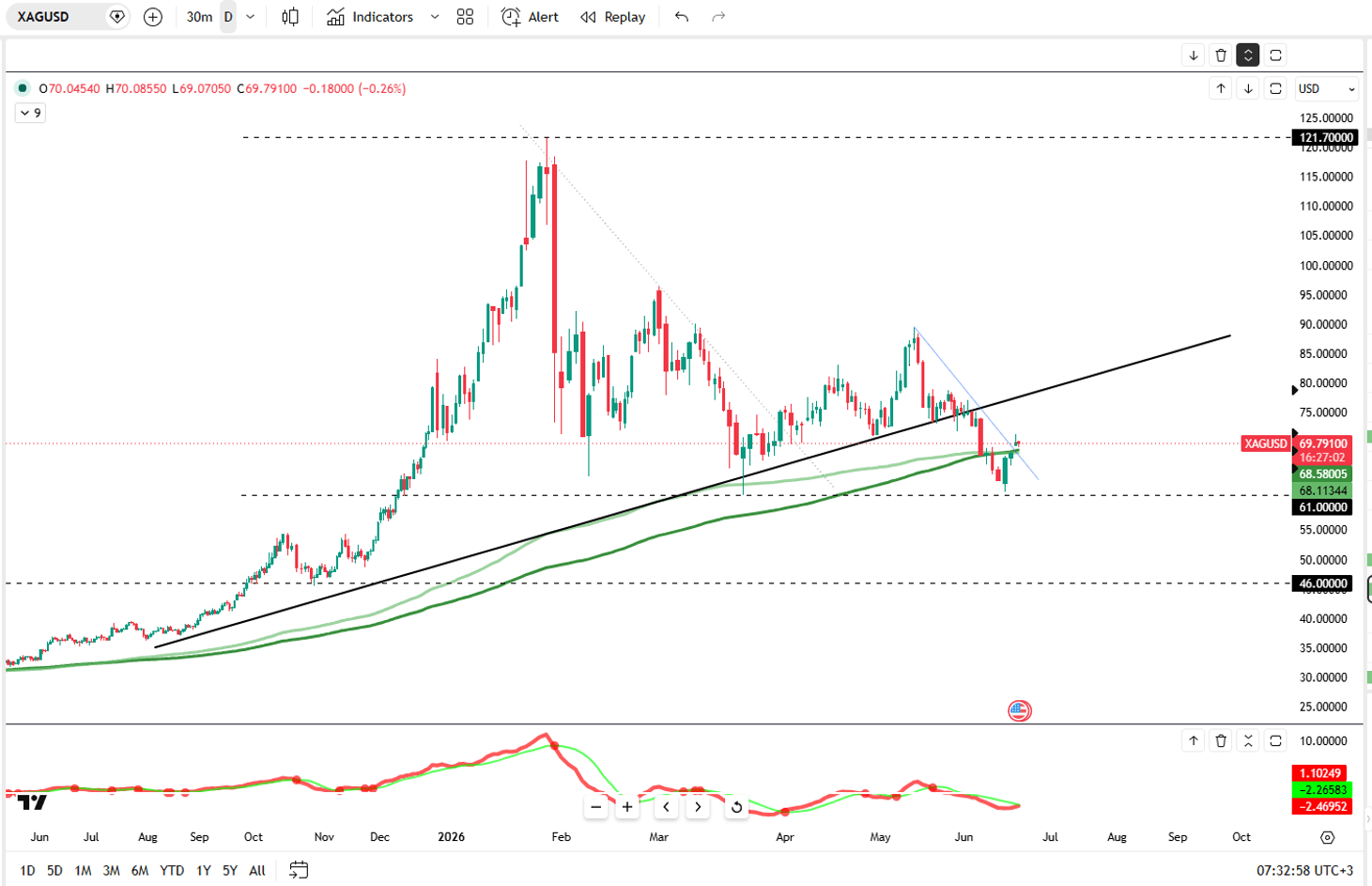
Silver stabilized near $69.80 per ounce on Tuesday, maintaining its broader upward trajectory following a powerful 6% surge in the prior session. This recovery is underpinned by fading global inflation anxieties after President Donald Trump confirmed the official signing of the U.S.–Iran peace agreement, which successfully removed a major geopolitical burden from financial markets. Meanwhile, last week's ECB rate hikes and strong U.S. producer-price data keep the potential for future Federal Reserve tightening alive, ahead of Wednesday's policy decision under new Chair Kevin Warsh.
From a technical view, resistance stands near $70.40, while support is located around $68.25.
| R1: 70.40 | S1: 68.25 |
| R2: 72.00 | S2: 66.05 |
| R3: 73.90 | S3: 63.20 |
Hawkish Federal Reserve meeting minutes reinforced expectations for another rate hike this year, pushing Treasury yields higher and supporting the US dollar.
Oil inventories are nearing depletion, increasing supply risks and supporting prices. Aramco estimates less than 6 billion barrels remain after over 1 billion barrels were drawn this year, while the IEA is preparing a 100-million-barrel release. The US 10-year Treasury yield stabilized near 5.31% on Wednesday, close to 24-year peaks, as markets awaited the Fed's minutes.
The dollar index steadied around 102 on Tuesday, near its highest since April 2025, as the euro weakened on French fiscal and political concerns and Spain's upcoming snap election, yet stabilized near 1.1220 after touching its lowest level since May 2025.
DetailThen Join Our Telegram Channel and Subscribe Our Trading Signals Newsletter for Free!
Join Us On Telegram!


