


The dollar index held steady near 99.4 on Friday and was set for a weekly gain as Middle East uncertainty continued to increase demand for safe-haven assets. President Donald Trump said peace talks are nearing their final stage and is reportedly hesitant to escalate into full-scale conflict with Iran despite recent tensions. However, Iran’s foreign minister Abbas Araghchi stated that no meaningful progress has been made in negotiations, while Hezbollah rejected a US-brokered ceasefire proposal between Israel and Lebanon.
Global markets remained focused on the balance between geopolitical risks and monetary policy expectations. The euro edged higher as investors priced in a likely ECB rate hike following stronger inflation data, while sterling also benefited from growing expectations of tighter policy from the Bank of England. Meanwhile, gold and silver remained under pressure as elevated energy prices fueled concerns that central banks may need to keep interest rates higher for longer. In Asia, the yen hovered near the key 160 level, keeping intervention risks firmly on traders’ radar as officials reiterated their readiness to act against excessive currency volatility.
| Time | Cur. | Event | Forecast | Previous |
| 15:30 | USD | Average Hourly Earnings | 0.3% | 0.2% |
| 15:30 | USD | Nonfarm Payrolls (May) | 85K | 115K |
| 15:30 | USD | Unemployment Rate (May) | 4.3% | 4.3% |
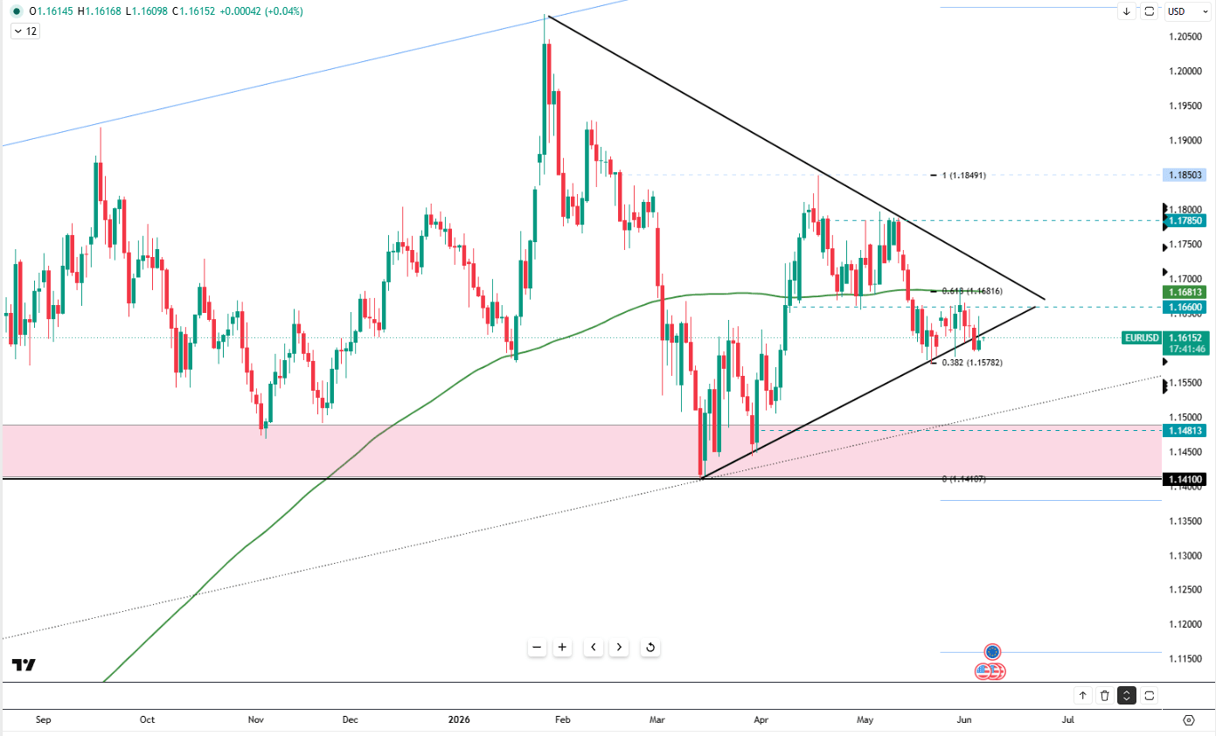
The euro edged toward $1.164, supported by potential Middle East de-escalation and upcoming ECB policy decisions. While Iran dismissed diplomatic progress with the U.S., Israel–Lebanon ceasefire reports and a U.S. House vote restricting military action against Tehran lifted broader market sentiment.
Domestically, stubborn Eurozone price pressures keep monetary tightening firmly on the table. Following May's inflation print of 3.2%, markets confidently anticipate a 25 basis point ECB interest rate hike on June 11, with subsequent increases expected later this year to anchor core prices.
For EUR/USD, the initial resistance is seen at 1.1650, while the closest support is positioned at 1.1570.
| R1: 1.1650 | S1: 1.1570 |
| R2: 1.1700 | S2: 1.1520 |
| R3: 1.1780 | S3: 1.1450 |
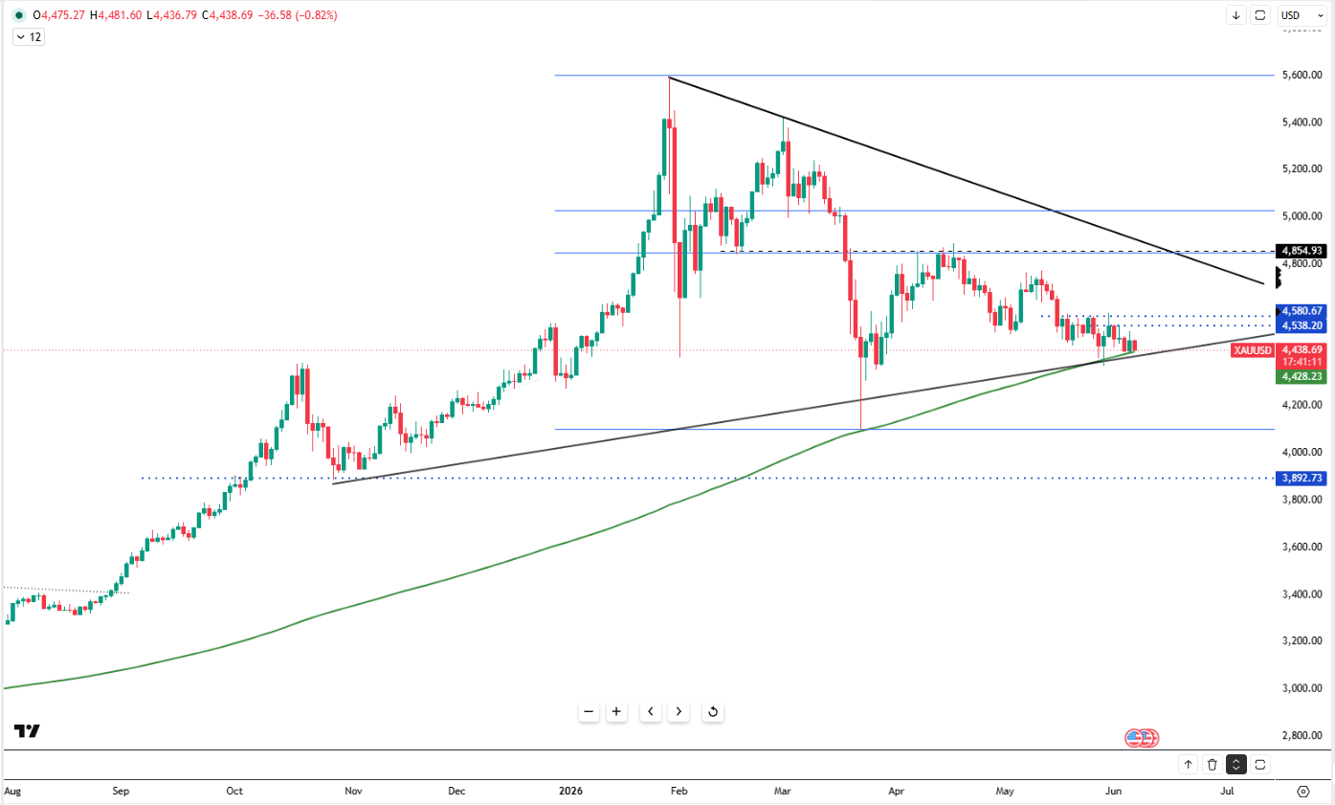
Gold dipped below $4,450 on Friday, heading for a weekly loss exceeding 2% as persistent Middle East friction fuels inflation and interest rate concerns. While President Donald Trump signaled that peace talks are nearing completion, conflicting signals emerged. Iran’s foreign minister denied significant diplomatic progress, and Hezbollah rejected a U.S. brokered ceasefire proposal, dashing immediate hopes of de-escalation.
Compounding the pressure on precious metals, ongoing geopolitical instability and supply threats in the Strait of Hormuz kept crude oil prices elevated, reinforcing long term global inflation risks.
First resistance is seen at $4510, with initial support near $4425.
| R1: 4510 | S1: 4425 |
| R2: 4590 | S2: 4390 |
| R3: 4650 | S3: 4340 |
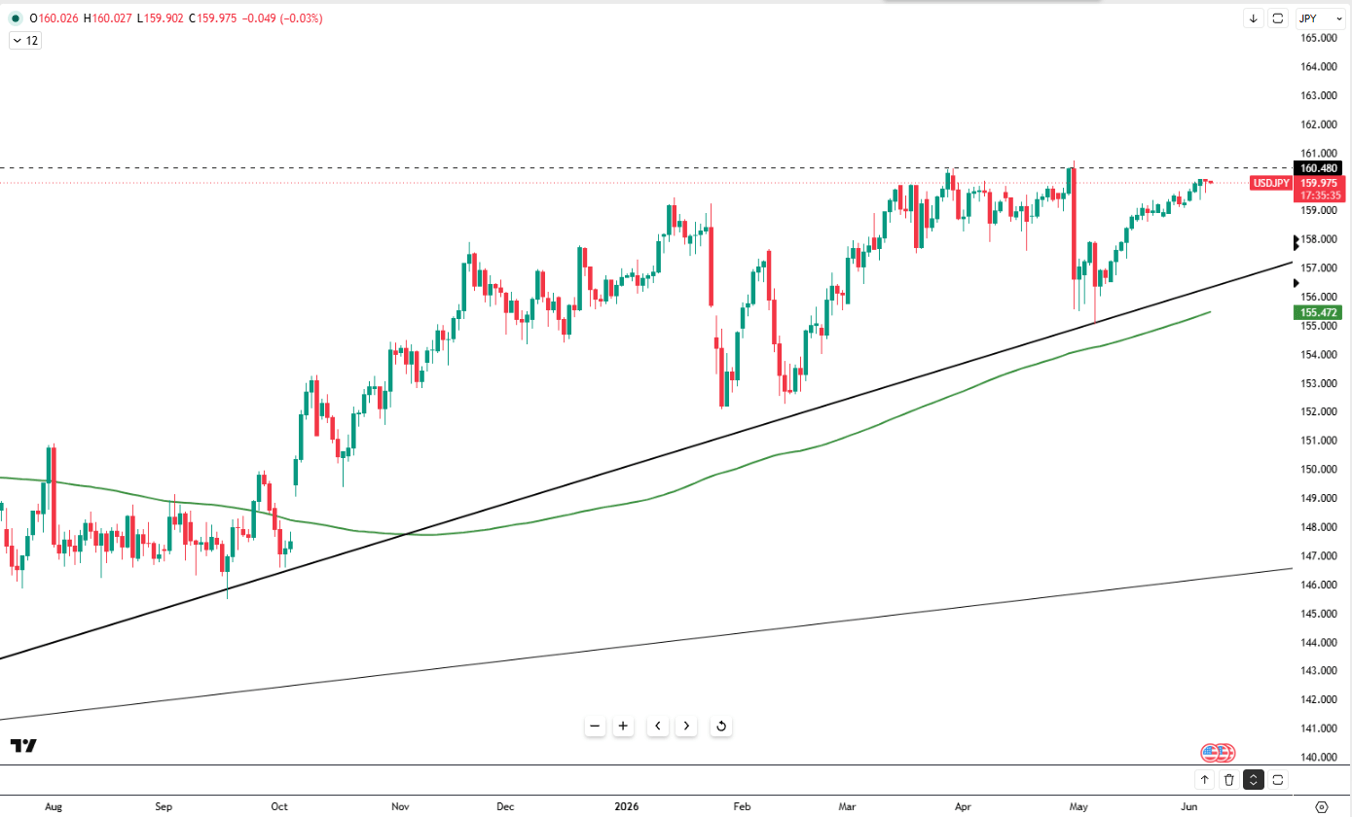
The Japanese yen hovered near 160 per dollar for a third consecutive session on Friday, prompting renewed verbal warnings from Tokyo. Prime Minister Takaichi stated that the government aims to strengthen the currency by revitalizing economic fundamentals and domestic investment. Finance Minister Katayama affirmed readiness to intervene, closely coordinating with the U.S.
Data revealed Japan’s foreign reserves plummeted at a record pace in May following prior large scale currency intervention. Meanwhile, BOJ Governor Ueda noted that future rate hikes must be carefully balanced if inflation risks begin to overshadow growth concerns.
Initial resistance stands at 160.30, while the first support is located at 159.40.
| R1: 160.30 | S1: 159.40 |
| R2: 160.90 | S2: 158.30 |
| R3: 161.50 | S3: 157.50 |
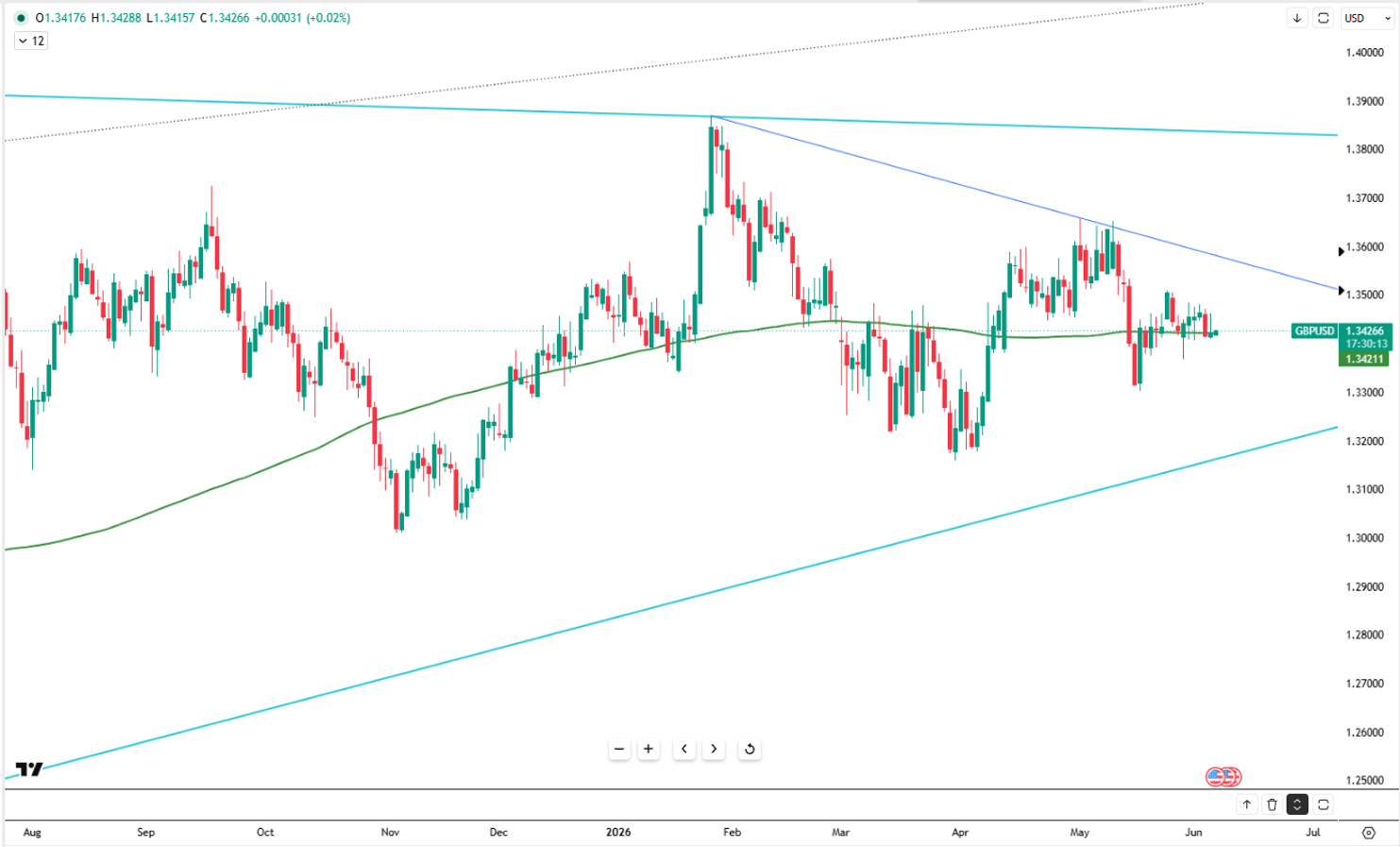
The British pound climbed toward $1.348, supported by optimism surrounding a potential Middle East ceasefire. While Iran denied diplomatic progress with Washington and regional arguments persisted, an Israel–Lebanon truce and a U.S. House vote blocking military action against Tehran lifted broader market sentiment.
In the UK, investors are adjusting their monetary policy expectations. Markets now price in nearly two Bank of England interest rate hikes this year, with the initial move anticipated in September, as policymakers carefully weigh sticky inflation against emerging signs of a cooling labor market.
From a technical view, resistance stands near 1.3510, with support around 1.3390.
| R1: 1.3510 | S1: 1.3390 |
| R2: 1.3560 | S2: 1.3340 |
| R3: 1.3630 | S3: 1.3300 |
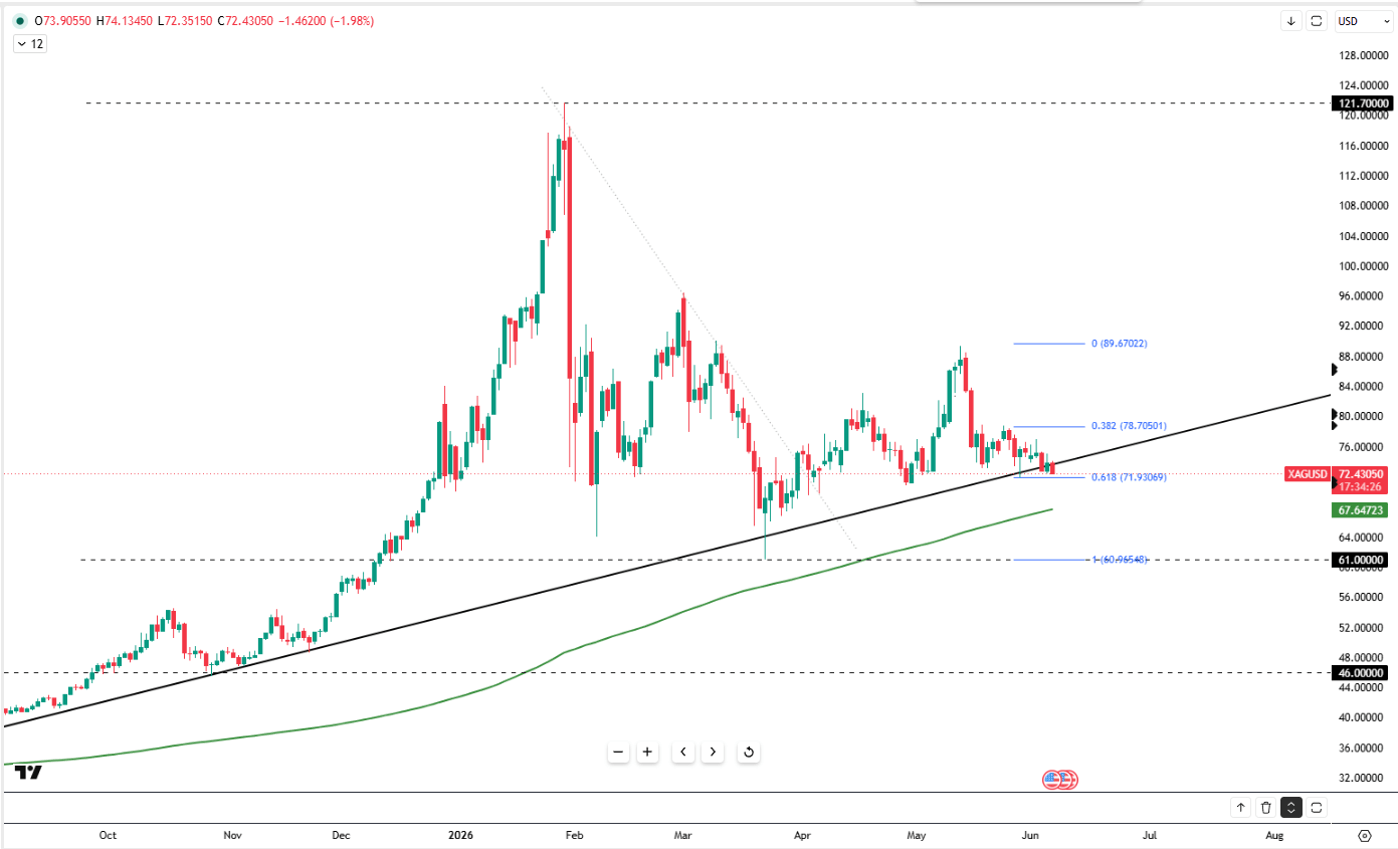
Silver fell below $73 on Friday, heading toward a steep weekly loss of nearly 4% as persistent Middle East friction fuels inflation and interest rate anxieties. While President Donald Trump suggested peace talks are entering their final phase, geopolitical roadblocks remain. Iran’s foreign minister reported no meaningful diplomatic progress, and Hezbollah rejected a U.S. brokered ceasefire, crushing near term de-escalation hopes.
Furthermore, ongoing clashes and critical energy flow disruptions through the Strait of Hormuz kept oil prices elevated, reinforcing stubborn global inflationary pressures and dragging down precious metals.
From a technical view, resistance stands near $76.20, while support is located around $72.40.
| R1: 76.20 | S1: 72.40 |
| R2: 78.80 | S2: 71.50 |
| R3: 80.50 | S3: 68.50 |
 US Inflation Hits 3.7% as Energy Prices Surge
September’s inflation report reveals new price pressures across the US economy.
Detail Dollar Retreat Supports Metals (10.15.2026)A softer US dollar and declining Treasury yields offered some relief to financial markets as Federal Reserve officials signaled a willingness to pause rate adjustments.
Houthi missile attacks on Saudi Aramco and stepped-up Iranian strikes on tankers in Hormuz deepened worries over supply, while the IMF flagged threats to global growth from the Middle East conflict, high debt levels and a potential AI-boom reversal.
DetailThen Join Our Telegram Channel and Subscribe Our Trading Signals Newsletter for Free!
Join Us On Telegram!


