


After four months of cooling, eurozone inflation turned higher in September, rising to 2.2% from 2.0% in August.
The increase nudged the figure above the ECB’s mid-point target and re-ignited debate over how sustainable Europe’s path back to price stability really is.
Energy prices remain the key swing factor. They fell just 0.4% in September compared with a 2.0% drop in August. The slower decline suggests the cushion provided by cheaper energy is fading, leaving the door open for renewed pressure if supply risks flare as winter approaches.
Households caught a small break at the supermarket. Food, alcohol, and tobacco prices eased to 3.0% year-on-year, down from 3.2%. Much of that came from unprocessed food, helped by harvest season and steadier supply chains. Still, food costs remain well above the headline inflation rate, squeezing family budgets.
Services told a different story. Inflation in the sector ticked up to 3.2% from 3.1%, powered by rising wages and resilient demand for travel and leisure. Meanwhile, non-energy industrial goods inflation held steady at 0.8%, showing that consumer goods prices remain contained despite global disruptions.
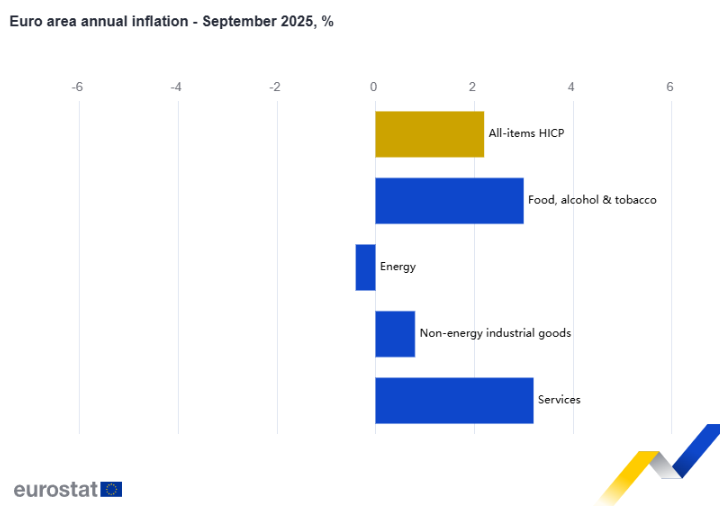
Core inflation, stripping out food and energy, was unchanged at 2.3%, its lowest since early 2022. For the ECB, this offers reassurance that underlying pressures are stabilizing even as the headline swings with energy. For households and businesses, it hints at calmer waters ahead, but energy markets this winter could decide how long that calm lasts.
A deepening sell-off in technology and artificial intelligence stocks pressured financial markets, forcing investors to liquidate precious metals holdings to cover losses elsewhere.
Escalating Middle East tensions pushed oil prices higher following a deadly drone strike on Saudi Aramco's Shaybah facility, renewing inflation concerns and expectations for further Federal Reserve tightening.
Rising oil prices renewed inflation concerns as uncertainty surrounding the US-Iran conflict and continued disruptions in the Strait of Hormuz reinforced expectations for further monetary tightening.
Then Join Our Telegram Channel and Subscribe Our Trading Signals Newsletter for Free!
Join Us On Telegram!


