


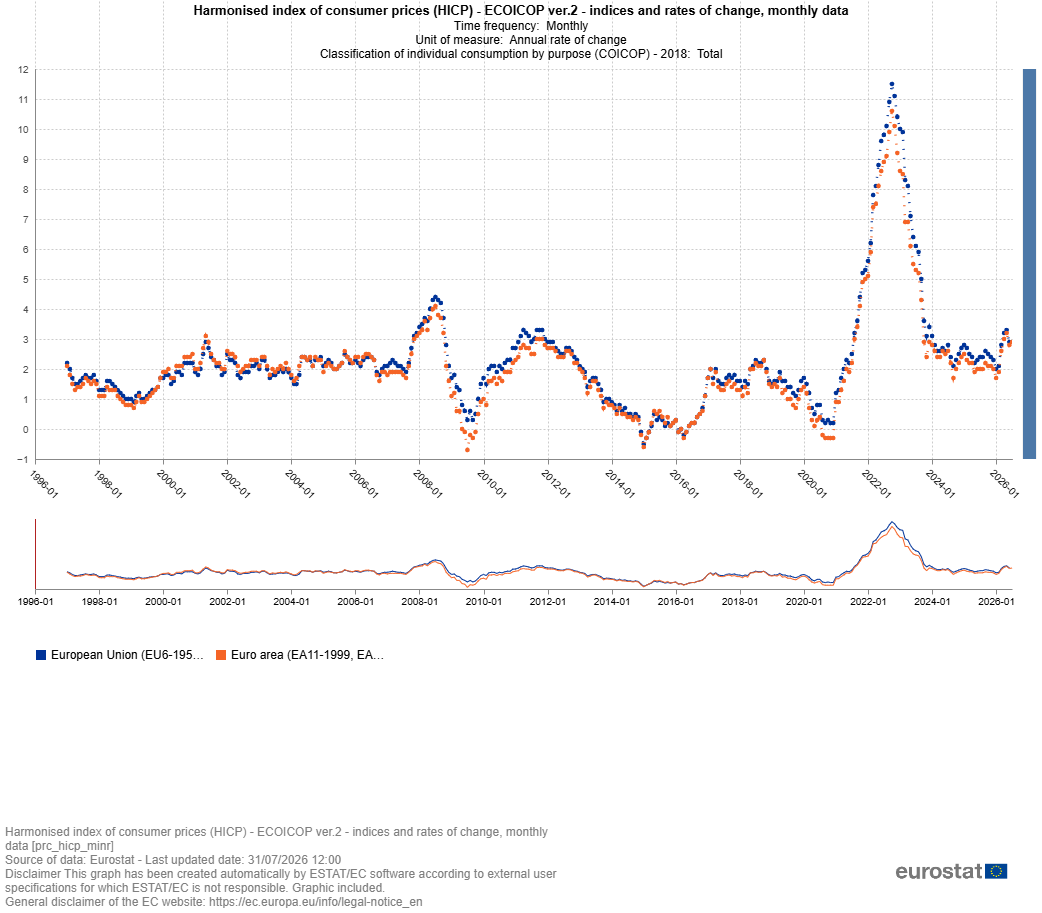
Eurozone inflation edged higher in July, with rising energy prices keeping overall price pressures well above the European Central Bank's target. Annual inflation increased to 2.9%, up from 2.8% in June, in line with market expectations but still significantly above the ECB's 2% goal.
The increase was largely driven by energy costs, with energy inflation accelerating to 10.0% from 8.5% a month earlier. Higher fuel prices and supply concerns linked to renewed US-Iran tensions contributed to the stronger reading.
Underlying inflation also showed signs of strengthening. Core inflation rose to 2.5%, while services inflation reached 3.3%. Prices for non-energy industrial goods also increased at a faster pace, suggesting inflationary pressures remained broad-based.
In contrast, inflation for food, alcohol, and tobacco eased to 1.2% from 1.5%, providing only limited relief against rising energy and service costs.
Among the bloc's largest economies, inflation accelerated in Germany, France, Spain, and the Netherlands, while Italy recorded a slight slowdown. The latest figures are likely to reinforce expectations that the European Central Bank will maintain a restrictive monetary policy. If inflation remains elevated in the coming months, markets may increasingly price in the possibility of another interest rate increase.
A deepening sell-off in technology and artificial intelligence stocks pressured financial markets, forcing investors to liquidate precious metals holdings to cover losses elsewhere.
Escalating Middle East tensions pushed oil prices higher following a deadly drone strike on Saudi Aramco's Shaybah facility, renewing inflation concerns and expectations for further Federal Reserve tightening.
Rising oil prices renewed inflation concerns as uncertainty surrounding the US-Iran conflict and continued disruptions in the Strait of Hormuz reinforced expectations for further monetary tightening.
Then Join Our Telegram Channel and Subscribe Our Trading Signals Newsletter for Free!
Join Us On Telegram!


