


In September, the U.S. Personal Consumption Expenditures (PCE) price index rose by 0.2% from the previous month, according to the latest data.
In September, the U.S. Personal Consumption Expenditures (PCE) price index rose by 0.2% from the previous month, according to the latest data. Within this measure, goods prices saw a slight decline of 0.1%, while service prices increased by 0.3%. Food prices rose by 0.4%, contrasting with a 2.0% drop in energy prices. When excluding the more volatile food and energy categories, the core PCE price index registered a 0.3% month-over-month increase.
Year-over-year, the PCE price index showed a 2.1% increase for September. This includes a 1.2% decrease in goods prices and a 3.7% rise in services. Food prices were up by 1.2%, while energy costs fell sharply by 8.1%. The core PCE price index, which excludes food and energy, rose 2.7% over the past year, reflecting continued inflation pressures, particularly in the services sector.
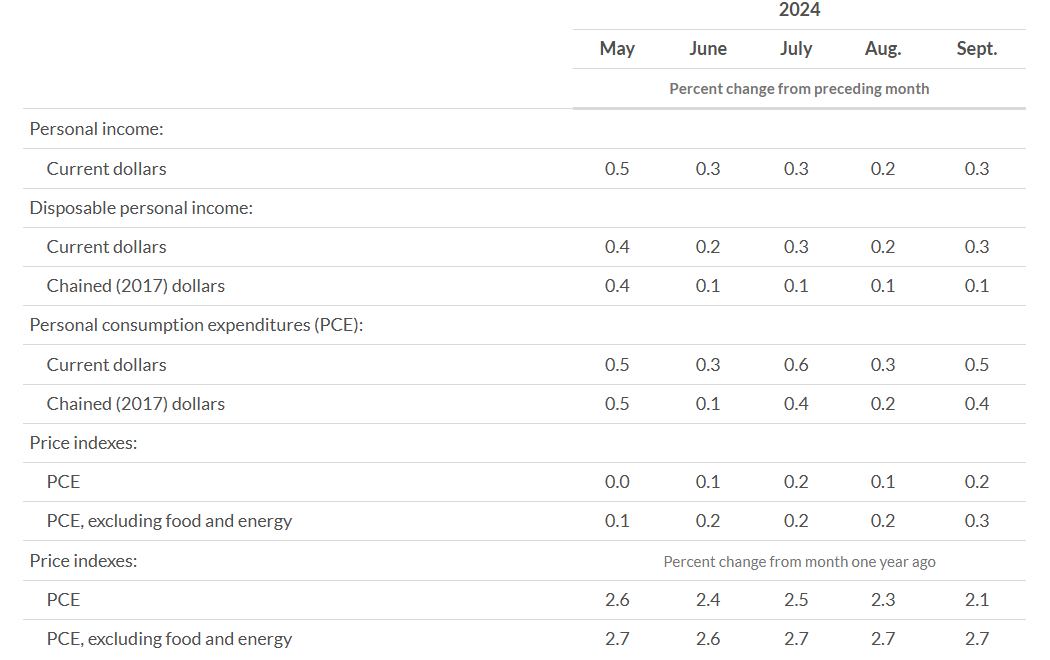
Source: U.S. Bureau of Economic Analysis
Escalating Middle East tensions pushed oil prices higher following a deadly drone strike on Saudi Aramco's Shaybah facility, renewing inflation concerns and expectations for further Federal Reserve tightening.
Rising oil prices renewed inflation concerns as uncertainty surrounding the US-Iran conflict and continued disruptions in the Strait of Hormuz reinforced expectations for further monetary tightening.
Elevated oil prices and rising Treasury yields weighed on precious metals as persistent geopolitical tensions reinforced inflation concerns and expectations for further Federal Reserve tightening.
Then Join Our Telegram Channel and Subscribe Our Trading Signals Newsletter for Free!
Join Us On Telegram!


