


In November 2024, the Consumer Price Index for All Urban Consumers (CPI-U) increased by 0.3% on a seasonally adjusted basis, according to the U.S. Bureau of Labor Statistics.
In November 2024, the Consumer Price Index for All Urban Consumers (CPI-U) increased by 0.3% on a seasonally adjusted basis, according to the U.S. Bureau of Labor Statistics. This follows a consistent 0.2% monthly increase in each of the prior four months. Over the past year, the CPI rose by 2.7% before seasonal adjustments, slightly up from October’s annual rate of 2.6%.
The shelter index rose by 0.3% in November, accounting for nearly 40% of the total monthly increase in the CPI. Food prices also saw a significant rise, with the food index climbing 0.4%. Within this category, the cost of food at home increased by 0.5%, while food away from home rose by 0.3%.
The energy index posted a modest increase of 0.2%, recovering from no change in October. Excluding food and energy, the core CPI also increased by 0.3% in November, matching the gains observed over the previous three months.
Several categories experienced notable price increases in November:
However, the communication index was one of the few major categories to decline, helping to offset broader price pressures.
For the 12 months ending in November, the all-items index rose by 2.7%, with core inflation (excluding food and energy) up by 3.3%. The energy index declined by 3.2% year-over-year, continuing to exert a moderating effect on overall inflation. In contrast, food prices increased by 2.4% over the same period, contributing to sustained upward pressure on the CPI.
The November data highlights ongoing inflationary pressures in key areas such as shelter and food, though declines in energy prices continue to temper the overall rise in consumer costs.
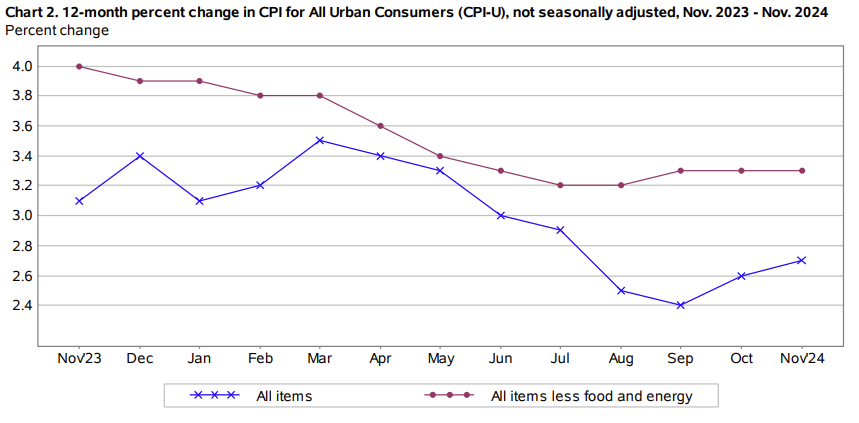
Source: U.S. Bureau of Labor Statistics
Escalating Middle East tensions pushed oil prices higher following a deadly drone strike on Saudi Aramco's Shaybah facility, renewing inflation concerns and expectations for further Federal Reserve tightening.
Rising oil prices renewed inflation concerns as uncertainty surrounding the US-Iran conflict and continued disruptions in the Strait of Hormuz reinforced expectations for further monetary tightening.
Elevated oil prices and rising Treasury yields weighed on precious metals as persistent geopolitical tensions reinforced inflation concerns and expectations for further Federal Reserve tightening.
Then Join Our Telegram Channel and Subscribe Our Trading Signals Newsletter for Free!
Join Us On Telegram!


