


The number of Americans filing for unemployment benefits fell to 213,000 for the week ending February 8, reflecting a decrease of 7,000 from the previous week's revised figure of 220,000, according to data from the U.S. Department of Labor. The prior week’s estimate was revised upward by 1,000 from 219,000 to 220,000.
The four-week moving average, which smooths out short-term volatility, dropped by 1,000 to 216,000, down from the previous week's revised average of 217,000. This continued downward trend indicates resilience in the labor market, despite economic uncertainties.
For the week ending February 1, the insured unemployment rate remained unchanged at 1.2%, suggesting that longer-term unemployment remains in check. The total number of insured unemployed individuals fell to 1,850,000, a drop of 36,000 from the previous week’s 1,886,000.
The four-week moving average of insured unemployment also edged lower, declining by 750 to 1,871,500, down from 1,872,250 the previous week. These figures suggest that while layoffs persist, displaced workers are finding new employment relatively quickly.
The continued decline in jobless claims points to a labor market that remains strong, even as the broader economy navigates challenges such as interest rate uncertainty and slowing growth in certain sectors. With hiring activity still steady and unemployment rates largely unchanged, the latest data suggests that employers are maintaining cautious optimism about workforce retention heading into the coming months.
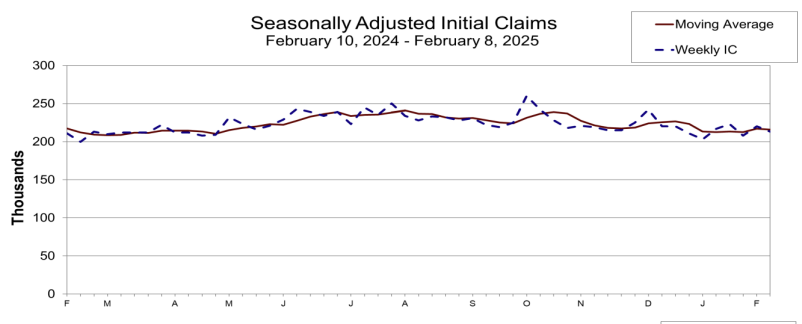
Source: U.S. Department of Labor
Dollar strength remained a key pressure across major currencies and precious metals as Federal Reserve officials reinforced expectations for further monetary tightening.
Renewed expectations for further Federal Reserve tightening kept the dollar supported as policymakers continued to warn about persistent inflation risks.
 Fed, BOJ Hikes Lift Dollar as Oil Falls (21 – 25 September)
Global markets entered the week balancing tighter monetary policy against signs of easing Middle East energy risks. The Federal Reserve remains the main macro driver after raising rates to 3.75%–4.00%, its first hike since 2023, and signaling that another increase remains possible this year. The Dollar Index advanced to 100.4, while Treasury yields remained elevated. The Bank of Japan also tightened policy, raising rates to 1.25%, although dissent within the board suggested that future increases could come at a slower pace.
DetailThen Join Our Telegram Channel and Subscribe Our Trading Signals Newsletter for Free!
Join Us On Telegram!


