


For the week ending January 4, seasonally adjusted initial jobless claims were reported at 201,000, reflecting a decline of 10,000 from the previous week's revised figure of 211,000.
For the week ending January 4, seasonally adjusted initial jobless claims were reported at 201,000, reflecting a decline of 10,000 from the previous week's revised figure of 211,000. The 4-week moving average of initial claims dropped by 10,250, reaching 213,000, compared to the prior week's revised average of 223,250.
The seasonally adjusted insured unemployment rate for the week ending December 28 remained unchanged at 1.2%, consistent with the prior week's unrevised rate. The number of seasonally adjusted insured unemployed individuals for the same period increased by 33,000, rising to 1,867,000 from the previous week's revised level. The prior week's figure was revised downward by 10,000, from 1,844,000 to 1,834,000.
Additionally, the 4-week moving average of insured unemployment decreased by 3,000, settling at 1,865,500. This represents a slight improvement from the previous week's revised average of 1,868,500, which had also been revised down by 2,250 from an earlier estimate of 1,870,750.
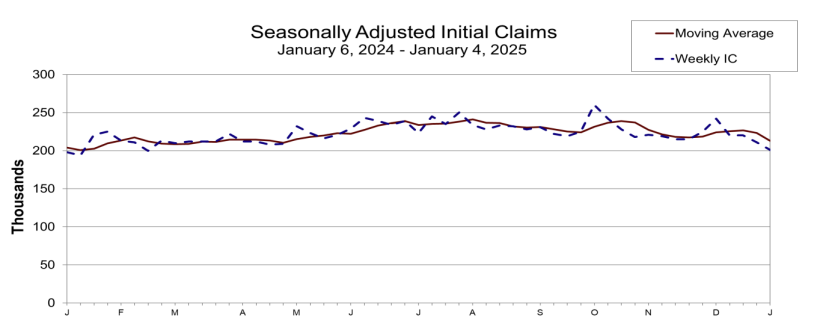
Source: U.S. Department of Labor
A deepening sell-off in technology and artificial intelligence stocks pressured financial markets, forcing investors to liquidate precious metals holdings to cover losses elsewhere.
Escalating Middle East tensions pushed oil prices higher following a deadly drone strike on Saudi Aramco's Shaybah facility, renewing inflation concerns and expectations for further Federal Reserve tightening.
Rising oil prices renewed inflation concerns as uncertainty surrounding the US-Iran conflict and continued disruptions in the Strait of Hormuz reinforced expectations for further monetary tightening.
Then Join Our Telegram Channel and Subscribe Our Trading Signals Newsletter for Free!
Join Us On Telegram!


