


Private sector employment in the United States increased by 62,000 jobs in April 2025, marking the smallest monthly gain since July 2024 and coming in well below market expectations of 115,000.
The figure is also a sharp drop from the revised 147,000 jobs added in March, according to the ADP National Employment Report, developed by ADP Research Institute in collaboration with the Stanford Digital Economy Lab.
The deceleration in hiring highlights the growing challenges faced by businesses, with recent government-imposed tariffs emerging as a key factor dampening labor demand. As trade costs rise, many employers appear to be scaling back hiring plans, despite otherwise stable economic conditions.
Job gains were concentrated in select sectors, while others saw notable contractions:
However, these gains were partly offset by declines in other areas:
As of January 2025, ADP’s pay tracking system is analyzing nearly 14.8 million monthly pay change observations, a significant increase from the 10 million at launch. This expanding dataset allows for more granular tracking of compensation trends and labor market shifts.
Dr. Nela Richardson, Chief Economist at ADP, emphasized that despite mostly favorable economic indicators, policy uncertainty and shifting consumer behavior are making it harder for employers to make confident hiring decisions. The slower pace of job creation reflects a more cautious stance by businesses.
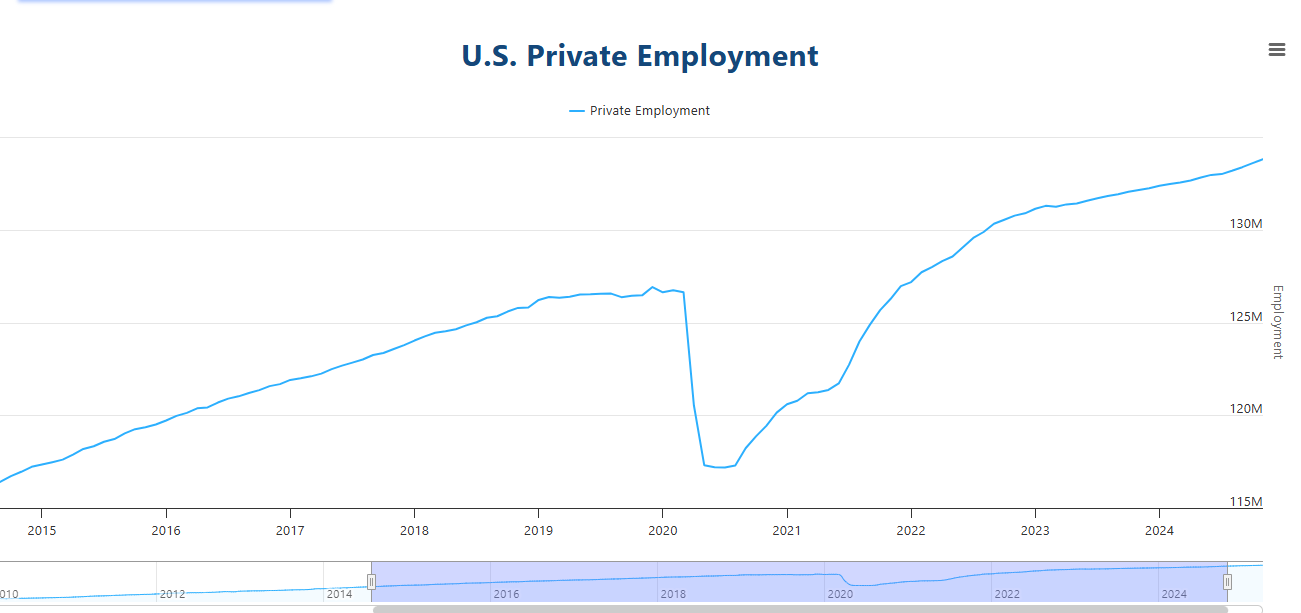
Source: Automatic Data Processing, INC.
Global markets ended the week with broad U.S. dollar weakness after the Treasury announced plans to expand long-term debt buybacks, adding liquidity and pressuring yields.
Detail Dollar Weakens as Falling Yields Lift Markets (08.20.2026)Global markets responded to falling U.S. Treasury yields after expanded government bond buybacks eased long-term borrowing costs and pressured the dollar.
Detail Euro Hits Two-Month High as Metals Fall (08.19.2026)Global markets remained focused on diverging central bank expectations, rising bond yields, and renewed Middle East tensions.
DetailThen Join Our Telegram Channel and Subscribe Our Trading Signals Newsletter for Free!
Join Us On Telegram!


