


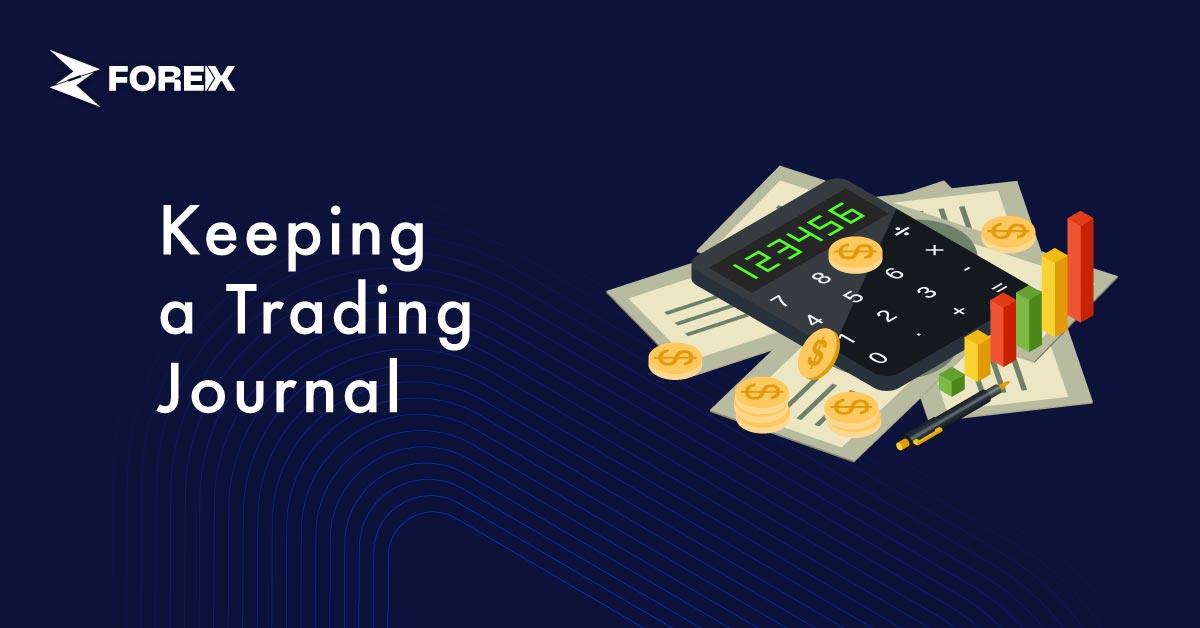
Many traders spend most of their time looking for better entries, stronger signals, or the next market opportunity. In many cases, however, the real improvement comes after the trade is closed. Having such a well-documented report helps traders look back at their decisions, understand what worked, and see where small mistakes keep repeating.
It is not only a list of wins and losses. A good trading journal shows the reason behind each trade, the risk taken, the market conditions, and even the trader’s mindset at the time. This makes it easier to turn trading experience into useful lessons.
A trading journal is a record of your trades and the decisions behind them. It usually includes details such as the instrument, entry price, exit price, trade size, stop loss, take profit, and result.
In simple terms, a trading journal connects your trading activity with your trading behavior. It shows whether you followed your plan, took too much risk, entered too early, or closed a trade for emotional reasons. Over time, this gives traders a clearer view of their strengths and repeated mistakes.
A trading journal gives traders a clear way to review their decisions instead of relying on memory. It helps show what is working, what is not, and where the same mistakes keep appearing.
Many trading mistakes are not obvious at the moment. A trader may keep entering too early, moving stop losses, or increasing lot size after a loss. A journal makes these patterns easier to spot.
Traders see how much risk they take on each trade. A written record of your trades also shows whether the position size, stop loss, and target were planned properly before entering the market.
Not every strategy works in every market condition. By reviewing past trades, traders can see which setups perform better and which ones need adjustment.
Writing down the reason for a trade can reduce impulsive decisions. It encourages traders to follow their plan rather than reacting only to price movement.
Trading more does not always mean improving. A journal helps traders learn from each trade, whether it ends in profit or loss.
A useful trade log should show both the numbers and the thinking behind each position. The goal is not to write a long story after every trade. It is to keep enough detail so you can review your decisions later and understand what is helping or hurting your results.
Here are the main details traders can include:
These are the core numbers of the trade. They help you compare one trade with another.
A trade does not happen on its own. The same setup can behave differently depending on the market conditions.
This is one of the most important parts. Write down why you opened the trade.
For example:
This helps you separate planned trades from random entries.
Risk details show whether the trade was managed properly before entry. This is especially important in forex and CFD trading, where leverage can increase both profit and loss.
You can record:
Many mistakes happen after the trade is opened. That is why management notes are useful.
You can take notes whether you:
This part often shows if the trader followed the original plan or changed decisions under pressure.
Numbers don’t always show the full picture. A short emotional note can explain why a trade was taken or managed in a certain way.
Useful notes can include:
These notes don’t need to be long. Even one sentence can be enough.
After the trade is closed, add a short lesson. This is where the journal becomes useful for improvement.
You can ask:
Over time, these small reviews can show clear patterns in your trading behavior.
A journal becomes more useful when it goes beyond simple profit and loss. The right metrics help traders understand whether their strategy is actually working, how much risk they are taking, and where performance can improve.
The win rate shows how many trades closed in profit compared to the total number of trades.
For example, if 55 out of 100 trades are profitable, the win rate is 55%.
This number is useful, but it should not be reviewed on its own. A trader can have a high win rate and still lose money if the losing trades are much larger than the winning trades.
These two numbers show the size of your typical winning and losing trades.
For example:
This means the trader is gaining more on winning trades than losing on bad trades. That is usually a healthier structure than winning often but losing heavily when trades go wrong.
Risk-reward ratio compares how much a trader risks with how much they aim to make.
For example, risking $100 to target $200 gives a 1:2 risk-reward ratio.
Tracking this helps traders see whether their targets are realistic and whether the potential reward is worth the risk. It also helps avoid trades where the upside is too small compared to the possible loss.
Expectancy shows the average result a trader can expect from each trade over time.
It combines win rate, average win, and average loss. This makes it more useful than looking at one metric alone.
A simple way to think about it:
Maximum drawdown shows the largest drop from a previous account high.
For example, if an account rises to $10,000 and then falls to $8,500, the drawdown is 15%.
This metric is important because it shows the pressure a strategy can create. Some strategies may be profitable over time, but the drawdowns may be too deep for the trader to handle comfortably.
Profit factor compares total profit with total loss.
For example:
A profit factor above 1 means the strategy made more than it lost. The higher the number, the stronger the overall performance looks. Still, it should be reviewed together with the drawdown and sample size.
Trade duration shows how long trades usually stay open.
This can help traders understand whether they perform better with short-term trades or longer setups. A trader may discover that quick trades create more mistakes, while swing trades produce cleaner decisions. Another trader may find the opposite.
Not every trader performs well on every market. Tracking results by instrument can show where the trader has an edge.
For example:
This makes it easier to focus on the markets that match the trader’s style.
Forex and CFD markets can behave differently across sessions. A journal can show whether trades work better during London, New York, or quieter market hours.
This is especially useful for day traders and scalpers. Sometimes the issue is not the strategy itself, but the time of day it is being used.
This is a simple but powerful metric. After each trade, mark whether you followed your plan.
For example:
Followed the plan?
A losing trade can still be a good trade if the plan was followed. A winning trade can still be a bad trade if it was based on impulse. This metric helps traders measure discipline, not only results.
A journal does not need to be complicated. What matters is using it consistently and reviewing your trades with honesty.
Over time, even simple notes can show patterns that are easy to miss in daily trading. To make the process easier, you can download our free Trading Journal Template and start tracking your trades in a more structured way.
Sign up in seconds for free, access your platform, and start trading with ease.

 PAMM vs MAM vs Copy Trading: Key Differences
With PAMM, money participates in a managed pool. MAM keeps client accounts separate but gives the manager a central way to trade them. Copy Trading leaves the follower with an independent account and reproduces another trader’s positions there.
Detail What Happens When a Company Joins or Leaves the S&P 500?
How companies join or leave the S&P 500, what happens before and after the change, and the key announcement and effective dates that matter.
Detail What Is PAMM and How Does It Work?
Learn how PAMM accounts work, how profits, losses and manager fees are calculated, and what to check before allocating funds to a trading strategy.
DetailThen Join Our Telegram Channel and Subscribe Our Trading Signals Newsletter for Free!
Join Us On Telegram!


