


Global markets turned cautious as escalating U.S.–Iran tensions and stronger U.S. inflation data reinforced expectations for higher interest rates.
The euro eased toward 1.17 despite growing bets on further ECB tightening, while rising Treasury yields pressured gold and supported the dollar. The Japanese yen weakened toward 158 as traders monitored possible intervention signals from Tokyo, and sterling softened amid mounting political uncertainty in the UK. Meanwhile, silver climbed to a two-month high, supported by strong industrial demand and persistent supply concerns despite broader market volatility.
| Time | Cur. | Event | Forecast | Previous |
| 12:30 | USD | PPI (MoM) (Apr) | 0.5% | 0.5% |
| 14:30 | USD | Crude Oil Inventories | -2.000M | -2.313M |
| 17:00 | USD | 30-Year Bond Auction | 4.876% |
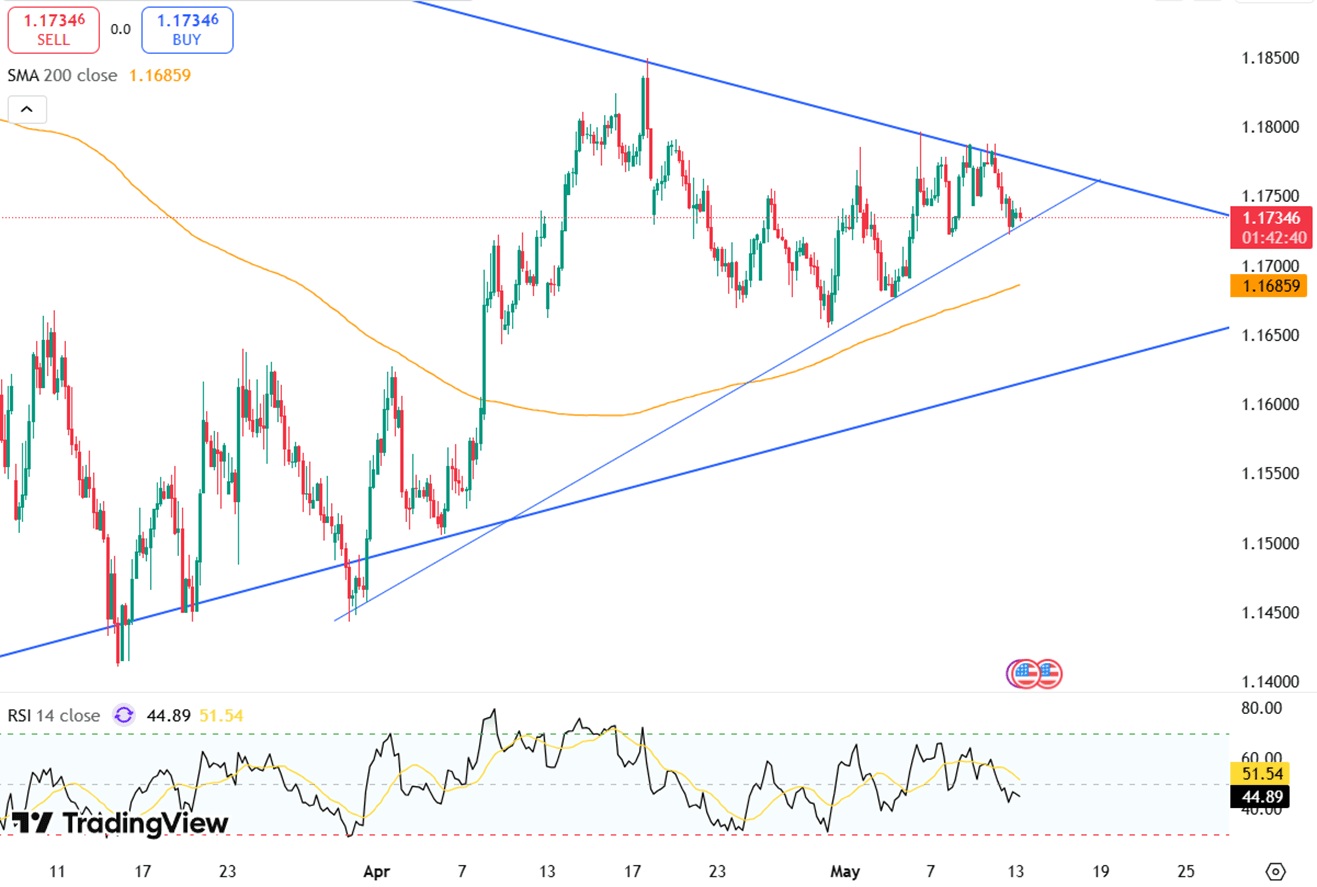
The euro softened toward $1.17 as investors weighed escalating U.S.–Iran friction against the likelihood of more ECB rate hikes. Surging oil prices, sparked by Middle East volatility, have heightened European inflation risks and solidified bets on tighter monetary policy. While Christine Lagarde confirmed the central bank's readiness to intervene, modest improvements in German sentiment provided only a minor cushion for the currency.
For EUR/USD, the initial resistance is seen at 1.1770, while the closest support is positioned at 1.1660.
| R1: 1.1770 | S1: 1.1660 |
| R2: 1.1810 | S2: 1.1550 |
| R3: 1.1880 | S3: 1.1500 |
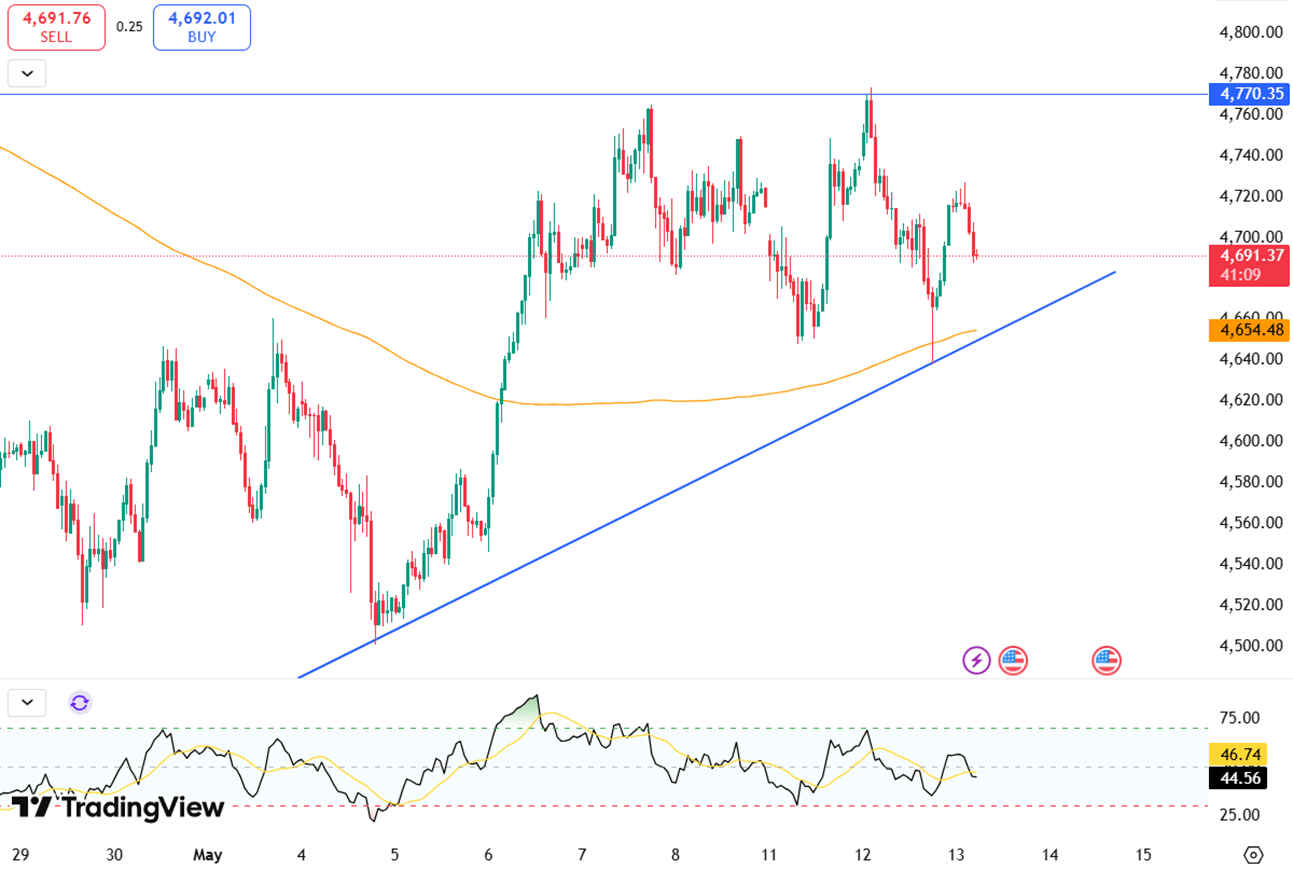
Gold dropped below $4,700 as strong U.S. inflation data lowered hopes for immediate Federal Reserve rate cuts. Rising Treasury yields, driven by energy-linked price pressures in the Middle East, further weighed on the non-yielding metal. Market sentiment was also hit by India’s hike in precious metal import duties, a move designed to reduce demand and stabilize its currency amidst global economic volatility.
First resistance is seen at $4770, with initial support near $4640.
| R1: 4770 | S1: 4640 |
| R2: 4840 | S2: 4580 |
| R3: 4900 | S3: 4500 |
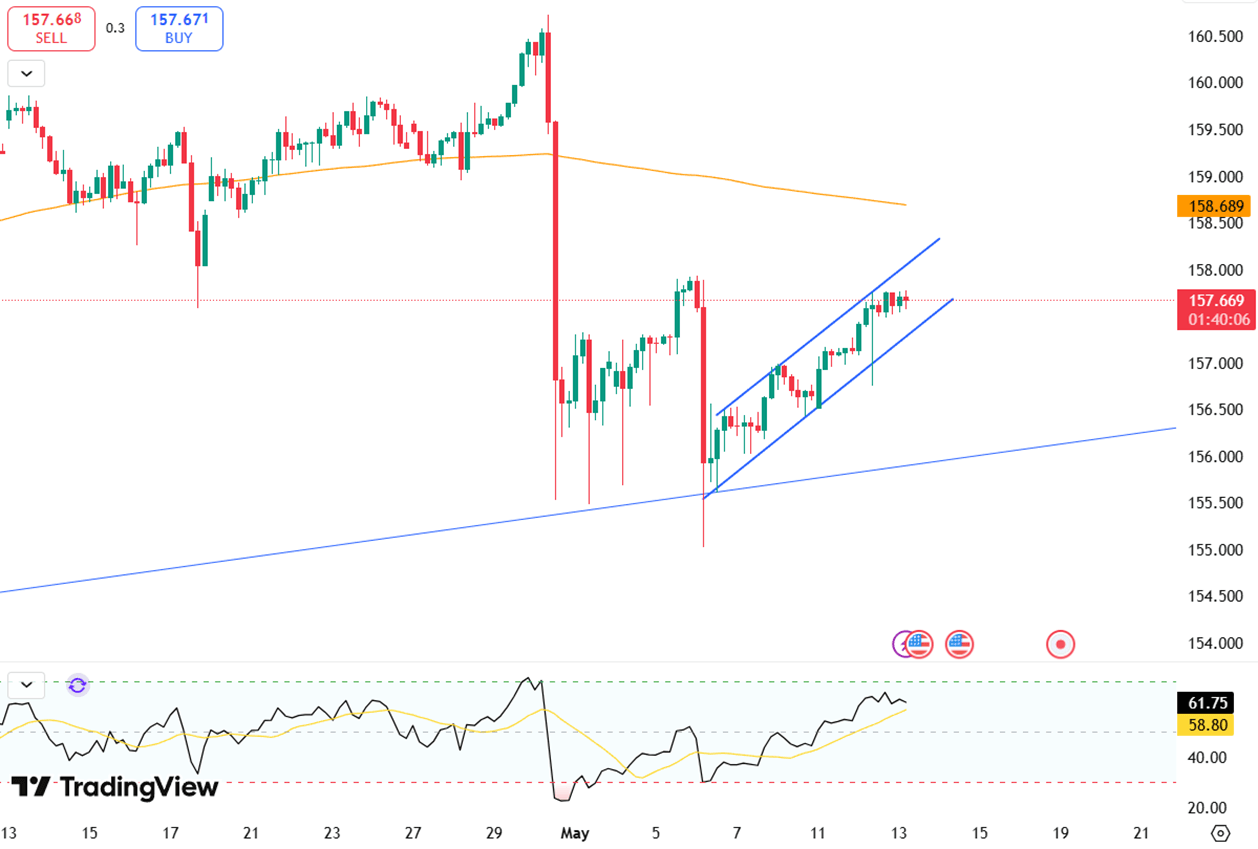
The Japanese yen slipped toward 158 per dollar as strong U.S. inflation data strengthened the dollar and solidified expectations for a restrictive Federal Reserve. Simultaneously, the Bank of Japan suggested that oil-driven price pressures might necessitate further rate increases. Investors remain on high alert for currency intervention, especially after U.S. Treasury Secretary Scott Bessent indicated support for measures intended to stabilize the yen and curb excessive market volatility.
Initial resistance stands at 158.10, while the first support is located at 156.80.
| R1: 158.10 | S1: 156.80 |
| R2: 158.75 | S2: 155.20 |
| R3: 160.00 | S3: 154.00 |
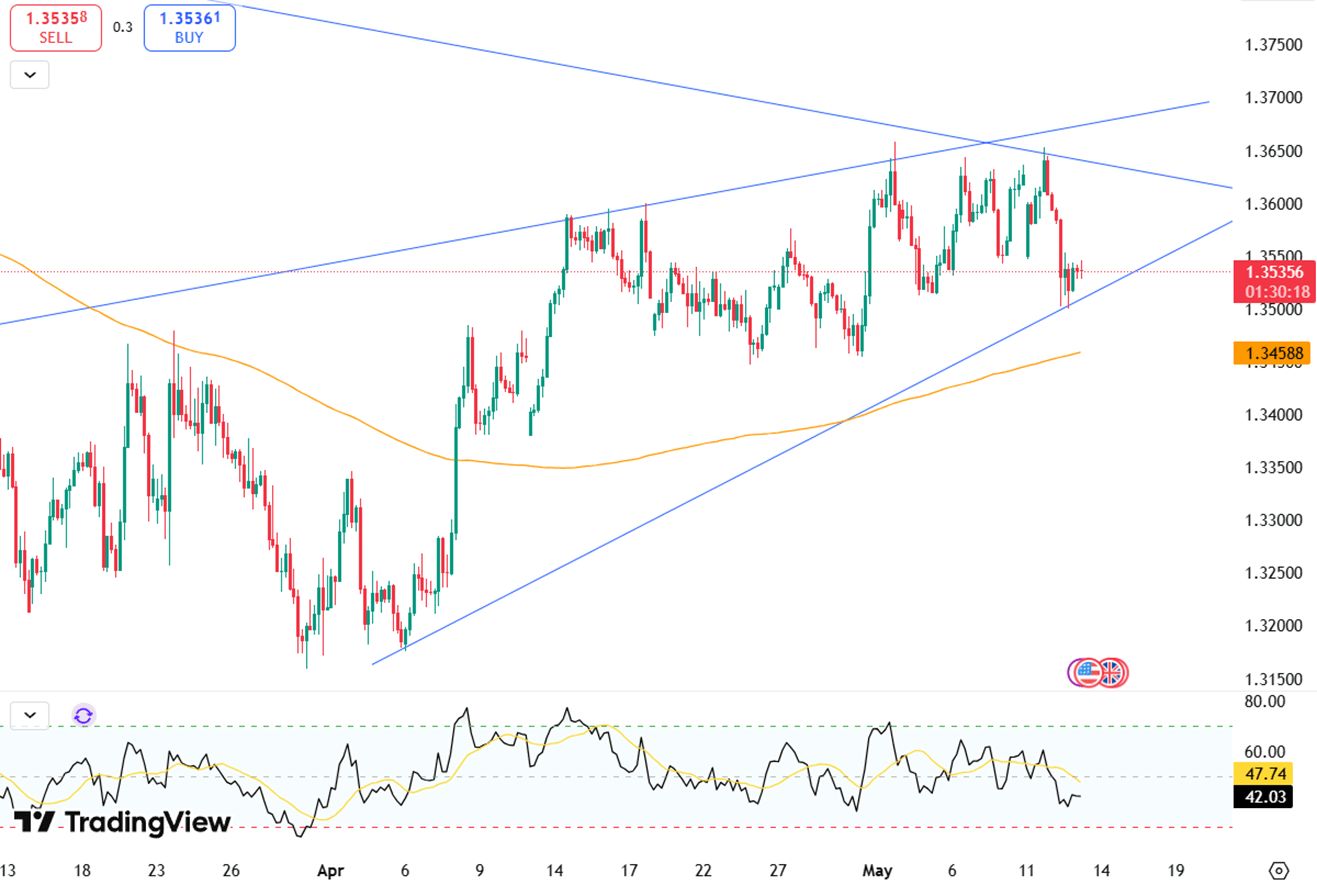
The British pound dipped to $1.354, retreating from recent two-month peaks as a severe leadership crisis and U.S.–Iran friction dampened sentiment. Prime Minister Keir Starmer faces intense pressure to resign following poor local election results and growing internal party dissent. Simultaneously, soaring oil prices from Middle East instability have heightened inflation risks, fueling market expectations that the Bank of England may implement further interest rate hikes to stabilize the economy.
From a technical view, resistance stands near 1.3610, with support around 1.3470.
| R1: 1.3610 | S1: 1.3470 |
| R2: 1.3700 | S2: 1.3400 |
| R3: 1.3780 | S3: 1.3340 |
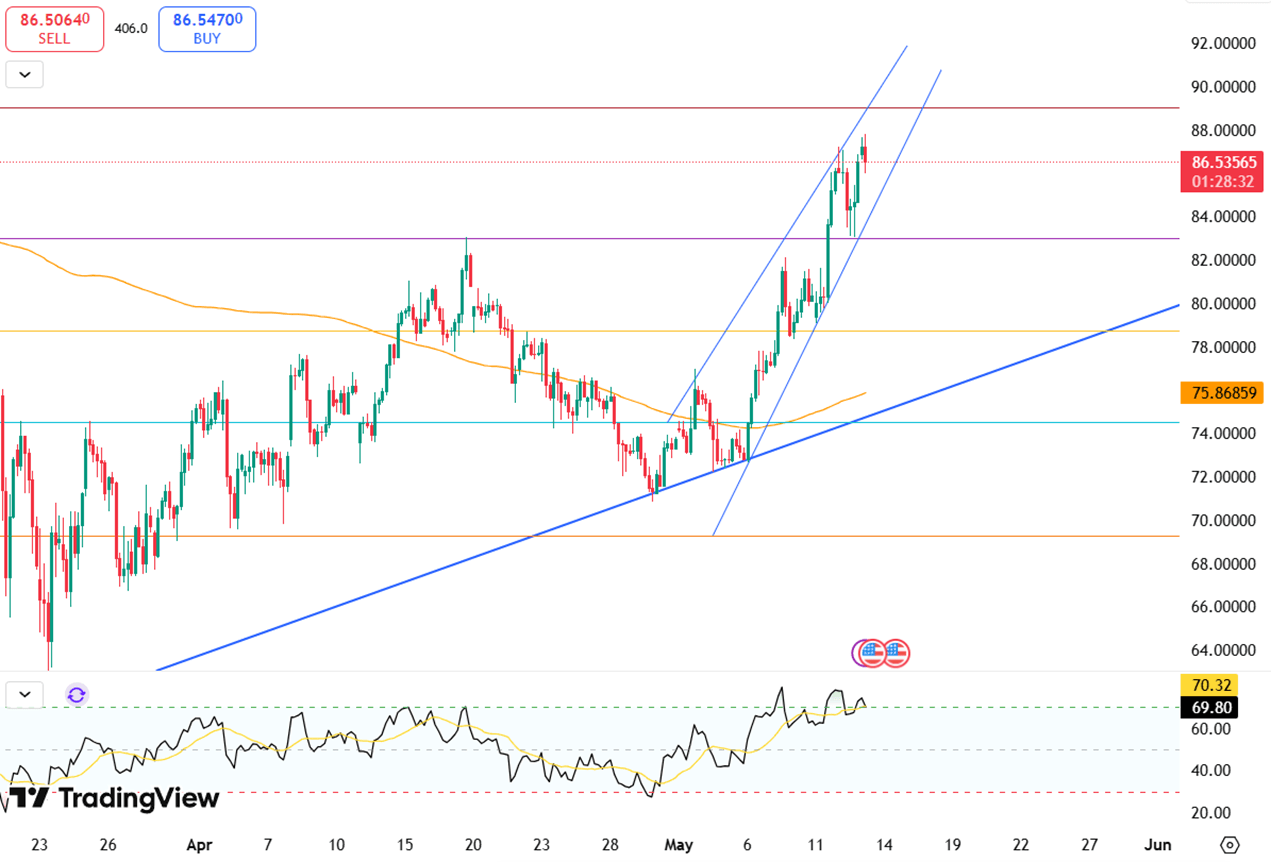
Silver climbed past $87 per ounce, marking a two-month peak as high demand from the electronics and renewable energy sectors fueled a rally. While gains were somewhat limited by strong U.S. inflation data, which supported the dollar and dampened rate cut hopes, the metal remains well supported. High oil prices and India's recent hike in import duties have further heightened volatility across global bullion markets as supply deficits persist into 2026.
From a technical view, resistance stands near $87.80 while support is located around $84.20.
| R1: 87.80 | S1: 84.20 |
| R2: 89.40 | S2: 82.30 |
| R3: 92.00 | S3: 80.00 |
Meredanya harga minyak dan penurunan imbal hasil obligasi Treasury (di sekitar 5,23%) memberikan sedikit kelegaan bagi pasar keuangan, seiring membaiknya prospek diplomatik AS-Iran yang mengurangi kekhawatiran jangka pendek terkait inflasi.
Detail Sikap Hawkish The Fed Mendorong Kenaikan Imbal Hasil dan Menekan Pasar (10.08.2026)Risalah rapat Federal Reserve yang bernada hawkish memperkuat ekspektasi akan adanya kenaikan suku bunga lagi tahun ini, sehingga mendorong kenaikan imbal hasil obligasi Treasury dan menopang nilai tukar dolar AS.
Detail Pemulihan Harga Minyak dan Imbal Hasil Tinggi Tekan Pasar (10.07.2026)Cadangan minyak kian menipis, sehingga meningkatkan risiko pasokan dan menopang harga. Aramco memperkirakan tersisa kurang dari 6 miliar barel setelah lebih dari 1 miliar barel digunakan tahun ini, sementara IEA bersiap melepas 100 juta barel ke pasar. Imbal hasil obligasi pemerintah AS tenor 10 tahun stabil di kisaran 5,31% pada hari Rabu—mendekati level tertinggi dalam 24 tahun—di tengah penantian pasar terhadap risalah rapat The Fed.
DetailBergabunglah dengan Channel Telegram Kami dan Berlangganan Sinyal Trading Kami secara Gratis!
Bergabunglah dengan Telegram!


