


Global markets began the week on a steadier footing as weaker U.S. labor data continued to weigh on the dollar and reduce expectations for additional Federal Reserve rate hikes.
Gold and silver held onto recent gains, while the euro and pound remained supported despite dovish signals from European central banks. The Japanese yen weakened modestly as traders continued to watch for potential intervention from Japanese authorities.
| Time | Cur. | Event | Forecast | Previous |
| 13:45 | USD | S&P Global Services PMI (Jun) | 51.3 | 51.3 |
| 14:00 | USD | ISN Non – Manufacturing Prices (Jun) | - | 71.3 |
| 14:00 | USD | ISN Non – Manufacturing PMI (Jun) | 54.2 | 54.5 |
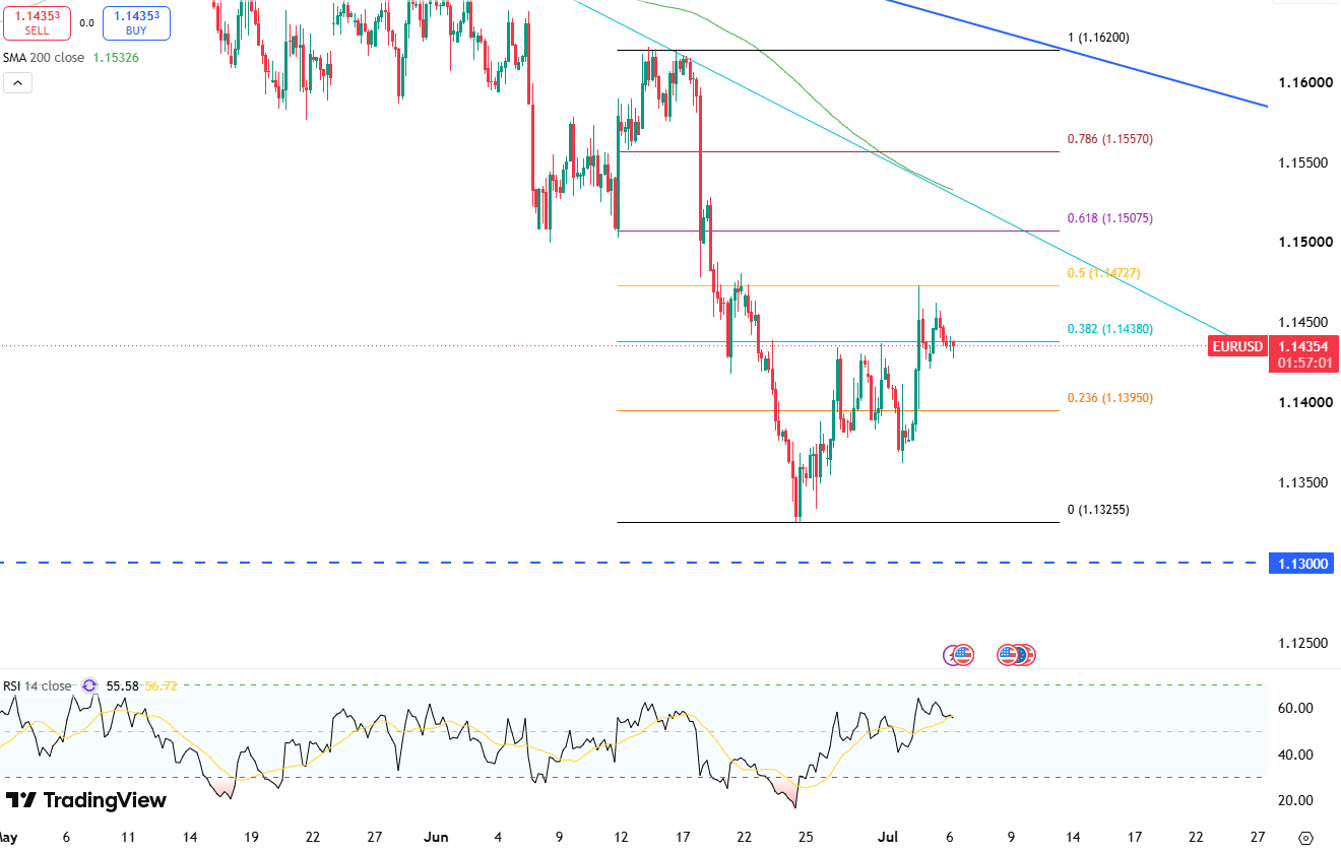
The euro finished the week above $1.14, gaining 0.5% as disappointing U.S. payroll figures dragged down the dollar. However, upside momentum was capped by cooling Eurozone inflation and dovish rhetoric from Christine Lagarde, which lowered the probability of a third ECB rate hike. June headline inflation slowed to 2.8% and core inflation hit 2.4%, both missing forecasts. Lagarde highlighted receding risks from falling energy prices following the U.S.-Iran peace agreement.
The first resistance is positioned at 1.1460 while the support starts from 1.1380.
| R1: 1.1460 | S1: 1.1380 |
| R2: 1.1510 | S2: 1.1290 |
| R3: 1.1600 | S3: 1.1200 |
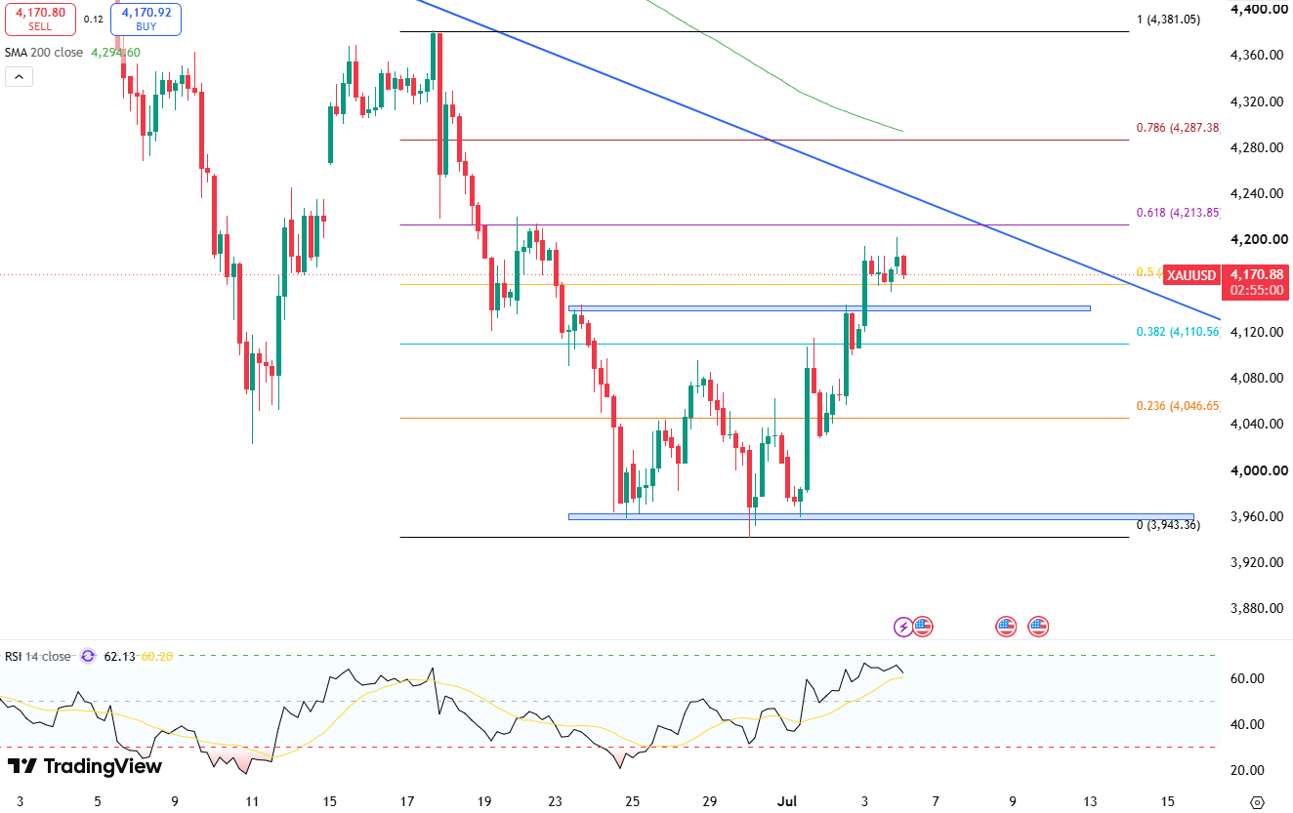
Gold stabilized near $4,170 per ounce on Monday, maintaining last week's gains as soft U.S. employment data and retreating crude prices reduced Federal Reserve rate hike expectations. Oil prices dipped amid recovering flows through the Strait of Hormuz and OPEC+ supply developments, alleviating the inflation concerns that previously burdened the metal. Following June's weak 57,000 payroll print, CME FedWatch data showed September rate hike probabilities dropping to 50% from 66%.
First resistance is seen at $4200, with initial support near $4120.
| R1: 4200 | S1: 4120 |
| R2: 4250 | S2: 4080 |
| R3: 4300 | S3: 4000 |
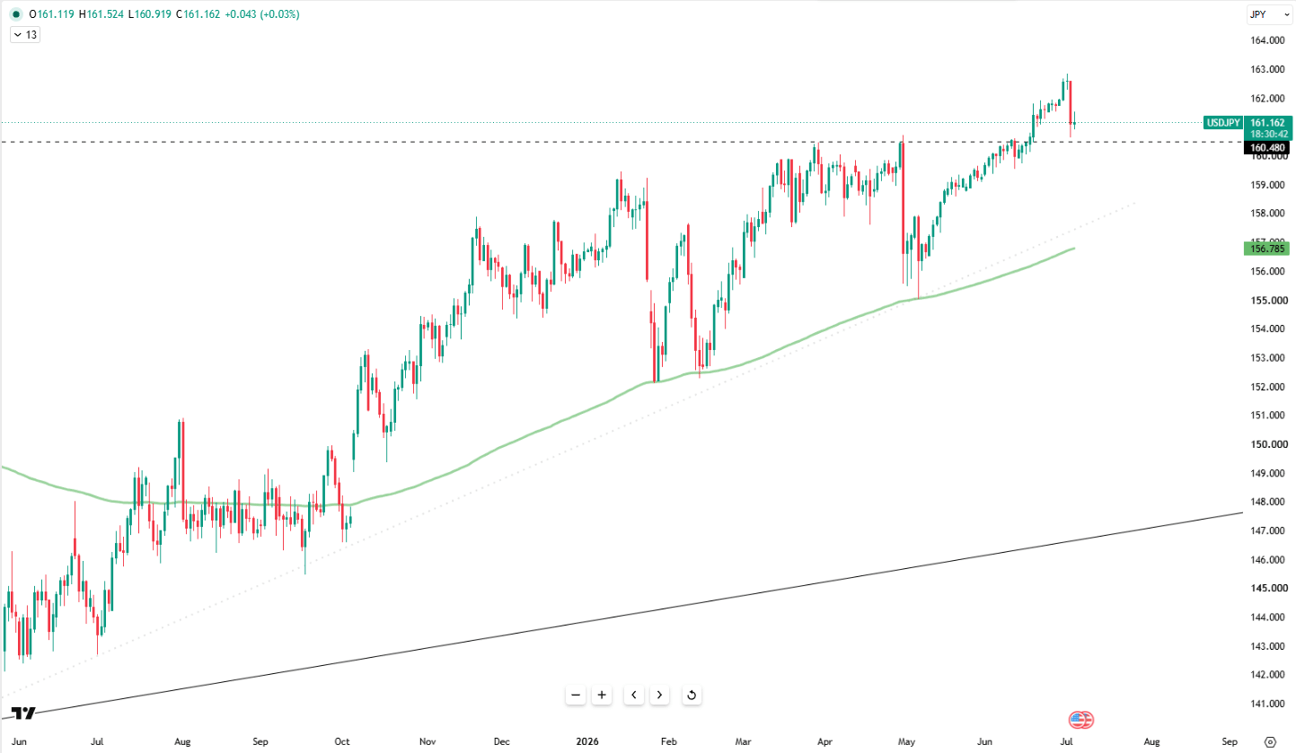
The Japanese yen slipped toward 162 per dollar on Monday, reversing half of its July 2 gains as Tokyo held off on actual market intervention despite persistent warnings. Market participants remain doubtful that official action will offer sustainable relief. While speculation grows that authorities might abandon advanced warning signals to shock speculative shorts, the currency found minor structural support from weak U.S. employment data and resulting lower Fed rate hike expectations.
Initial resistance stands at 162.70, while the first support is at 161.00.
| R1: 162.70 | S1: 161.00 |
| R2: 163.80 | S2: 160.50 |
| R3: 164.50 | S3: 159.00 |
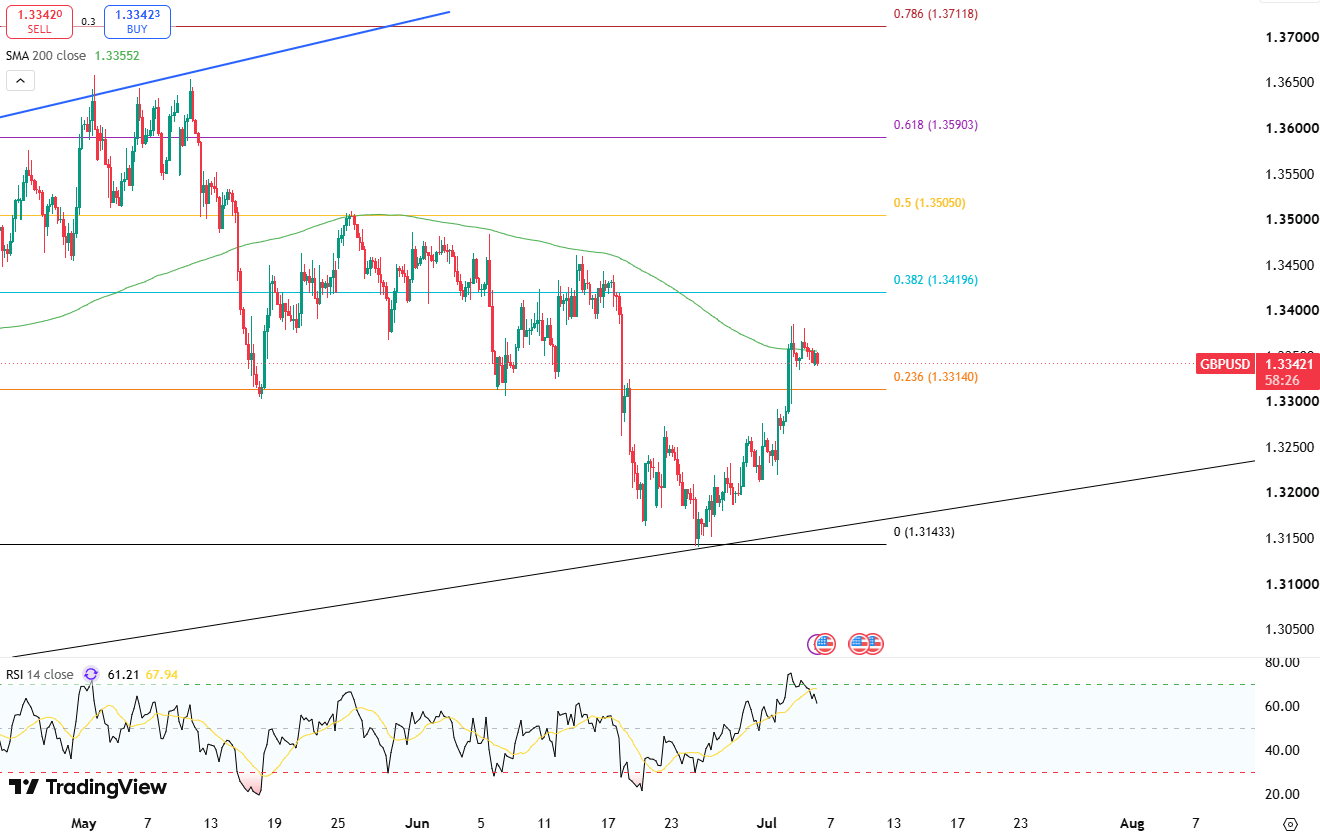
The British pound held near $1.335, posting a 1% weekly gain as weak US jobs data weighed on the dollar. Gains were capped by the Bank of England's dovish outlook, with Governor Andrew Bailey citing slower growth and delaying rate cuts. Meanwhile, Andy Burnham's commitment to fiscal discipline ahead of his expected July premiership supported market confidence.
From a technical view, resistance stands near 1.3390, with support around 1.3250.
| R1: 1.3390 | S1: 1.3250 |
| R2: 1.3480 | S2: 1.3110 |
| R3: 1.3550 | S3: 1.3040 |
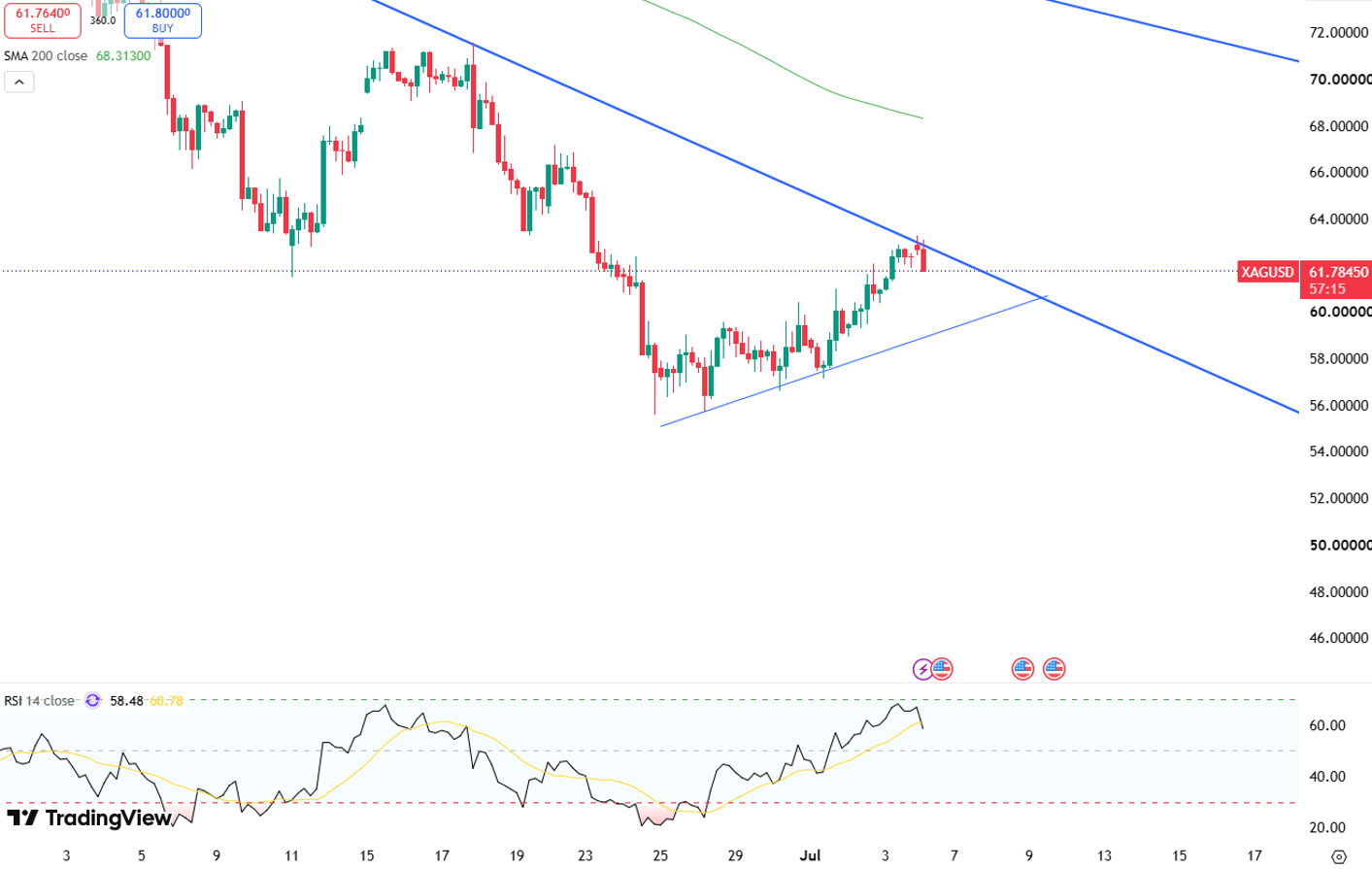
Silver traded above $62 an ounce Monday, sustaining previous gains as weak U.S. labor data and retreating crude prices pared Federal Reserve rate hike expectations. Oil prices fell on recovering Strait of Hormuz flows and OPEC+ supply concerns, soothing inflation anxieties. June’s soft 57,000 payroll additions missed the 110,000 forecast, trimming September hike odds to 50%.
From a technical view, resistance stands near $63.60, while support is located around $60.10.
| R1: 63.60 | S1: 60.10 |
| R2: 65.00 | S2: 58.50 |
| R3: 66.50 | S3: 56.00 |
A deepening sell-off in technology and artificial intelligence stocks pressured financial markets, forcing investors to liquidate precious metals holdings to cover losses elsewhere.
Escalating Middle East tensions pushed oil prices higher following a deadly drone strike on Saudi Aramco's Shaybah facility, renewing inflation concerns and expectations for further Federal Reserve tightening.
Rising oil prices renewed inflation concerns as uncertainty surrounding the US-Iran conflict and continued disruptions in the Strait of Hormuz reinforced expectations for further monetary tightening.
Then Join Our Telegram Channel and Subscribe Our Trading Signals Newsletter for Free!
Join Us On Telegram!


