


Markets turned cautious as renewed US–Iran tensions revived safe-haven demand and strengthened the US dollar.
EUR/USD came under pressure near 1.1750, while gold slipped below $4,800 and silver retreated toward $79 as rising oil prices fueled inflation concerns. The Japanese yen weakened again amid energy-related risks, highlighting Japan’s vulnerability to higher import costs. Meanwhile, sterling showed relative resilience near 1.3600, supported by expectations of continued Bank of England tightening. Despite occasional diplomatic signals, escalating geopolitical friction and energy volatility continue to dominate market direction.
| Time | Cur. | Event | Forecast | Previous |
| 16:40 | EUR | ECB President Legarde Speaks | - | - |
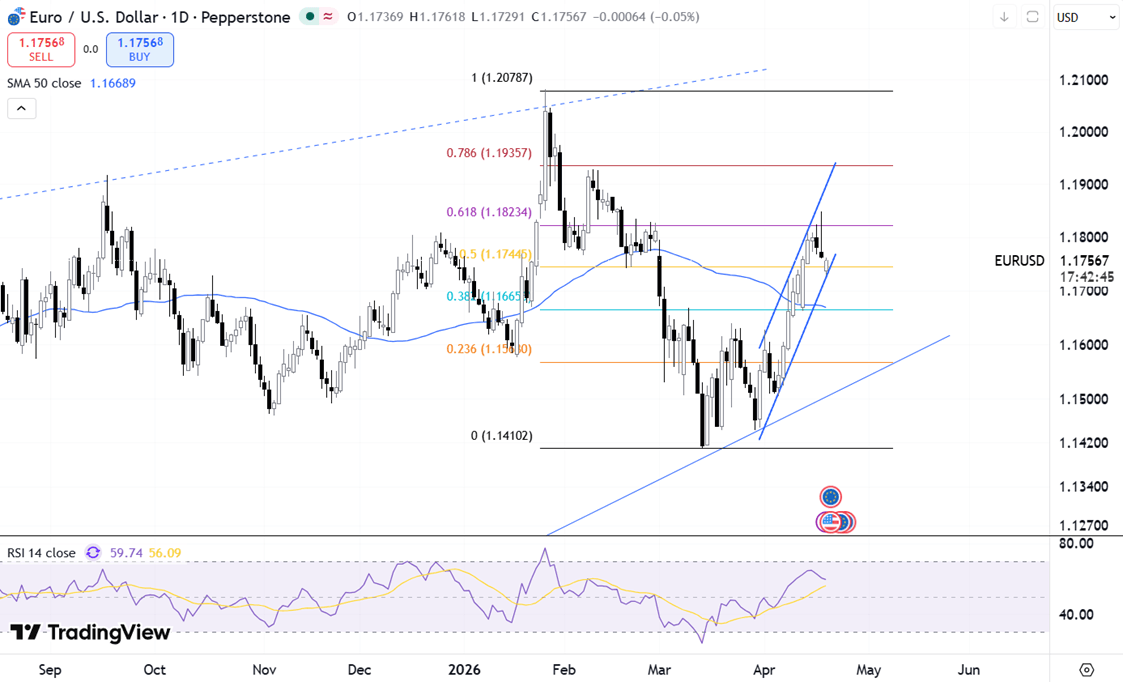
EUR/USD is struggling near 1.1750 as reignited US–Iran tensions drive investors toward the dollar. Reports that Tehran has rejected further talks due to "unrealistic expectations" have sparked fresh safe-haven demand. This escalation, paired with energy-related inflation fears, has strengthened market conviction that the Federal Reserve will keep interest rates elevated for an extended period, further weighing on the pair.
For EUR/USD, the initial resistance is seen at 1.1800, while the closest support is positioned at 1.1720.
| R1: 1.1800 | S1: 1.1720 |
| R2: 1.1840 | S2: 1.1640 |
| R3: 1.1880 | S3: 1.1600 |
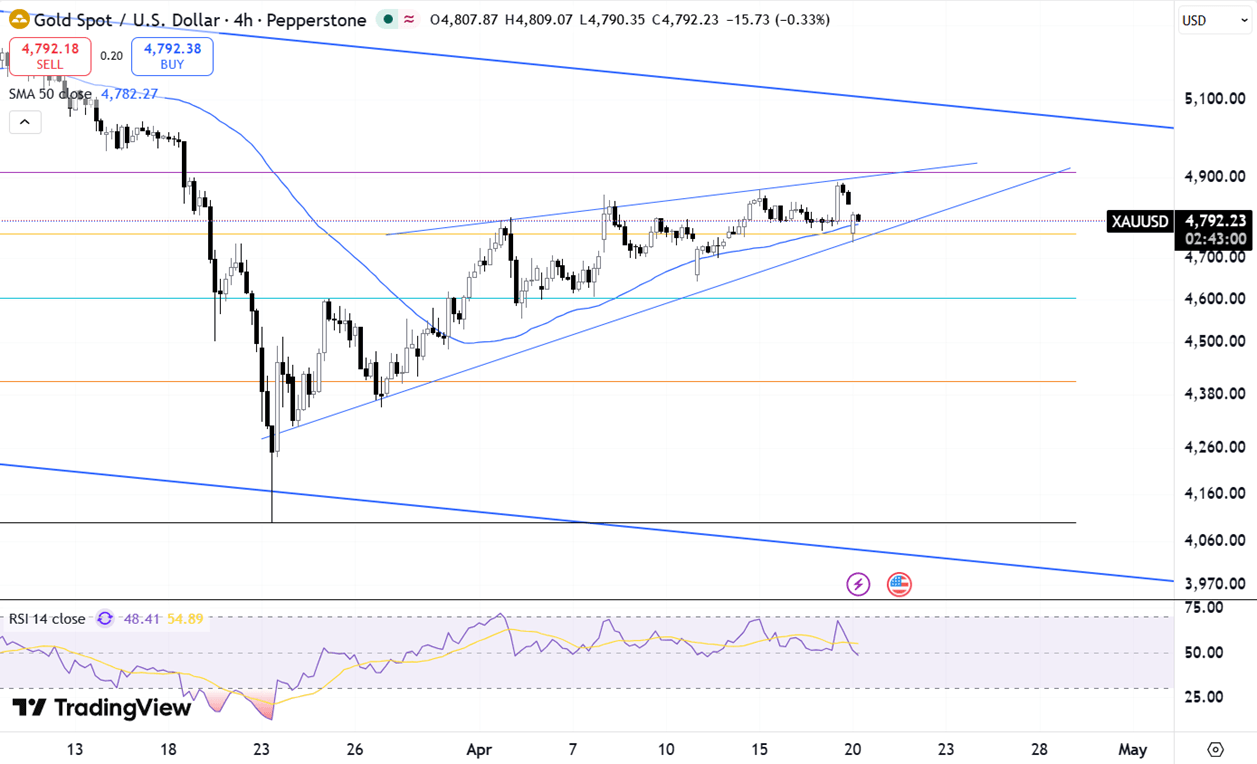
Gold fell over 1% on Monday, erasing previous gains as renewed hostilities in the Strait of Hormuz drove oil prices higher and fueled inflation worries. The escalation follows the seizure of an Iranian cargo vessel by US naval forces in the Gulf of Oman, prompting retaliatory maneuvers from Iran. Although President Donald Trump suggested a diplomatic resolution remains possible before upcoming discussions in Pakistan, Tehran has expressed significant skepticism regarding a deal. These rising geopolitical risks and energy costs have pressured the metal as markets reassess the global economic outlook.
First resistance is seen at $4840, with initial support near $4740.
| R1: 4840 | S1: 4740 |
| R2: 4960 | S2: 4650 |
| R3: 5020 | S3: 4580 |
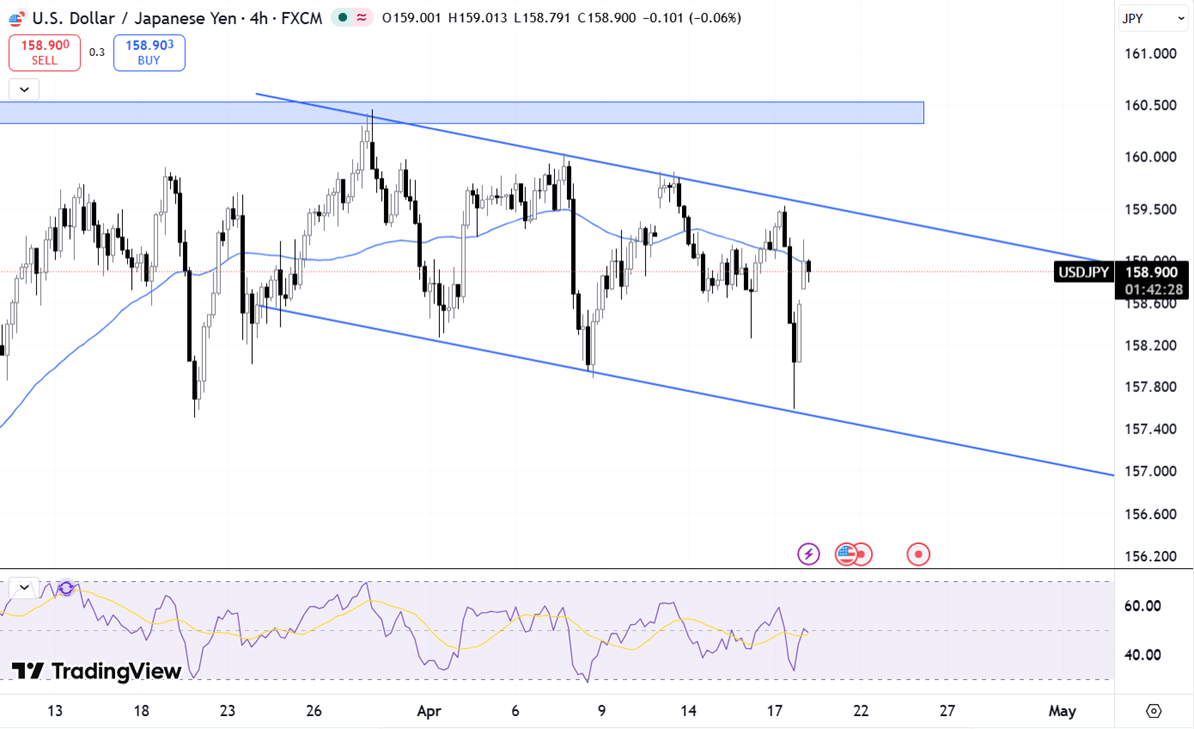
On Monday, the Japanese yen weakened toward 159 against the dollar, erasing recent gains as spiking oil prices, triggered by a sharp escalation in US–Iran hostilities, weighed on the energy-dependent economy. Following the US seizure of an Iranian vessel and Tehran’s subsequent closure of the Strait of Hormuz, crude prices surged over 5%. This geopolitical friction has overshadowed the Bank of Japan's outlook; while Governor Kazuo Ueda remains non-committal regarding a near-term rate hike, the central bank is widely expected to revise inflation forecasts upward to account for rising energy import costs.
Initial resistance stands at 159 .20, while the first support is located at 158.10.
| R1: 159.20 | S1: 158.10 |
| R2: 160.00 | S2: 157.60 |
| R3: 161.30 | S3: 156.80 |
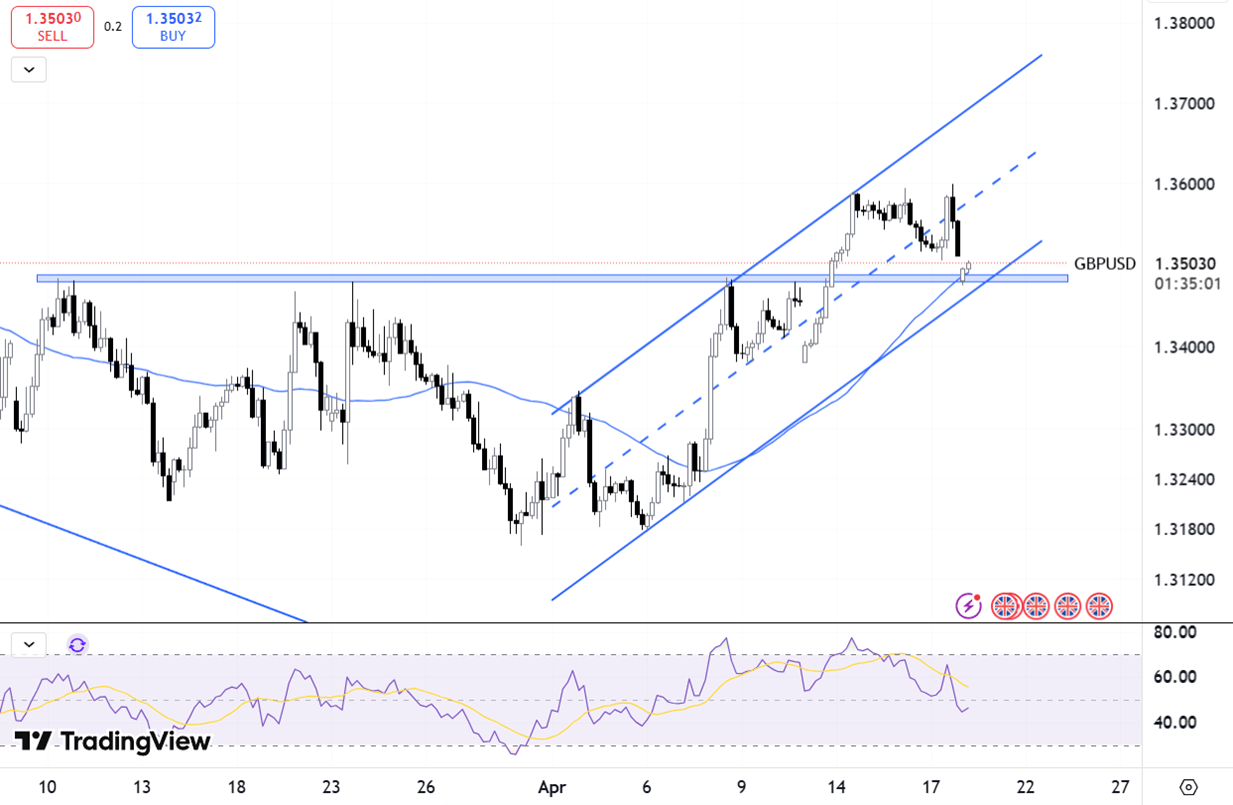
GBP/USD approached 1.3600 as the reopening of the Strait of Hormuz increased market sentiment and dampened dollar demand. Lowered geopolitical tension has revived forecasts for Federal Reserve rate cuts extending into 2026. The pound remains supported by persistent expectations that the Bank of England will maintain its tightening cycle, sustaining the currency's broader upward momentum.
From a technical view, resistance stands near 1.3550, with support around 1.3440.
| R1: 1.3550 | S1: 1.3440 |
| R2: 1.3590 | S2: 1.3350 |
| R3: 1.3650 | S3: 1.3280 |
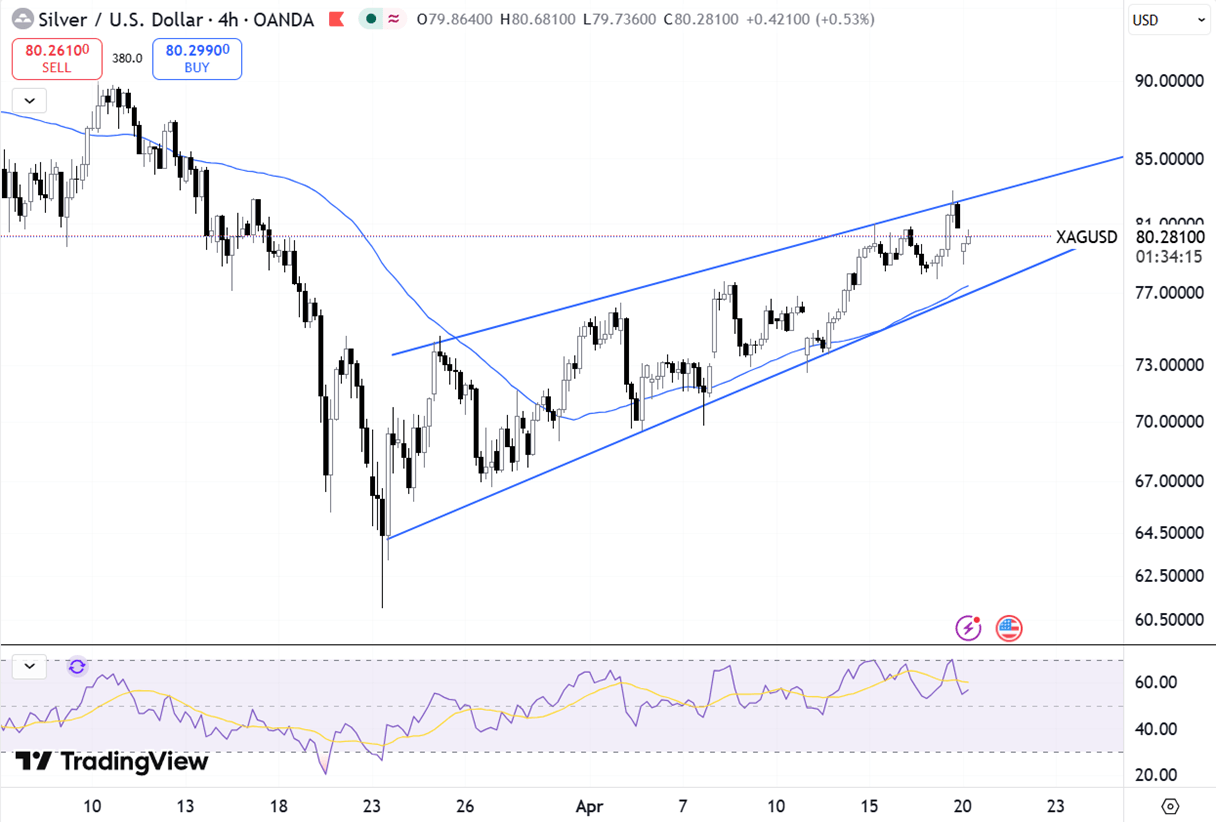
Silver declined nearly 2% on Monday, retreating toward the $79 per ounce mark as heightened friction in the Strait of Hormuz drove oil prices up and reignited inflation fears. This reversal follows the US seizure of an Iranian-flagged vessel, which prompted Tehran to target shipping and tighten its grip on the vital waterway. Although President Trump suggested a diplomatic resolution remains possible before upcoming negotiations in Pakistan, Iranian officials have expressed deep skepticism regarding a potential deal, dampening market hopes for a swift de-escalation.
From a technical view, resistance stands near $81.50 while support is located around $78.00.
| R1: 81.50 | S1: 78.00 |
| R2: 84.60 | S2: 75.00 |
| R3: 89.10 | S3: 73.50 |
Declining Treasury yields and rising geopolitical tensions supported precious metals as an equity market selloff increased demand for safe-haven assets.
 US Inflation Hits 3.7% as Energy Prices Surge
September’s inflation report reveals new price pressures across the US economy.
Detail Dollar Retreat Supports Metals (10.15.2026)A softer US dollar and declining Treasury yields offered some relief to financial markets as Federal Reserve officials signaled a willingness to pause rate adjustments.
Then Join Our Telegram Channel and Subscribe Our Trading Signals Newsletter for Free!
Join Us On Telegram!


