


Global markets traded cautiously as investors looked ahead to the Federal Reserve's June meeting minutes for further policy guidance.
The dollar stabilized after last week's employment-driven decline, weighing modestly on gold, silver, and the pound, while the euro held steady despite mixed Eurozone economic data. The Japanese yen remained under pressure as traders continued to question the likelihood of meaningful intervention by Japanese authorities.
| Time | Cur. | Event | Forecast | Previous |
| 12:30 | USD | Trade Balance (May) | -78.30B | -55.90B |
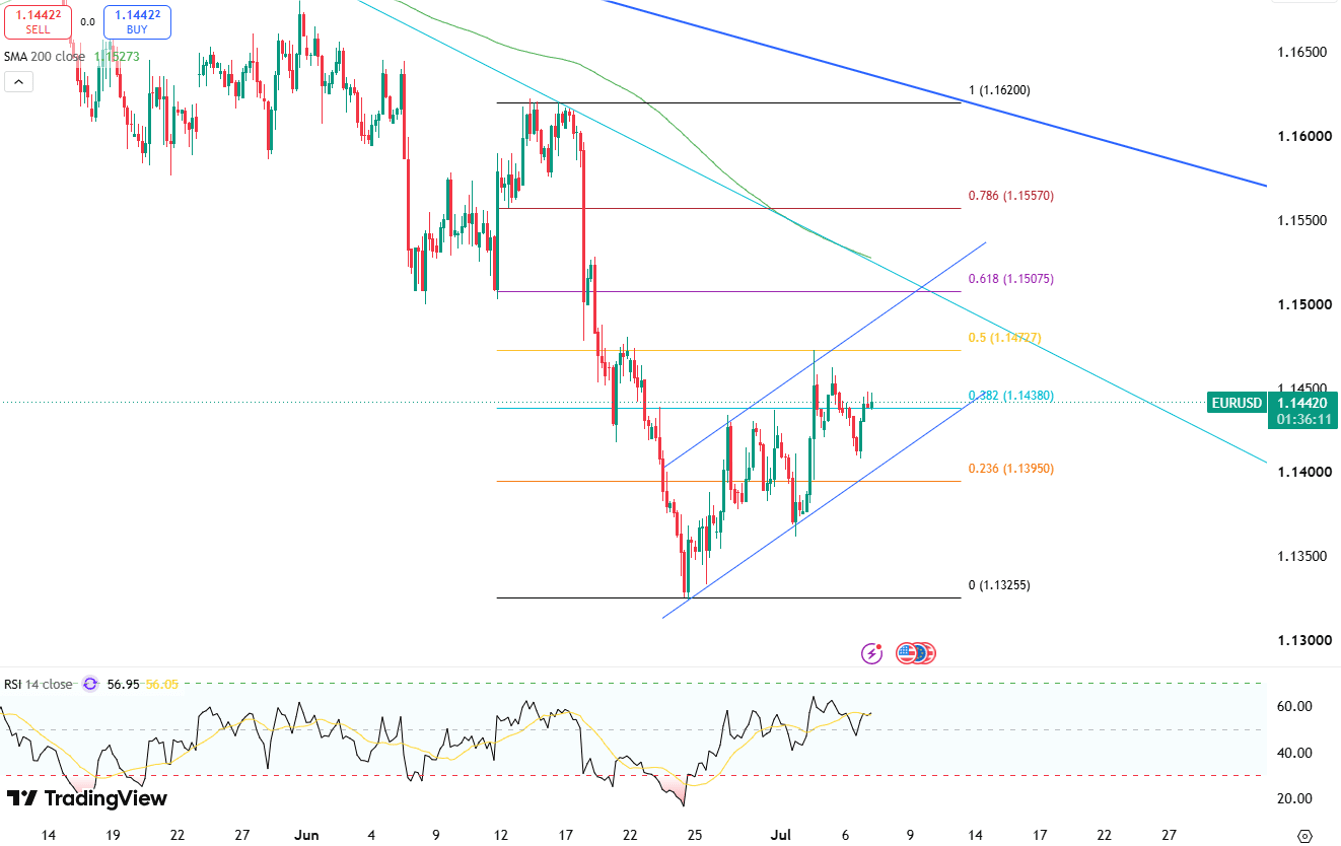
The euro hovered near $1.14 as investors digested conflicting economic data from the Eurozone. While German factory orders outperformed expectations with a 1.9% expansion, retail sales growth disappointed at 0.2%, and producer inflation climbed to 5.9%. Last week's 0.5% advance against the dollar, sparked by soft U.S. labor figures, faced resistance from dovish ECB rhetoric. Markets are pricing in just a single 25-basis-point rate hike this year, even as Berlin finalized a €555.4 billion budget for 2027.
The first resistance is positioned at 1.1460 while the support starts from 1.1400.
| R1: 1.1460 | S1: 1.1400 |
| R2: 1.1510 | S2: 1.1350 |
| R3: 1.1550 | S3: 1.1300 |
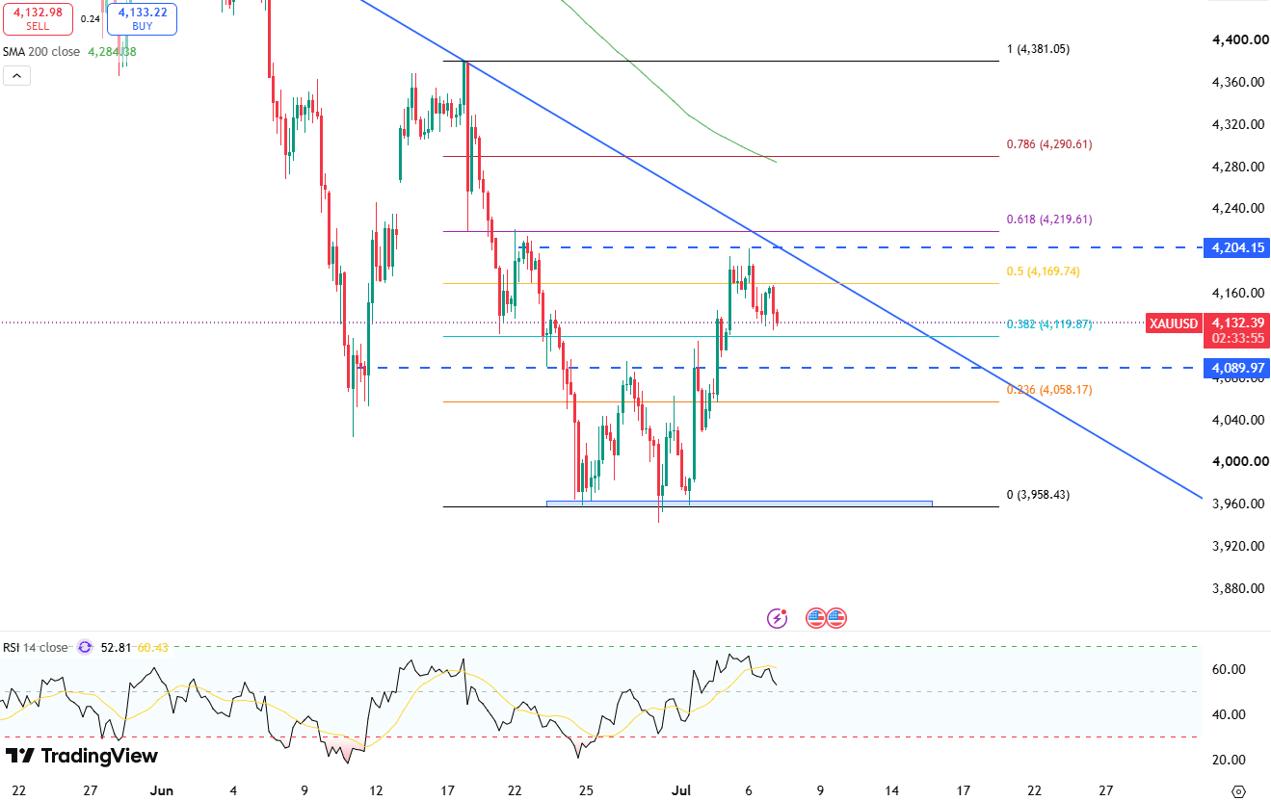
Gold edged lower below $4,130 an ounce on Tuesday, though it retained the bulk of last week's gains as investors anticipated the Federal Reserve's June minutes. Disappointing June labor data lowered September rate hike expectations to roughly 50%. Falling oil prices, pulled down by stabilizing Strait of Hormuz shipping lanes and expanded OPEC+ production targets, helped anchor market sentiment and limit significant downside for the precious metal.
First resistance is seen at $4200, with initial support near $4080.
| R1: 4200 | S1: 4080 |
| R2: 4250 | S2: 4000 |
| R3: 4300 | S3: 3950 |
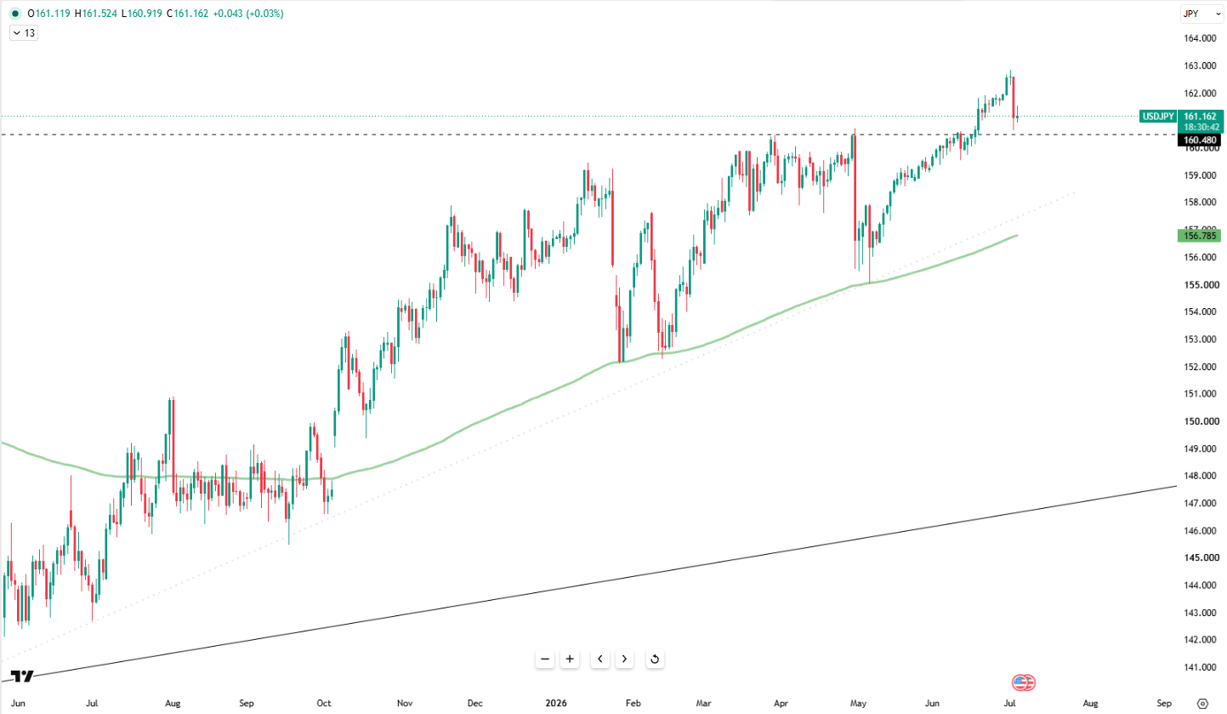
The yen hovered near 162 per dollar on Tuesday, remaining pinned close to its lowest level in forty years as traders continued selling the currency amid absent Bank of Japan intervention. Finance Minister Satsuki Katayama restated Japan's readiness to intervene alongside Washington, though market participants question the long-term effectiveness of such actions. Additional pressure stems from fiscal expansion anxieties and a sluggish policy normalization pace, even as mixed domestic data revealed rising wages but falling household spending.
Initial resistance stands at 162.70, while the first support is at 161.00.
| R1: 162.70 | S1: 161.00 |
| R2: 163.80 | S2: 160.50 |
| R3: 164.50 | S3: 159.00 |
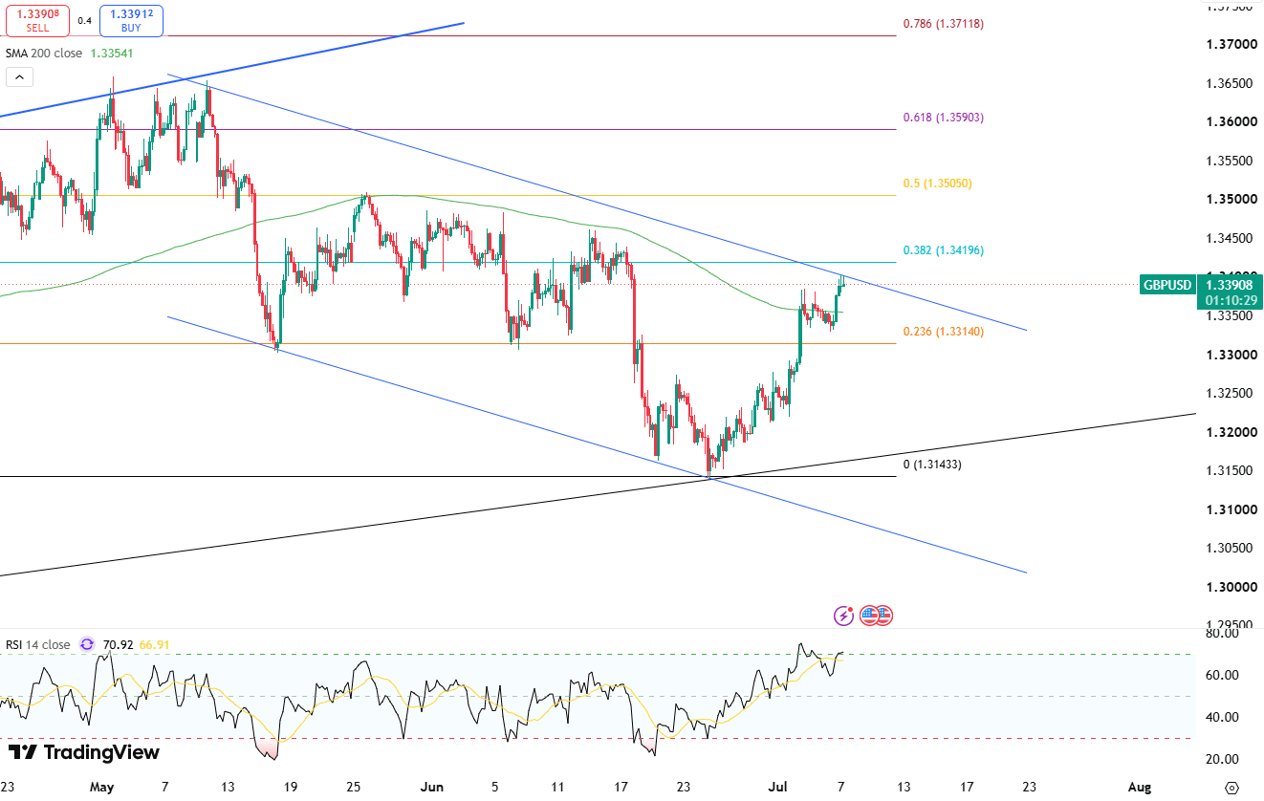
The pound retreated to $1.339, ending a seven-day winning streak as the dollar staged a recovery from its recent employment-driven selloff. While sterling benefited from a 1.1% weekly advance as Federal Reserve rate expectations cooled, sliding crude prices have simultaneously lowered tightening pressure on the Bank of England, with Andrew Bailey affirming a steady path toward inflation targets.
From a technical view, resistance stands near 1.3430, with support around 1.3330.
| R1: 1.3430 | S1: 1.3330 |
| R2: 1.3480 | S2: 1.3260 |
| R3: 1.3510 | S3: 1.3150 |
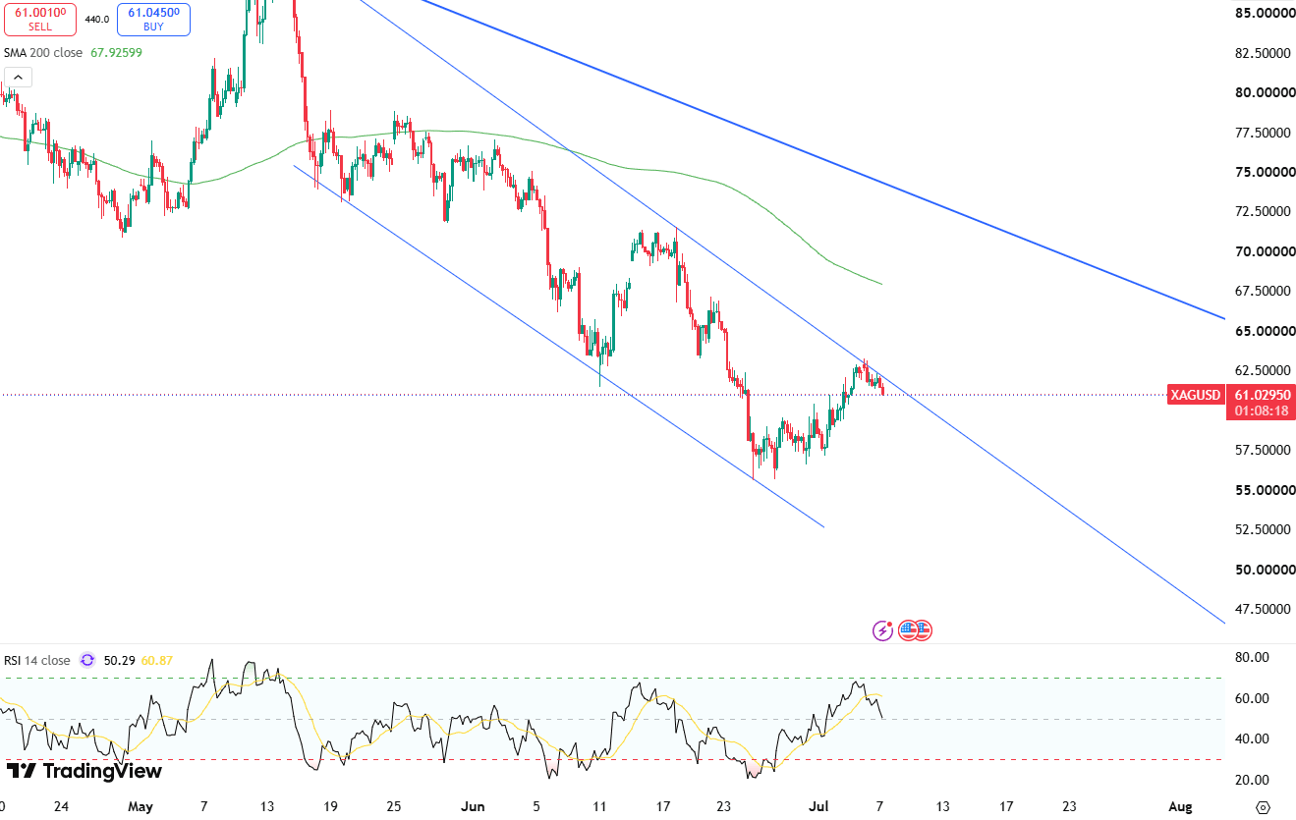
Silver fell below $61.50 an ounce on Tuesday, holding most of its prior weekly gains as market participants awaited the Federal Reserve's June minutes. Disappointing labor data lowered September rate hike expectations to near 50%. Falling crude prices, driven by normalizing Strait of Hormuz logistics and heightened OPEC+ production targets provided underlying structural support for the metal.
From a technical view, resistance stands near $63.20, while support is located around $60.10.
| R1: 63.60 | S1: 60.10 |
| R2: 65.00 | S2: 58.50 |
| R3: 66.50 | S3: 56.00 |
A deepening sell-off in technology and artificial intelligence stocks pressured financial markets, forcing investors to liquidate precious metals holdings to cover losses elsewhere.
Escalating Middle East tensions pushed oil prices higher following a deadly drone strike on Saudi Aramco's Shaybah facility, renewing inflation concerns and expectations for further Federal Reserve tightening.
Rising oil prices renewed inflation concerns as uncertainty surrounding the US-Iran conflict and continued disruptions in the Strait of Hormuz reinforced expectations for further monetary tightening.
Then Join Our Telegram Channel and Subscribe Our Trading Signals Newsletter for Free!
Join Us On Telegram!


