


Global markets ended the week on a cautious note as investors balanced renewed U.S.–Iran tensions with expectations for further central bank tightening.
Gold and silver held near recent levels despite persistent inflation concerns, while the euro and pound found support from rate hike expectations. The Japanese yen recovered from multi-decade lows on intervention speculation, though the stronger U.S. dollar and geopolitical uncertainty continued to shape market sentiment.
| Time | Cur. | Event | Forecast | Previous |
| All Day | NZD | New Zealand – Bank Holiday | ||
| 06:00 | EUR | German CPI (MoM) (Jun) | -0.3% | -0.2% |
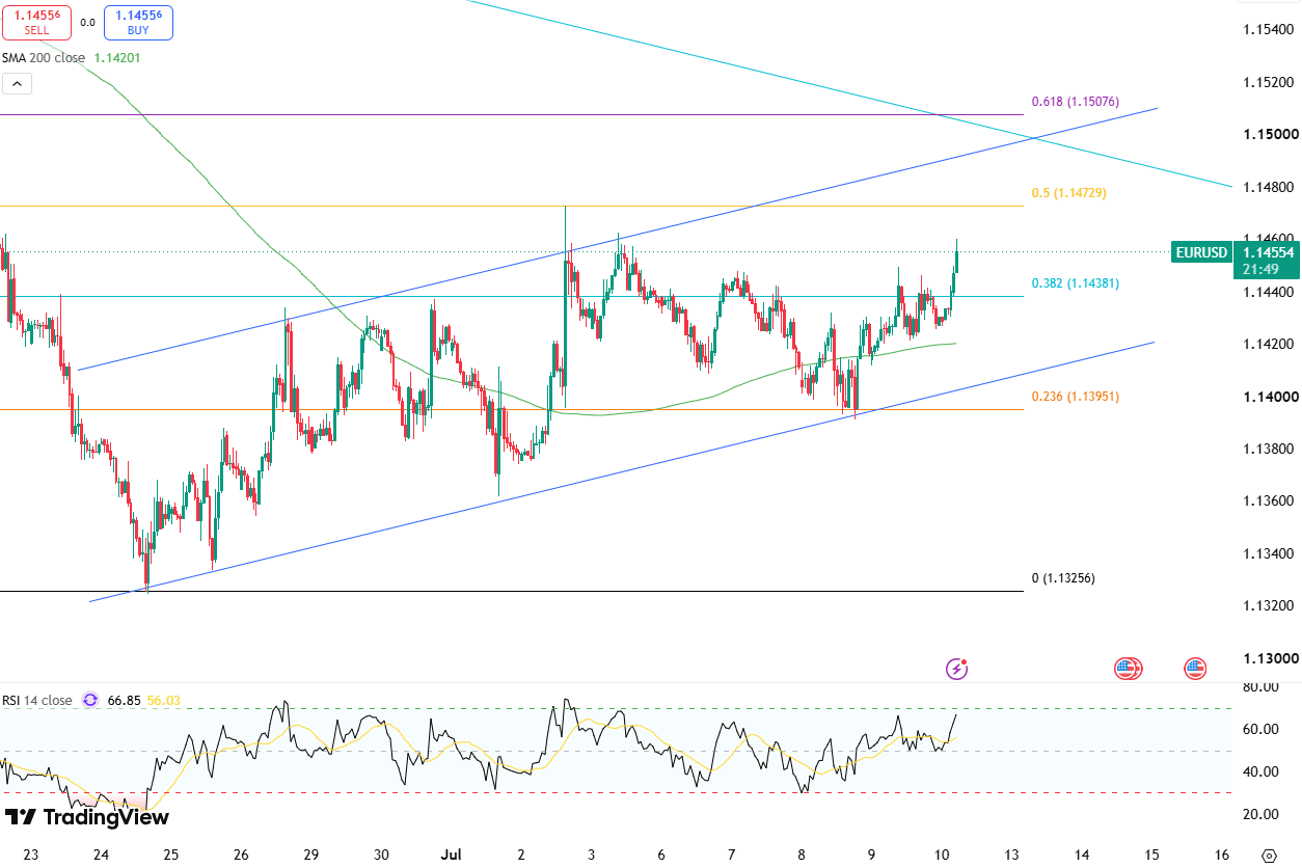
The euro traded near $1.145, recovering from June’s one-year low on expectations of a September ECB rate hike, though cooling Eurozone inflation capped gains. EUR/USD faced headwinds as safe-haven dollar demand intensified after Donald Trump terminated the Iran ceasefire, reinforced by hawkish Federal Reserve commentary and Brent crude testing multi-week highs.
The first resistance is positioned at 1.1480 while the support starts from 1.1430.
| R1: 1.1480 | S1: 1.1430 |
| R2: 1.1510 | S2: 1.1400 |
| R3: 1.1550 | S3: 1.1350 |
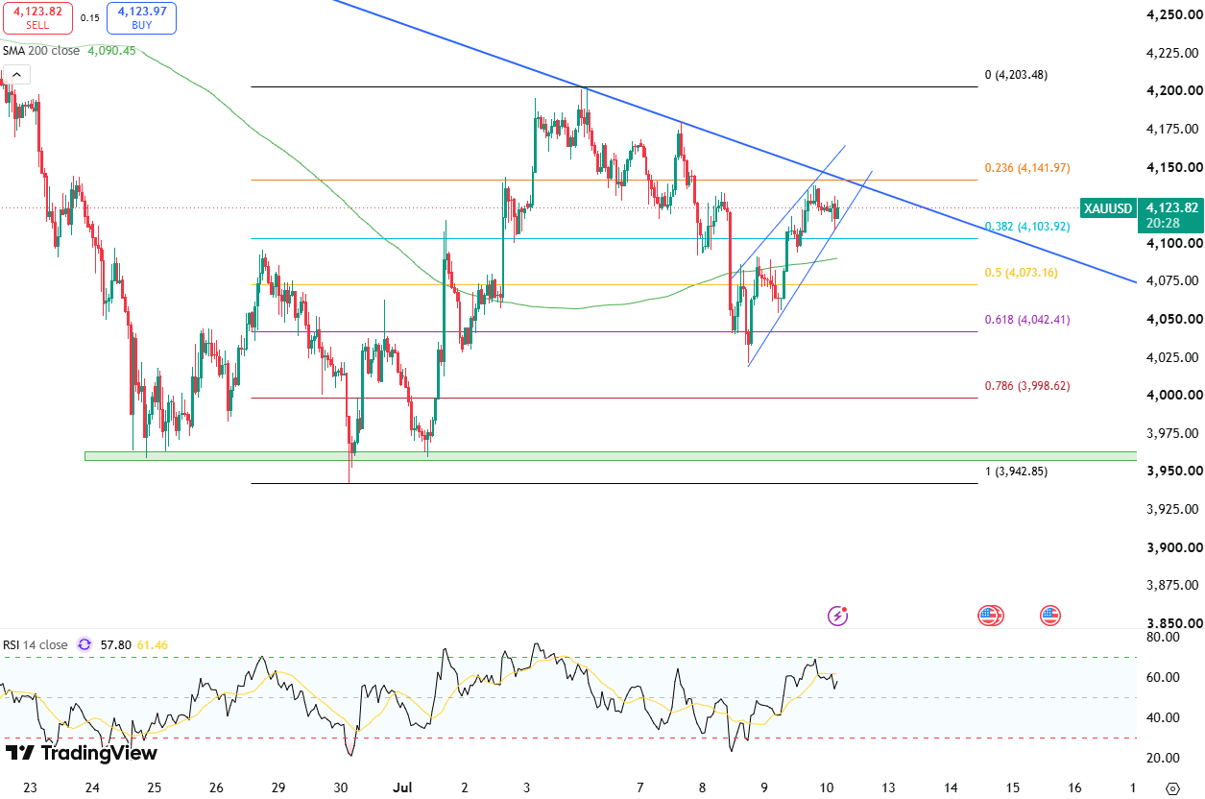
Gold stabilized above $4,120 an ounce on Friday, ending a volatile week virtually unchanged as market participants evaluated persistent Middle East frictions. Ongoing U.S.–Iran discussions continue despite recent airstrikes disrupting energy transit through the Strait of Hormuz, reviving inflation anxieties. While a Federal Reserve rate hike remains anticipated later this year, monetary policy trajectories remain cloudier after John Williams cited artificial intelligence demand as a primary inflationary threat.
First resistance is seen at $4150, with initial support near $4080.
| R1: 4150 | S1: 4080 |
| R2: 4180 | S2: 4000 |
| R3: 4250 | S3: 3950 |
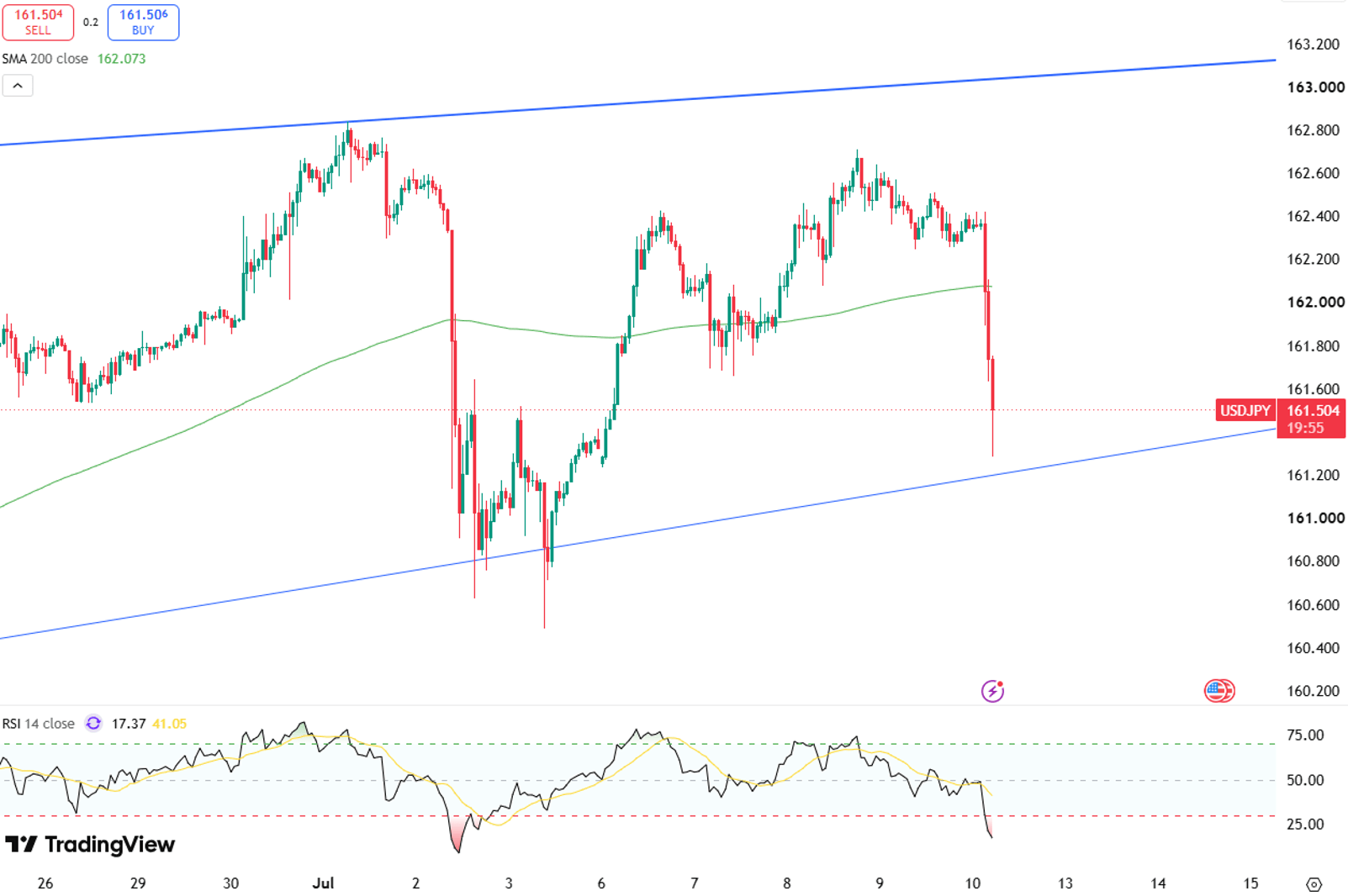
The Japanese yen strengthened past 161.5 per dollar on Friday, reversing its weekly losses as market participants remained alert for potential currency intervention following recent 40-year lows. While investors await data confirming official support, domestic producer price inflation surged 7.1% in June. Additionally, retreating oil prices tied to renewed U.S.–Iran diplomatic talks further alleviated pressure on the currency.
Initial resistance stands at 162.00, while the first support is at 160.70.
| R1: 162.00 | S1: 160.70 |
| R2: 162.80 | S2: 160.00 |
| R3: 163.50 | S3: 159.00 |
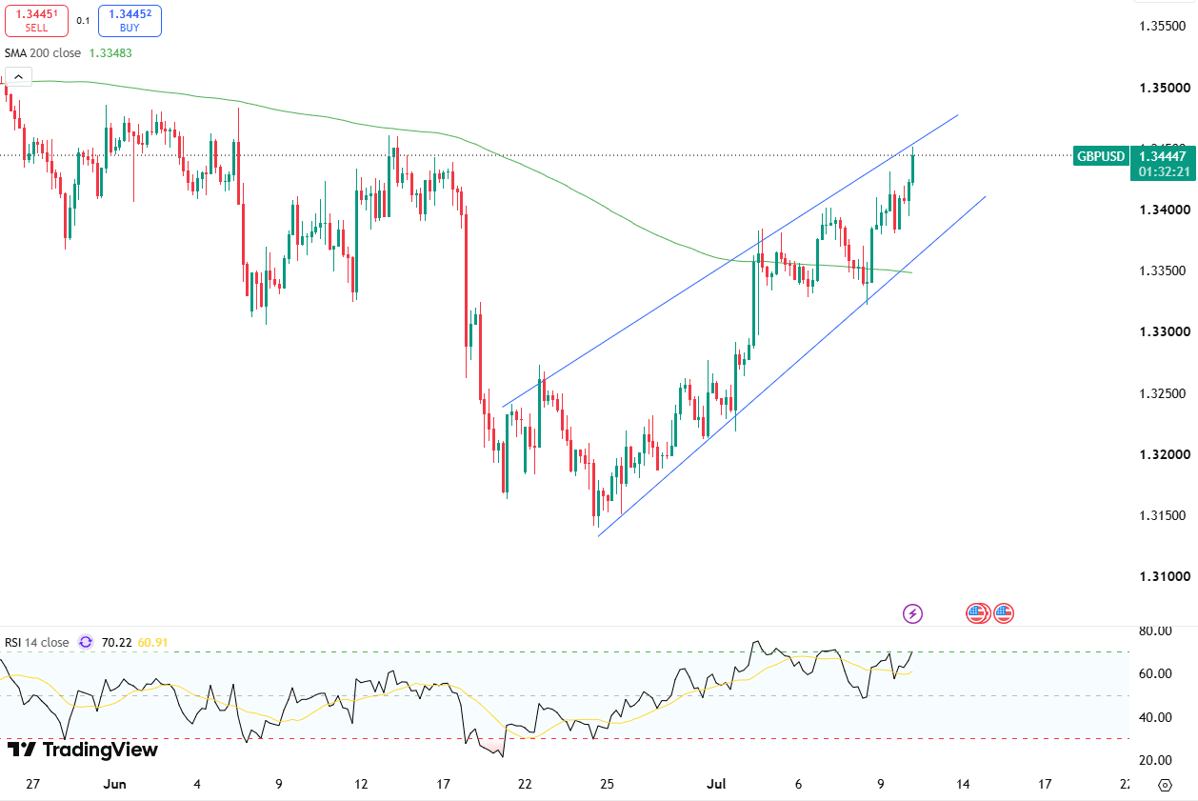
The pound advanced past $1.34, hitting its highest level since mid-June, as investors increased Bank of England rate-hike expectations amid intensifying U.S.–Iran frictions. Crude oil hit multi-week highs following fresh airstrikes and Donald Trump's termination of the ceasefire, amplifying inflation anxieties. Overnight, markets fully priced in a December BoE rate increase, while sterling's stability indicated that political succession dynamics are already digested.
From a technical view, resistance stands near 1.3480, with support around 1.3380.
| R1: 1.3480 | S1: 1.3380 |
| R2: 1.3510 | S2: 1.3300 |
| R3: 1.3550 | S3: 1.3250 |
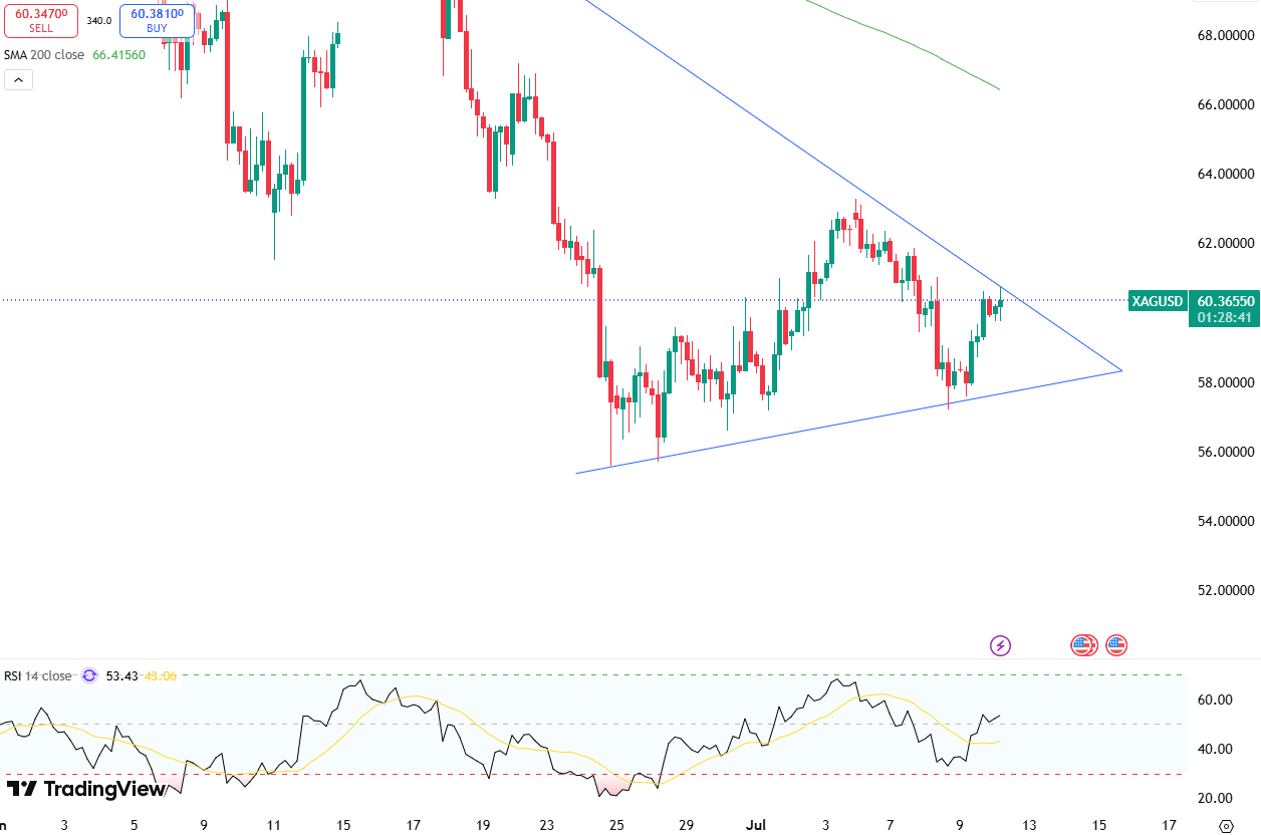
Silver stabilized near $60 an ounce on Friday, though it remained on track for a weekly loss as market participants monitored Middle East developments. Ongoing U.S.–Iran diplomatic discussions provided a backdrop to recent airstrikes that disrupted energy flows and reawakened inflation fears. Markets continue to price in a Federal Reserve rate hike this year, despite policy uncertainty linked to AI-driven demand.
From a technical view, resistance stands near $61.80, while support is located around $59.20.
| R1: 61.80 | S1: 59.20 |
| R2: 63.10 | S2: 57.00 |
| R3: 65.00 | S3: 55.00 |
Rising oil prices renewed inflation concerns as uncertainty surrounding the US-Iran conflict and continued disruptions in the Strait of Hormuz reinforced expectations for further monetary tightening.
Elevated oil prices and rising Treasury yields weighed on precious metals as persistent geopolitical tensions reinforced inflation concerns and expectations for further Federal Reserve tightening.
 European Daylight Saving Time (October 25, 2026)
We would like to inform you of upcoming adjustments to the trading schedule for selected instruments due to the end of Daylight Saving Time (DST) in Europe on October 25, 2026.
DetailThen Join Our Telegram Channel and Subscribe Our Trading Signals Newsletter for Free!
Join Us On Telegram!


